
Growing up in Malaysia and Singapore, I was surrounded by stories. They comforted, disturbed, amused and enlightened me. In my matriarchal extended family, stories were passed as naturally as food around a table. My grandmothers, aunts, and cousins told anecdotes, everyday gossip, past and present half-truths, warnings, and rumours, all woven into layered parables.
From morning to night, as they toiled on chores, chopping, frying, steaming, mopping, ironing, peeling mangoes, picking tau geh tails, there was a constant chatter and hum of activity, tips, advice, and reminiscence. For me, stories are memories, imagined and real. They aren’t just entertainment or chit-chat. They helped me understand where and how I belonged.
Related article: Exclusive: Author Wen-yi Lee On Reimagining Singapore’s Darker Side With Her New Novel When They Burned The Butterfly
Related article: Exclusive: Bestselling Asian-American Author Elizabeth Lim Is Painting The Future—Literally and Literarily—With Her Latest Novel
It’s no surprise, then, when I started writing my latest novel In Safe Hands, that I returned to the idea of family stories. What happens when memory fails, when a father forgets his daughter’s name, or when a daughter can no longer be sure of her place at home?
When I moved to London in my twenties, I buried the stories I grew up with. I was excited by a new life, a new job, a new country and most of all, a new me. Youth is forgetful. And with distance comes silence because there was no internet, mobile phones, or communication apps. Cameras only belonged to those who were photographers. The things we take for granted now simply didn’t exist and I gradually became disconnected. The small details of daily life—cooking together, doing chores, or sharing a meal with people I grew up with—quickly became faint.
That tension of living between spaces where we should feel safe, but are not, is what shaped In Safe Hands. On the surface, it is a psychological thriller set in London and Singapore about a daughter who returns home to find that a caregiver has replaced her. Below the suspense is something universal: The fear of losing your loved ones, because you also lose who you are.
In my youth, this fear felt far away. It is not something you think about when your parents are very able, still working, travelling or active. You, too, are active, pursuing a career, your first holiday with friends, a new romance or the purchase of your first apartment. These milestones are all-consuming. In our 20s and 30s, we are the sandwich generation. We are not yet caring for the elderly. We are not caring for little ones either. We are free. But it got me thinking: If you’re an immigrant abroad, then what does it mean to grow old in a foreign country? What does it mean to raise children straddled between two worlds, yours and your parents’?
In Asia, we grow up with the instinct of filial piety, the belief that caring for our elders is not a choice, but a duty woven into the fabric of family life. In Singapore and Malaysia, and quite likely Southeast Asia, it is still common for three generations to live under one roof. But even so, times are changing in modern societies. Families are smaller, and children are moving abroad. Parents are ageing alone in houses or flats that once bustled with noise and clutter all year round.
Related article: Exclusive: First-Time Author Jemimah Wei Reveals The Long, Tumultuous Journey Behind The Original Daughter
The expectation in Europe is quite different. Elderly care is professionalised and handed to institutions or carers. It looks efficient and practical. It creates its own silence. Neither model is perfect. Both reflect the pressures of modern life, migration and survival. But the real question is: When our memory fails, in Eastern or Western cultures, who will take care of our stories?
Since childhood, writing has been how I hang onto the stories and how they hang onto me. In Asia, I am not considered Asian anymore, and in London, where I’ve lived for 30 years, I am definitely not British, either. I am just another immigrant. I do not belong in either camp. Writing helps me address and explore my personal conflicts of cultural displacement and identity.
I wrote In Safe Hands two years ago, before my parents turned old. They had been fit, independent, regular people, just like you and me. The book is not only a thriller about family and betrayal, but also a meditation on belonging, memory, and survival. Fiction, for me, is the place where these questions live on the page, and where I live in my imagination.
Whether in Singapore or London, in a noisy extended household or a silent care home, we are searching for the same thing: To matter.
Stories are not just memories, or what we inherit, but what we create and pass on. They adapt, transform and survive in unexpected ways. Novels, films, podcasts, TikToks, and even a WhatsApp voice note can outlive us. My children, shaped by their hybrid identities and international cultures, will carry different stories to mine and that gives me comfort.
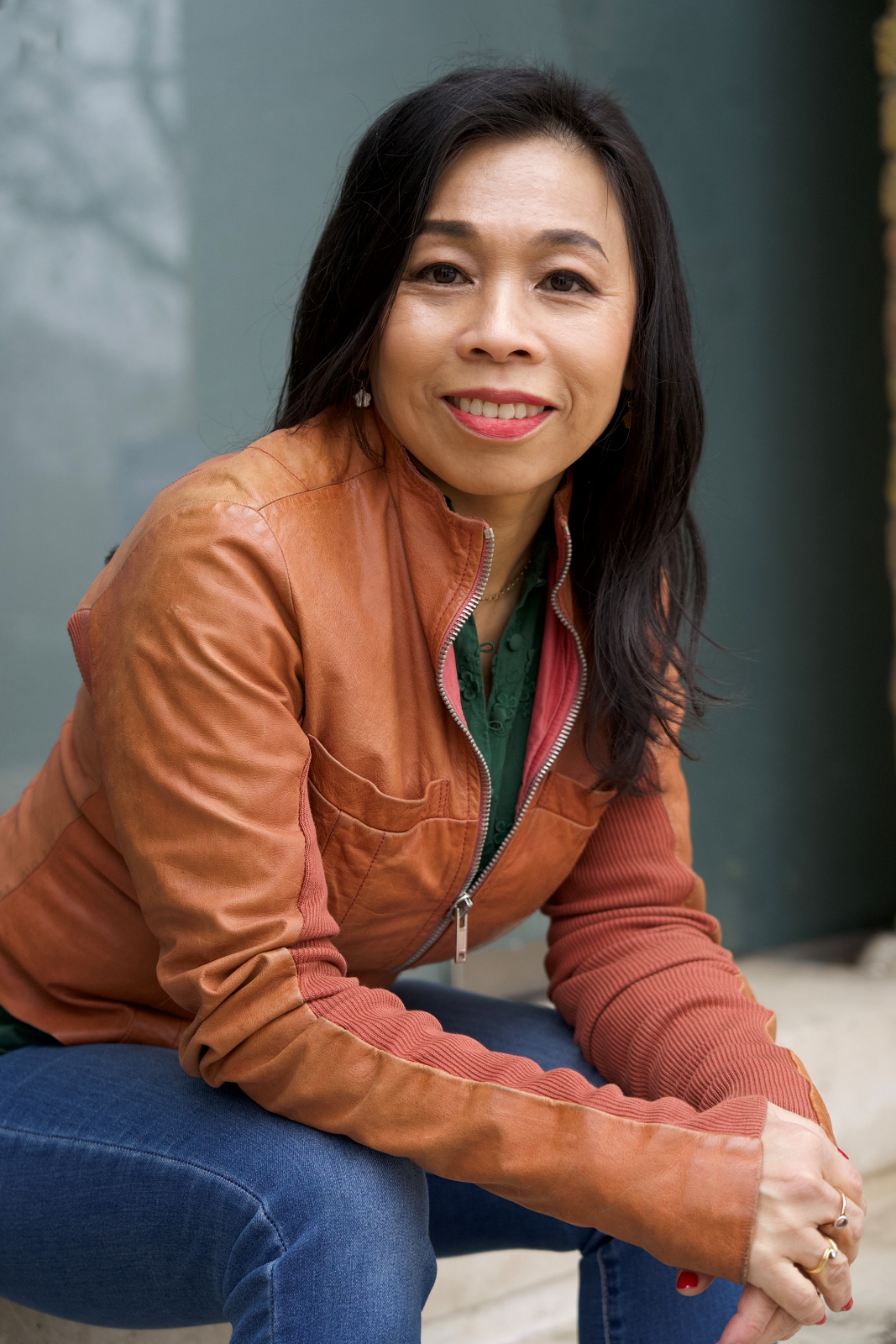
Bestselling author of "The American Boyfriend", Ivy Ngeow is a Malaysian-born, London-based architect, designer and multi-instrumentalist turned thriller novelist. She crafts genre-bending stories about modern Asian women, identity, secrets, and displacement.