
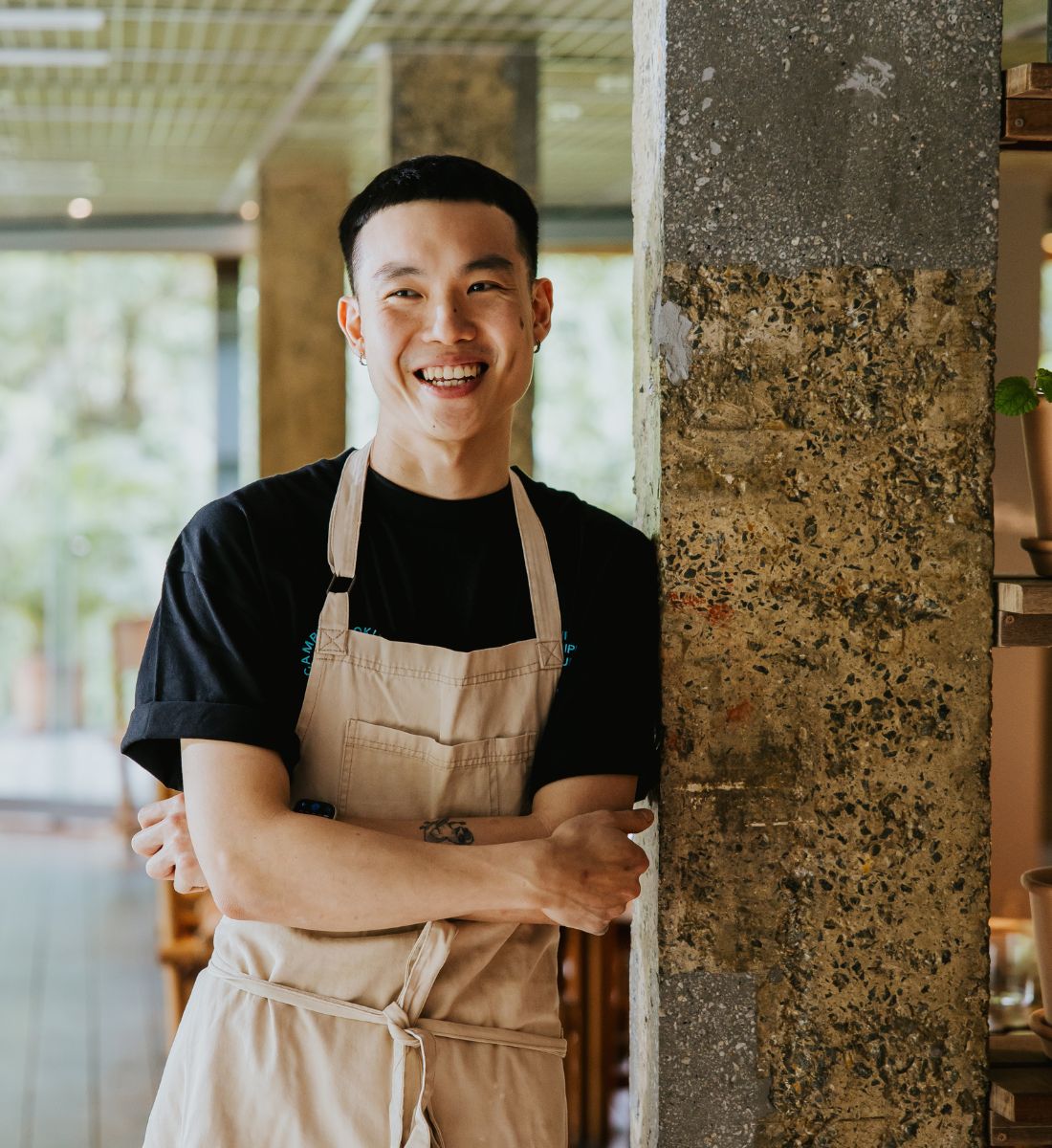
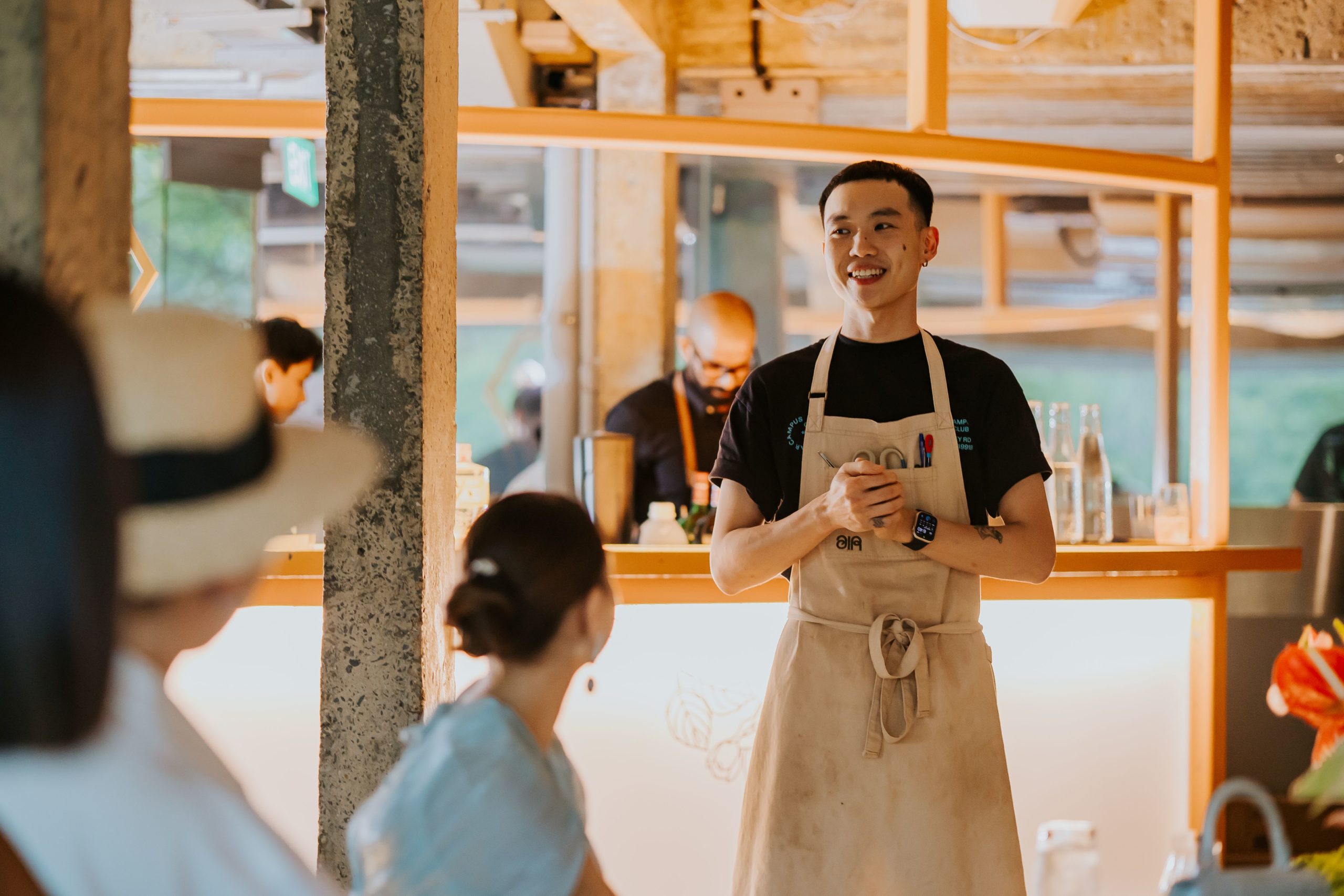
At AIR CCCC, innovation is more than just a buzzword. Tucked away in Dempsey Hill, the restaurant operates on a philosophy of awareness and responsibility, where creativity thrives not only through flavours and techniques, but also in its circular approach. Led by Sous Chef Aiken Low, the menu at AIR CCCC evolves with the seasons, working with, rather than against the natural cycles and processes of local and regional farmers and their produce. Rooted in sustainability and understanding of where our food comes from, the restaurant offers a dining experience that is not just delicious, but thoughtful, intentional and responsible.
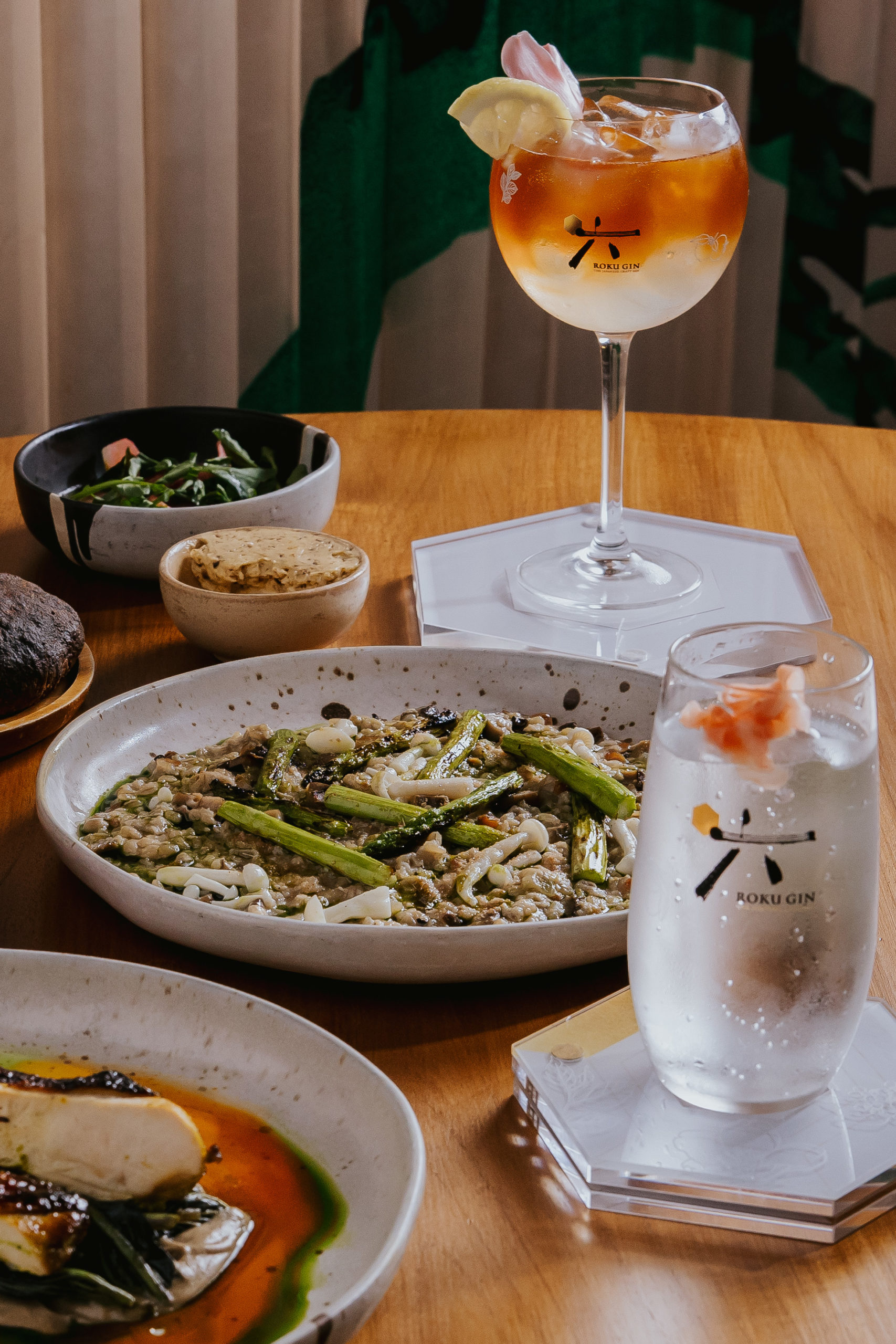
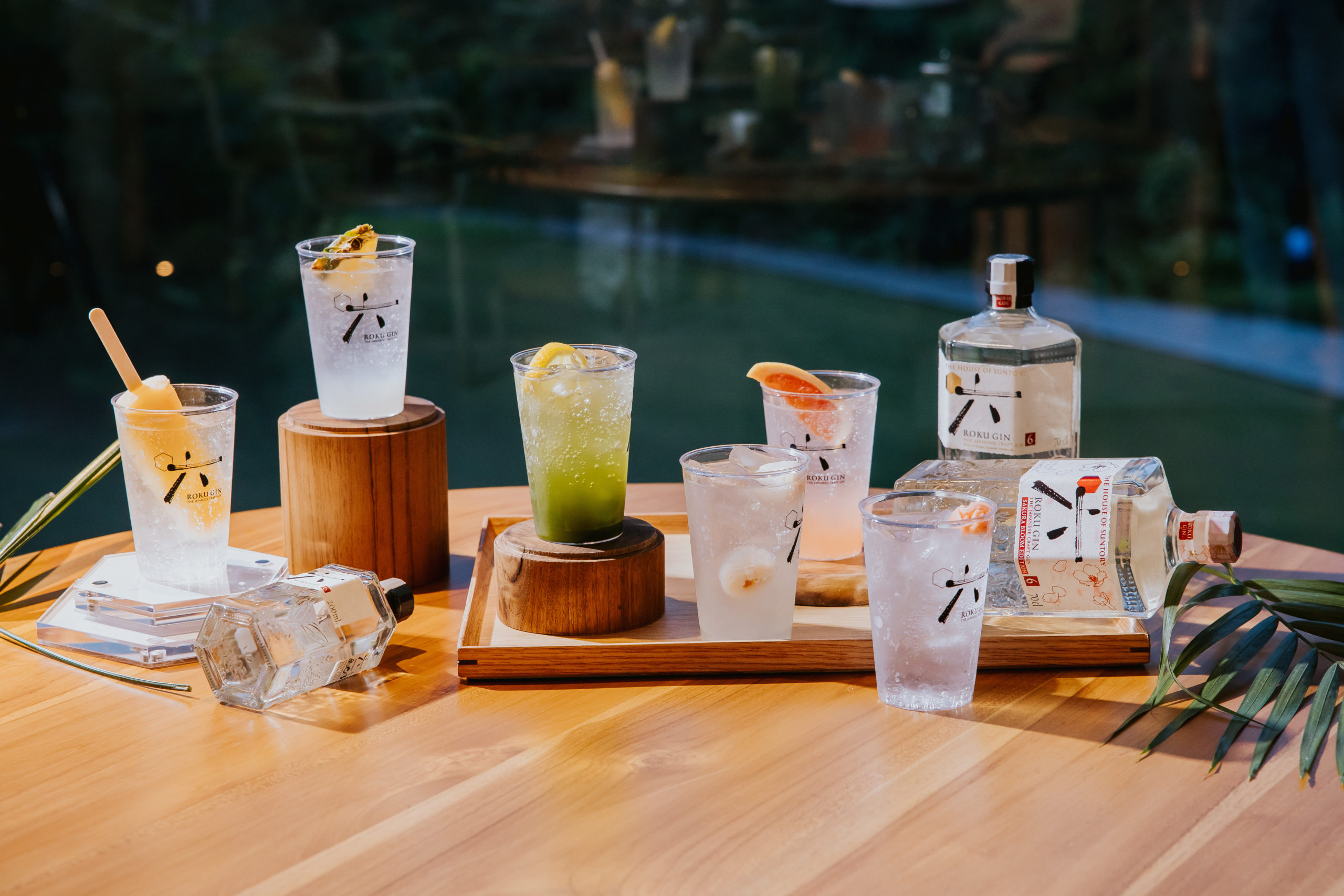
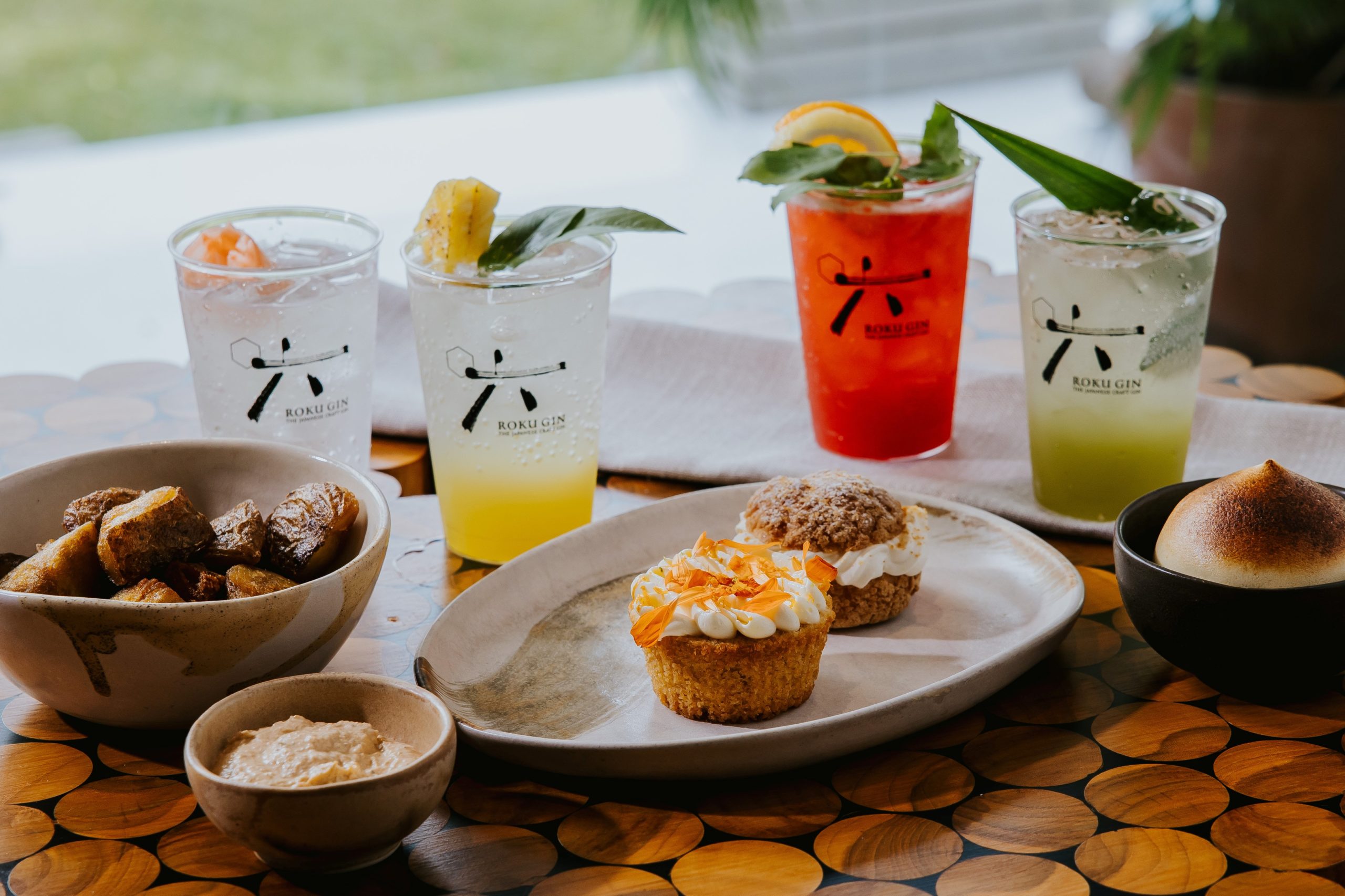
For its first consumer pop-up this past weekend, AIR CCCC partnered with Roku Gin to develop a new tasting room menu, pairing the liquor brand’s iconic Japanese botanicals with its own ideas of balanced, mindful dining. The synergy between the two brands is palpable, as Chef Low explains: “As both sides value thoughtful sourcing and balance, the collaboration felt instinctive rather than constructed.”
Below, Chef Low opens up to ELLE Singapore about his experience partnering with Roku Gin, his personal highlights from the collaboration and what innovative dining looks like to him.
Related article: Love At First Bite: Don’t Miss Out On Crazy Pizza's Pop-Up At Capitol Bistro.Bar.Patisserie
What defines the AIR CCCC dining experience?
At AIR CCCC, dining is a full-circle experience. We treat the restaurant as a campus, where food, learning, and community come together. Our cooking is grounded in circularity, using every part of an ingredient as thoughtfully as possible—preserving, fermenting, or transforming what might otherwise be discarded. The menu shifts with the seasons and draws from our garden, local growers, and regional producers across Southeast Asia. Beyond the plate, the space hosts workshops, talks, and collaborative sessions, inviting chefs, farmers, and guests to explore how food can be both enjoyable and responsible.
What about Roku Gin stood out to you? Why was it the right fit for this collaboration with AIR CCCC?
Roku Gin is built around seasonality and craftsmanship expressed through six distinctive Japanese botanicals like sakura blossom, yuzu, and gyokuro tea. This philosophy aligns closely with how we cook at AIR CCCC, where flavour starts with what is produced in the garden or preserved in our fermentation room as both sides value thoughtful sourcing and balance, the collaboration felt instinctive rather than constructed.
It has been a really good collaboration. The pop-up gave us space to explore how our food can work with the gin, not just in taste, but in how we both think about ingredients and the seasons. It felt very natural working together, and I think guests can feel that connection when they dine here.
Related article: Tao Group’s Jason Strauss On The Re-opening Of LAVO Singapore & Evolving With Nightlife Culture
What flavours and ideas went into conceptualising the collaborative menu with Roku Gin? Do you have a personal favourite dish?
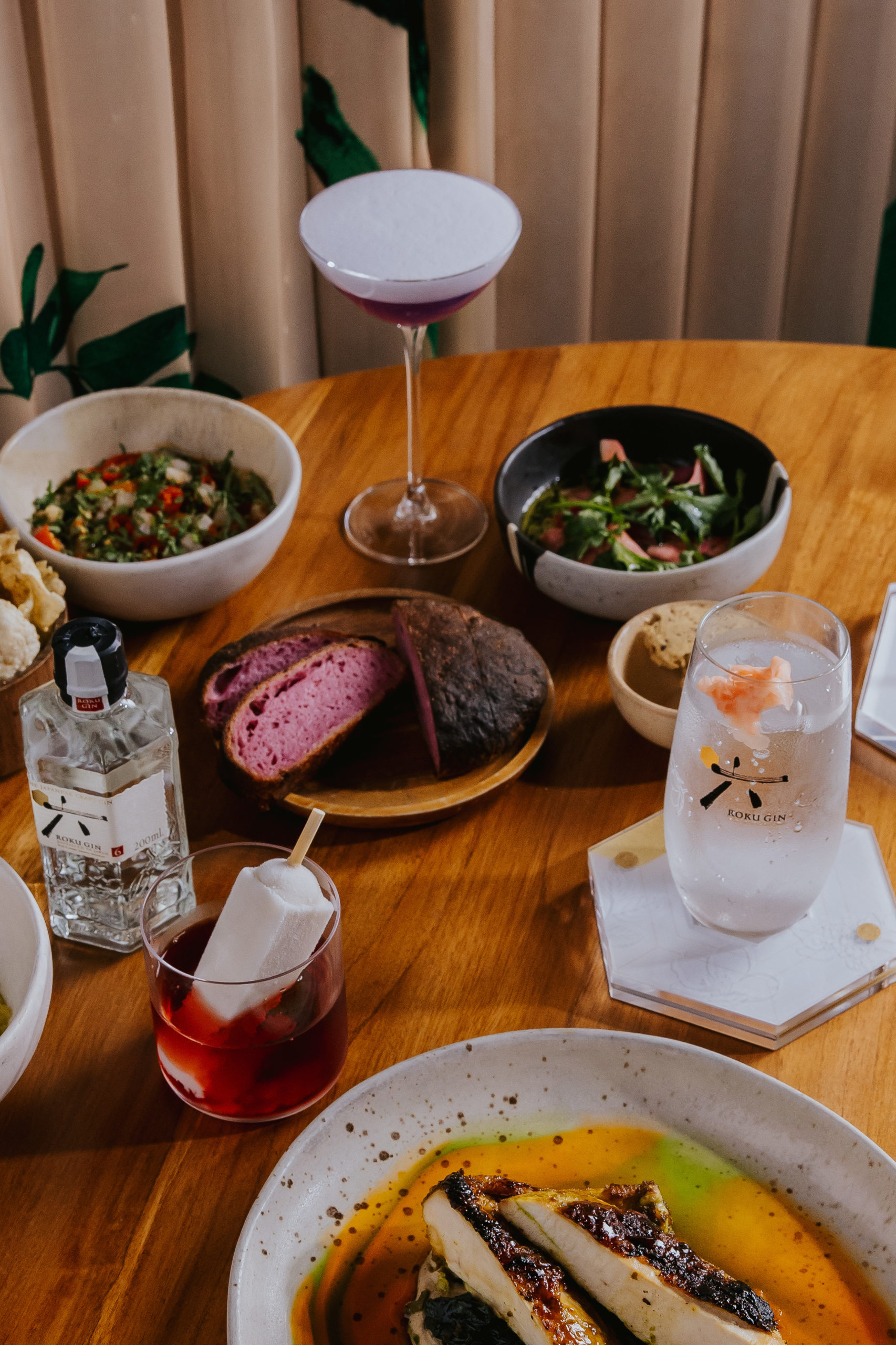
Roku Gin leans toward bright citrus and clean, botanical notes. To complement that, we designed a menu that feels light and expressive, allowing room for subtle flavours to come through. Instead of creating contrasts, we focused on harmony: Herbs from the garden, gentle acidity, and refined textures that invite the gin and the dish to echo one another rather than compete.
The snapper ceviche, with its citrus-forward aguachile, brings a brightness that mirrors the same qualities we find in Roku Gin, making it a natural pairing.
What has been the most fulfilling part of collaborating with Roku Gin? Did you face any challenges during the process?
Discovering how naturally Roku Gin’s philosophy aligns with ours. Their focus on seasonality, detail, and respectful craft allowed the menu to grow from a shared understanding rather than compromise. It felt like building something together that had purpose
At the start, we were figuring out how best to translate Roku Gin’s identity into our own ingredient language. Once we took the time to understand the gin more closely, the similarities became clear, and the menu came together naturally, guided by shared values of balance and craftsmanship.
Related article: Step Inside Leila: A Stylish New Spot For Mediterranean & Middle Eastern Dining In Singapore
What considerations do you have to account for when curating brand-led experiences like these? How does the process of menu formulation change between casual and experiential dining?
We always begin by finding the shared value system. For AIR CCCC, that foundation is awareness and responsibility, both in sourcing and in how we present flavour. Once that is in place, we allow our collaborator’s character to add nuance. With Roku Gin, their craftsmanship and sense of seasonality naturally enhanced the ingredient-first approach we take here.
In casual dining, menu creation focuses on comfort, consistency, and approachability, ensuring guests know what to expect and leave satisfied. In experiential dining, the process is more narrative-driven, where each dish is designed to tell a story, evoke emotion, and spark conversation. At AIR CCCC, we begin with purpose rather than flavour alone, drawing inspiration from the season, the garden, and our collaborations, so the menu evolves as a reflection of time, place, and intention.
I hope guests leave with a sense of connection not only to flavour, but to the intention behind it. If they notice how an ingredient is used, or feel curious about where something came from, then the experience has done more than just please the palate. It has encouraged a gentler, more conscious way of appreciating food.
What does innovation in the culinary scene look like to you?
Innovation is not just about new techniques; it is about rethinking our relationship with resources. It asks us to reduce waste, to source more thoughtfully, and to build systems where producers, chefs, and brands work together rather than in isolation. I would love to see more of that shared approach in Singapore: Collaboration rooted in transparency and care.
*This interview has been edited and condensed for clarity.