
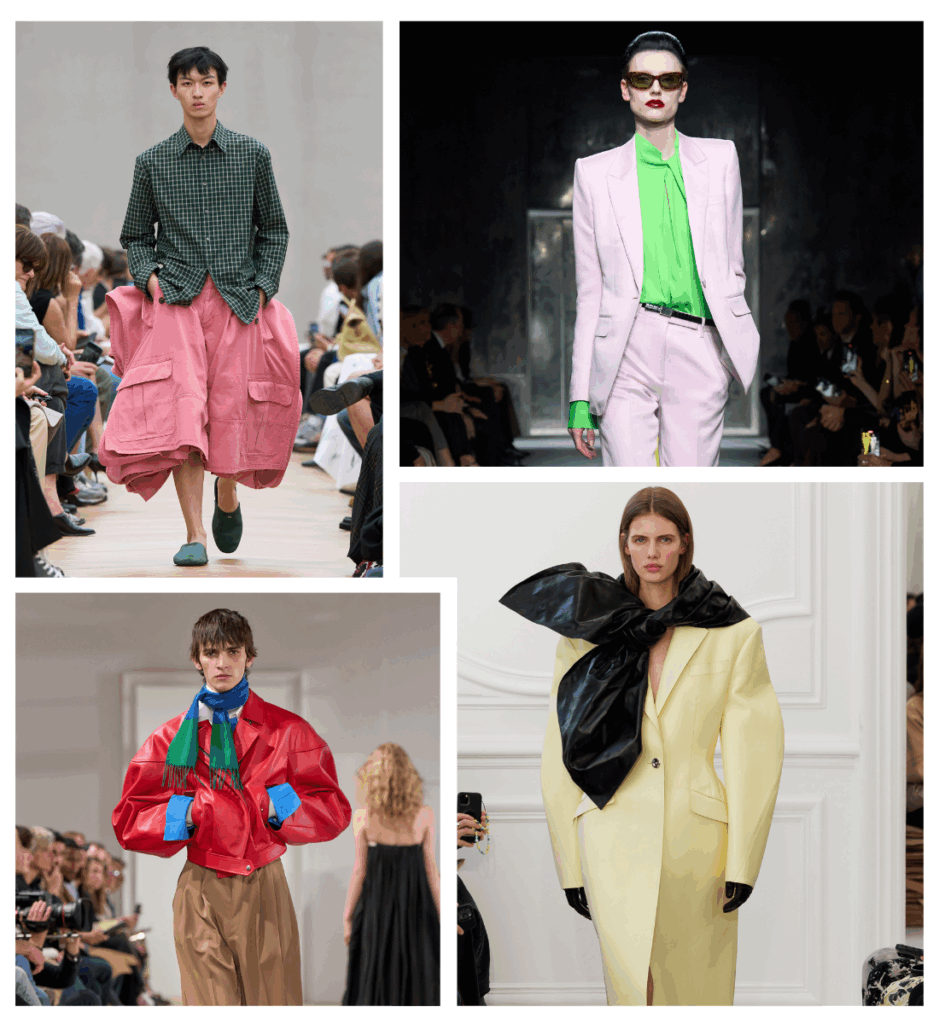
This fall/winter 2025, a new wave of high-profile designer debuts has re-energised the runways. Major fashion houses like Givenchy and Dior has welcomed new creative leads and we were nothing short of excited to see their visions come to life. At Givenchy, Celine, Tom Ford and Dior Men, we managed to get a glimpse into what the next era of each house might look like under their new leads. Silhouettes were reimagined and traditions were challenged, all while ensuring that the fashion labels maintain as standouts in the industry.
Givenchy
The stakes and expectations for Sarah Burton’s Givenchy debut were sky-high. It had been a long time since the brand was in the centre of the fashion discourse like this. Having cycled through three creative directors in the past eight years, its identity was a little muddled; and beyond its founder’s creations for Audrey Hepburn, Givenchy never really owned an aesthetic the way Dior did the New Look, or Chanel with its tweed suits. Anticipation for what Burton would do was feverish, as she brought with her decades of experience honed at Alexander McQueen—first as the namesake designer’s intern, then as his right hand, and eventually succeeding him as creative director after his death.
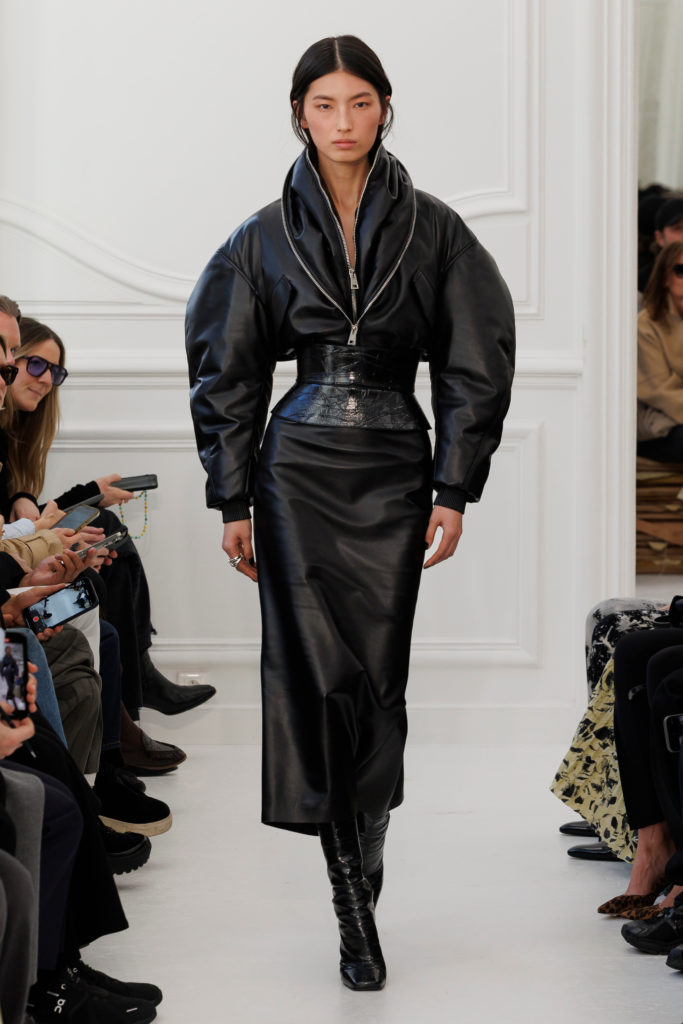
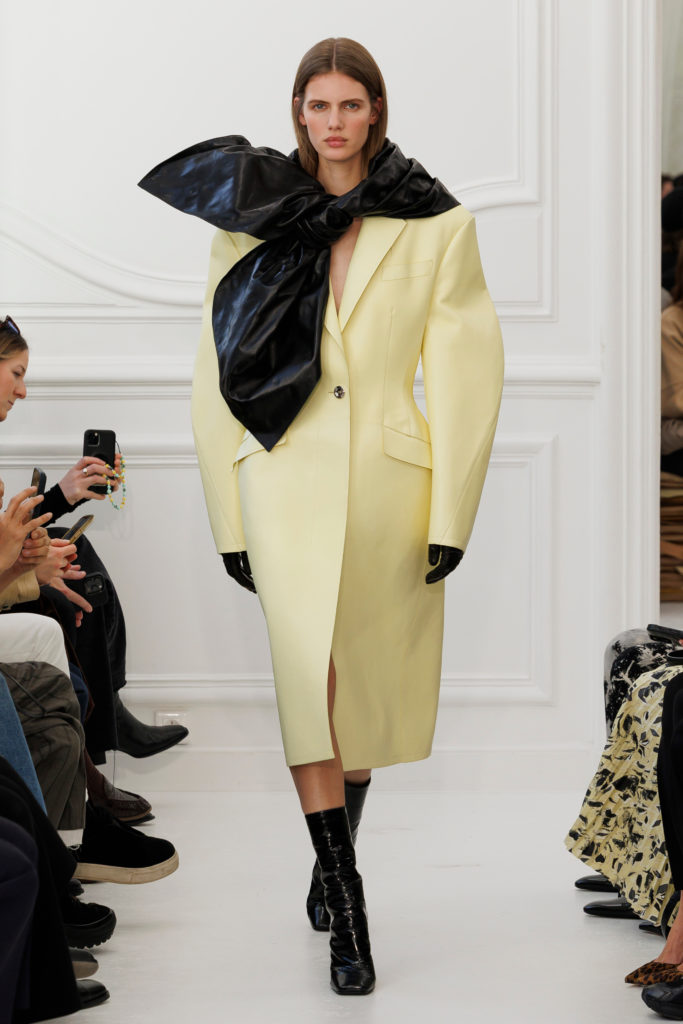
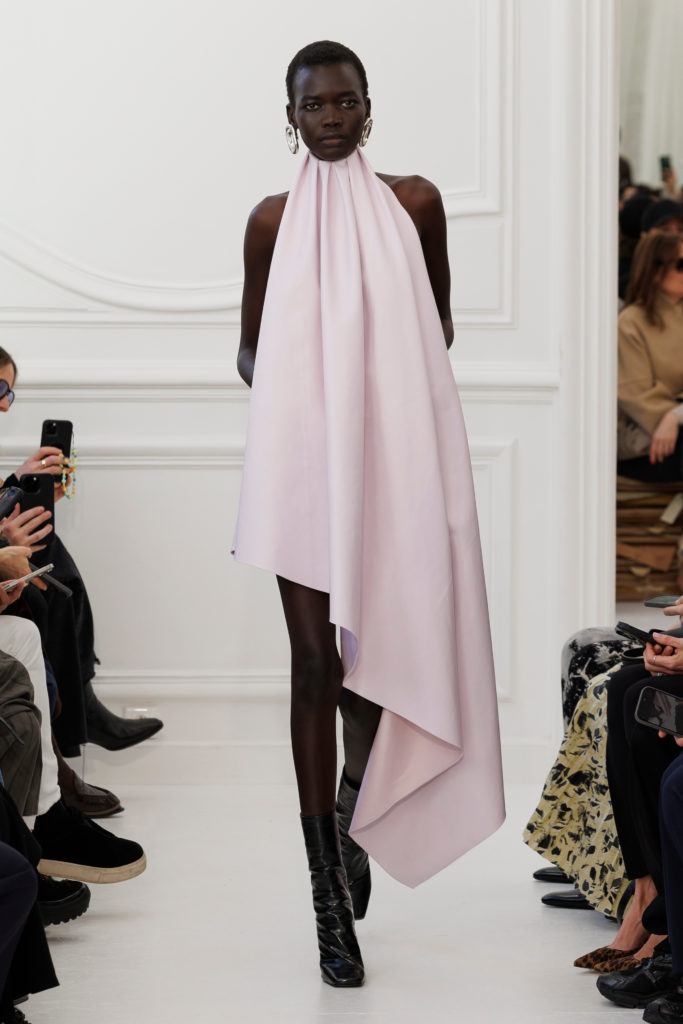
Burton exceeded those expectations with a collection that is assured, restrained and tightly focused. Within the span of 52 looks, she manages to define a clear new silhouette for the House—one that is crisp and commanding, but also shapely and sensual. Of course, there are similarities to her work at Alexander McQueen—that was her design language for more than 25 years, after all—but there are also significant enough differences. Where her McQueen was more decadent and shadowy, the feeling at Givenchy is one of lightness and ease.
Highlights include a coat-dress and a skirt suit turned front-to-back, and soft sheets of leather falling gently from high halter necks—they look like the height of elegance. The many hourglass silhouettes in the collection never look retro or constricting; instead, they feel like soft, modern armour. The tailoring is a perfect mix of structure and slouch.
Equally compelling is Burton’s insistence on real, wearable clothes rather than showpieces. The trench coat, the leather jacket, the white shirt, and the black trousers—she turned these staple items into their dream versions. It is a great first collection, and Burton’s focus on building a wardrobe—refreshingly free of theatrics and gimmicks, save for a dress embellished with multiple powder compacts—was a solid instinct.
Related article: Sarah Burton On Her Givenchy Debut: "I Wanted The Collection To Encompass Everything It Is To Be A Woman Today"
Tom Ford
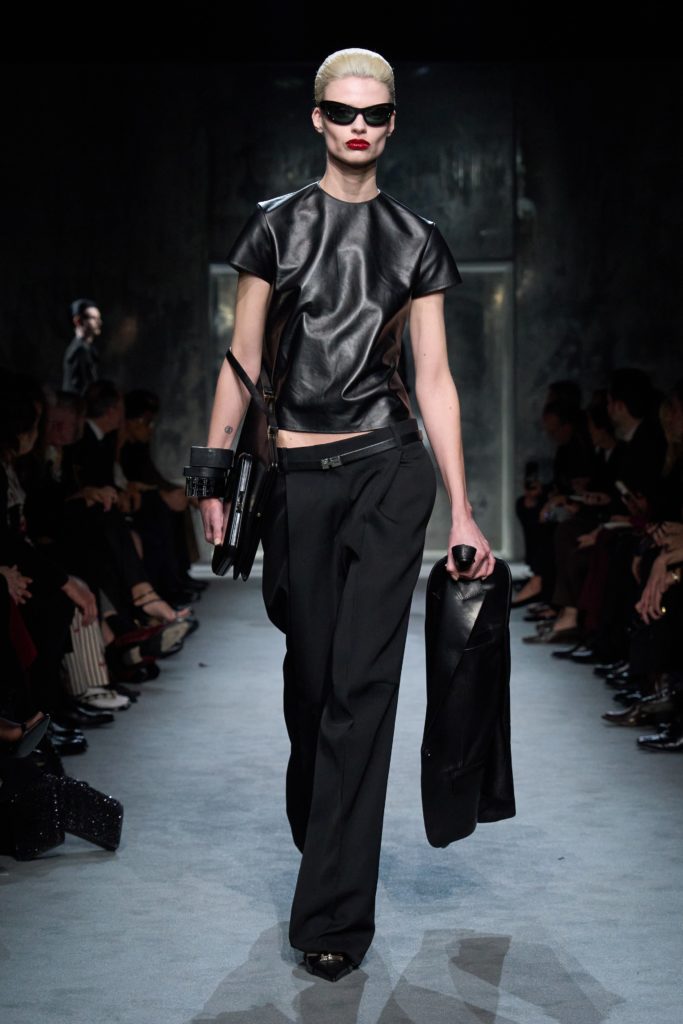
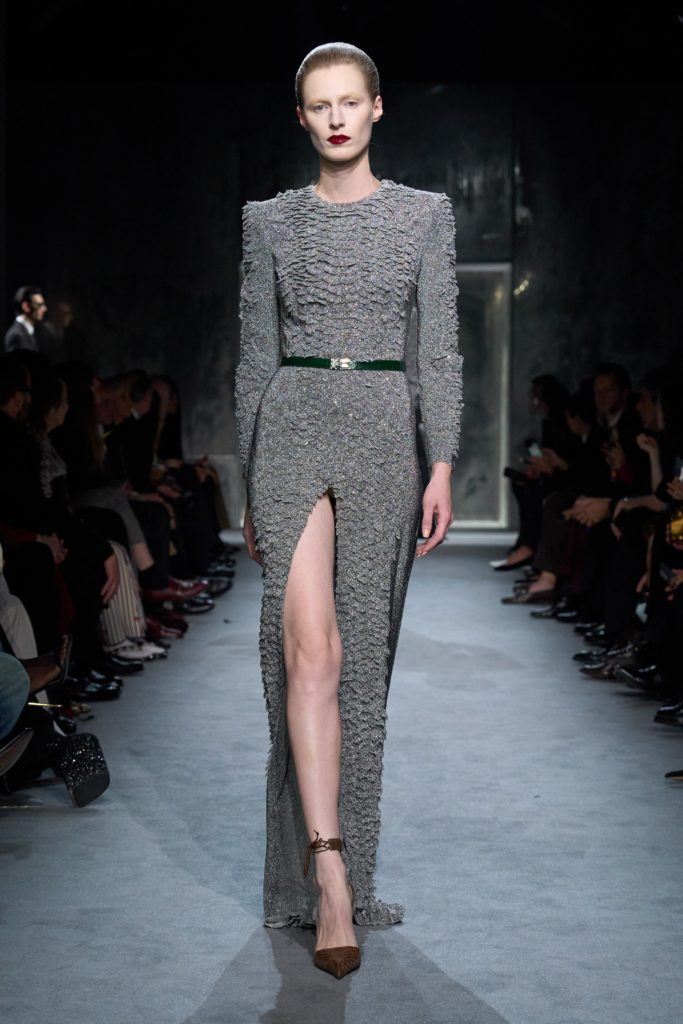
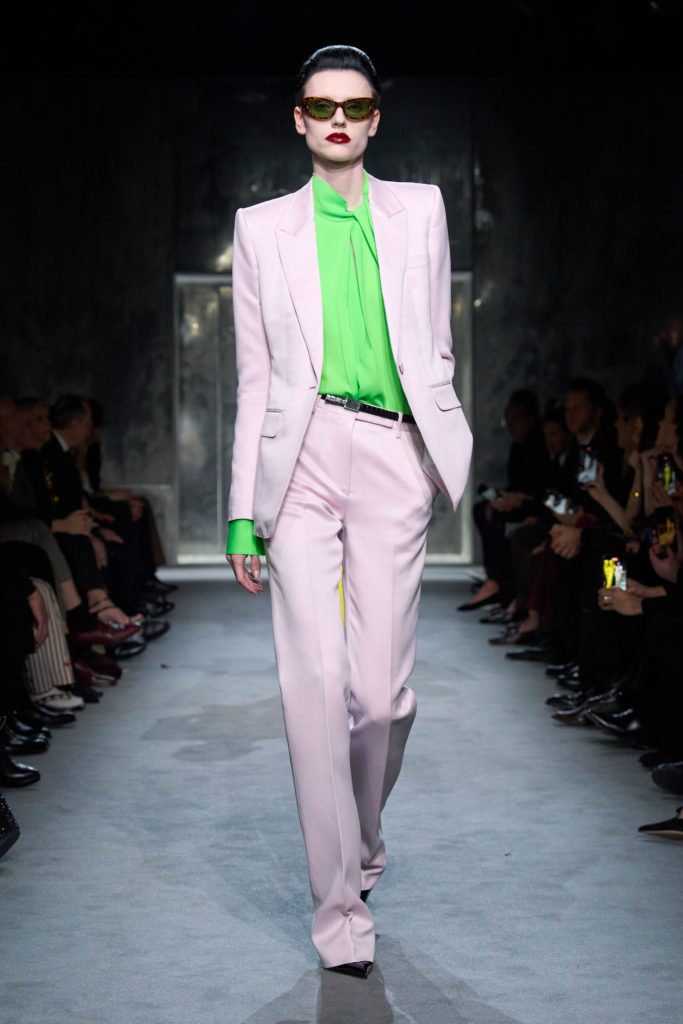
The way Tom Ford reversed and revived the fortunes of Gucci in the 1990s is one for the history-slash-business books. That sleek, sexy, hyper-glamorous look he established for the brand became one that defined the era and his own work for decades to come, for better or worse. Worse, because when that look fell out of fashion, Ford’s aesthetic suddenly seemed rather dated. It did not help that when the designer stepped down from his namesake brand, his successor, Peter Hawkings, stuck to that exact same formula. But now, after years of streetwear dominance and the casual-fication of fashion, the look is primed for a comeback—there is a thirst for glamour and beauty again. Enter Haider Ackermann.
The cult designer—beloved by Tilda Swinton and Timothée Chalamet—pulled off a tricky balancing act with his debut collection. It is true to the spirit of Tom Ford—that is, pure seduction—but it also moves the aesthetic forward. This is no throwback, nor is it just homage. The clothes are sexy, but in an understated way—and it is all thanks to Ackermann’s precision of cut. He opened the show with glossy black leathers and creamy white wools cut into daywear silhouettes, such as leather T-shirts or cropped, fitted jackets worn with low-slung pants. One look in particular stood out for its blend of sensuality and subtlety: A cropped sweater worn with a floor-length, bias-cut silk skirt; one side of the skirt falling open to reveal a flash of hip bone. That look pretty much sums up Ackermann’s Tom Ford: Sexy but not vulgar.
It was when Ackermann introduced colour into the proceeding that the collection truly soared. The designer has always been a brilliant colourist and it was exciting to see that sensibility mesh with the sleekness that is Ford’s signature—see the pale pink suit worn over an acid green blouse; the electric yellows and purples paired with coffee and tobacco shades. Eveningwear is another standout, especially the pair of gowns that looks like crocodile leather, but is actually fully beaded and embroidered—couture-level stuff that signals great things ahead.
Celine
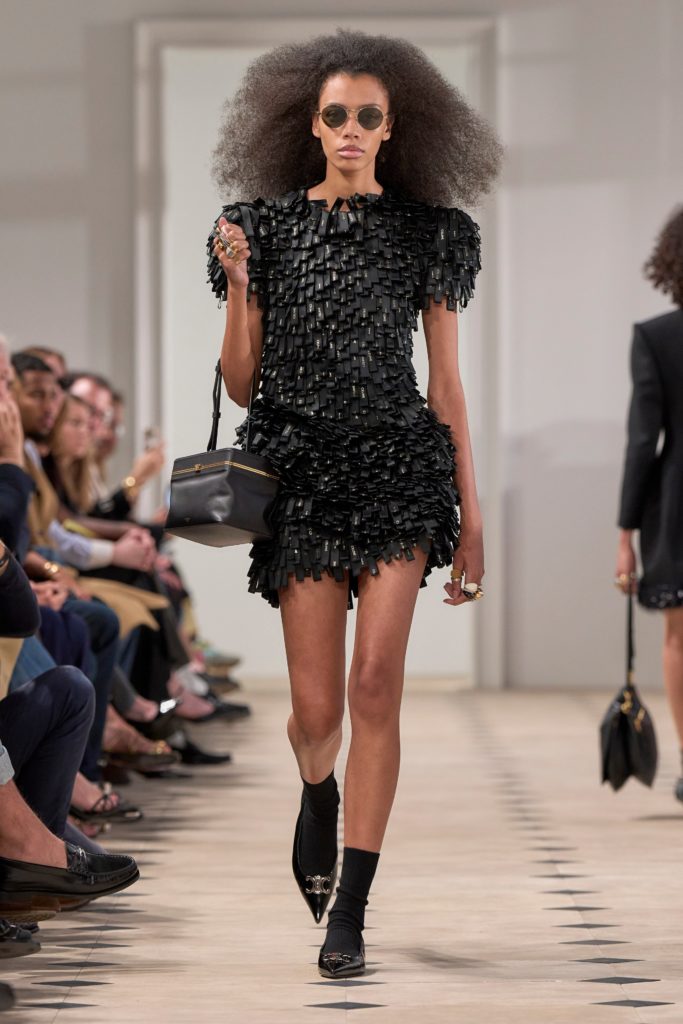
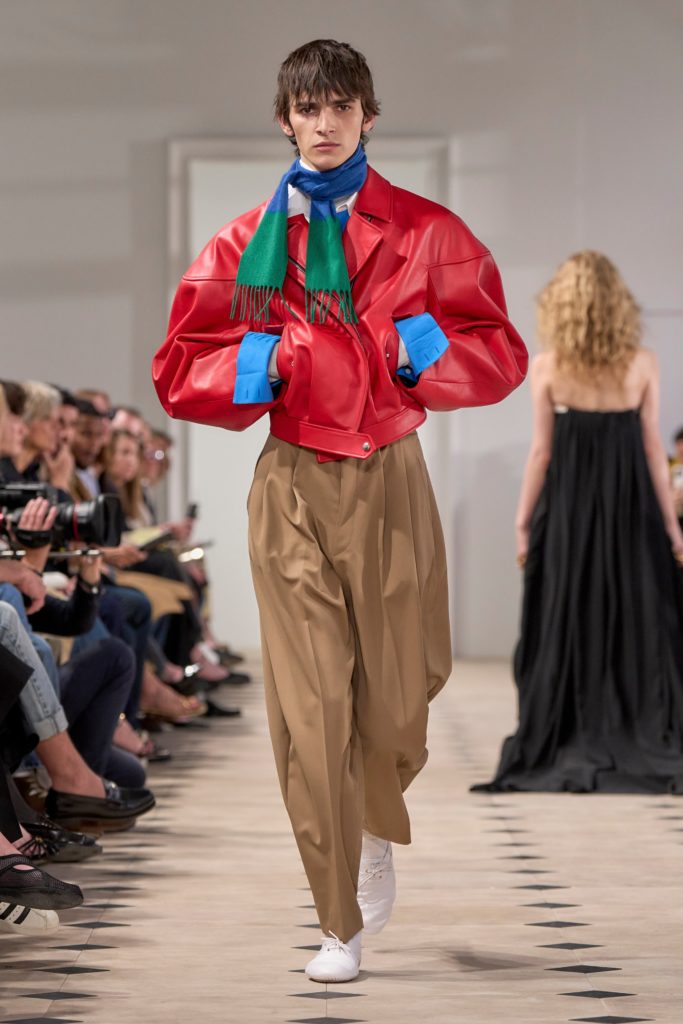
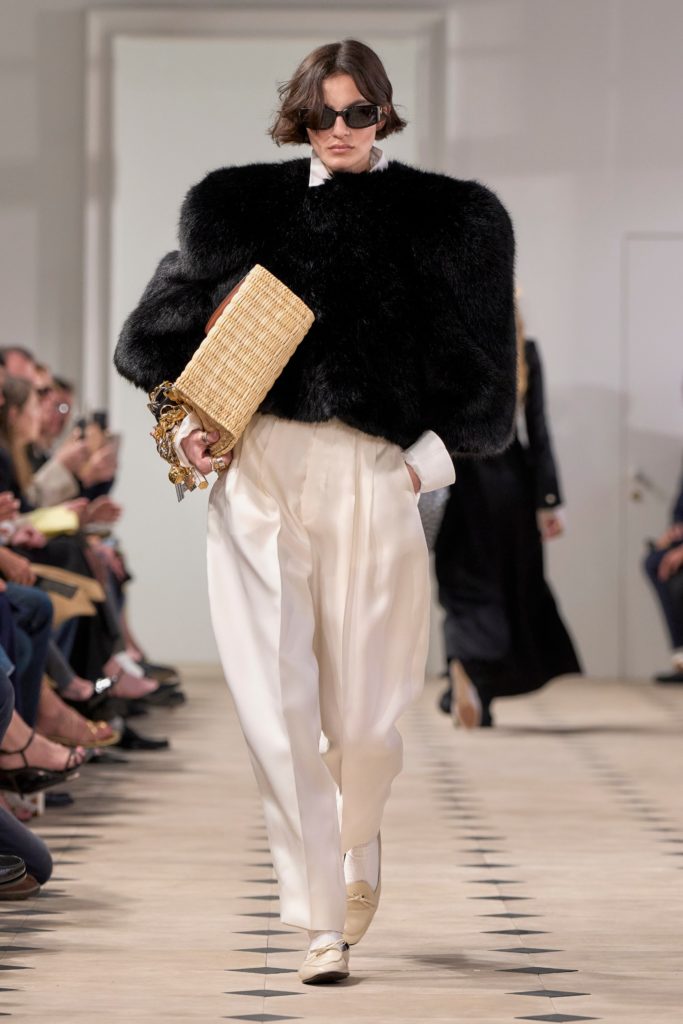
It is never an easy task to come after Hedi Slimane. The designer’s vision is so all-encompassing and so deeply entrenched into the brands he leads that his successors often struggle with what to keep, what to take apart, and how to move forward in a meaningful, thoughtful manner. Look at Saint Laurent, where Anthony Vaccarello took a good few years to find and settle into his groove. At Celine, the task might be doubly hard, as fashion fans still think of the Phoebe Philo years with much fondness. The smart thing that Michael Rider did was not to dismantle what exists nor disavow what came before. Instead, his approach is rooted in remixing and refreshing.
From Philo, he took interestingly tailored coats and jackets—wide at the shoulders, narrow at the waist; some twisted or draped just so, some with curved cut-aways, others with dropped waists. He also borrowed her slightly off-kilter proportions and styling, though he made them his own. See the blouses with extended pussy bows, the elongated rugby shirts with starched collars and a single bold stripe, the slouchy trousers tucked into boxing boots. Into that mix he threw in Slimane-esque minimalist black dresses, giant faux fur chubbies, and a great selection of denim.
What he brings of himself to this new role is a distinctly American sensibility—one rooted in ease, choice, and variety. A democratic approach to dressing, one could say. For a brand like Celine—which did not start out as a couture house like many of the other French brands, but as a provider of solutions and staples for the modern women of its time—this somehow feels right. Prior to this stint, he was heading up Polo Ralph Lauren. It is inevitable that a certain preppiness and American sportswear feel seeped into his work here—most evident in his use of punchy colours as well as the staples that can be broken down and worn in a multitude of ways. He also demonstrates an outsider’s playful take on French-isms, such as the silk scarves spilling out of necklines or turned into lapels, and the stacks and strands of jewels and charms. His work might be commercial, but at a time when the wider industry is struggling, that is not necessarily a bad thing.
Related article: Celine Ushers In A New Era, And It’s Pristinely Preppy
Dior Men
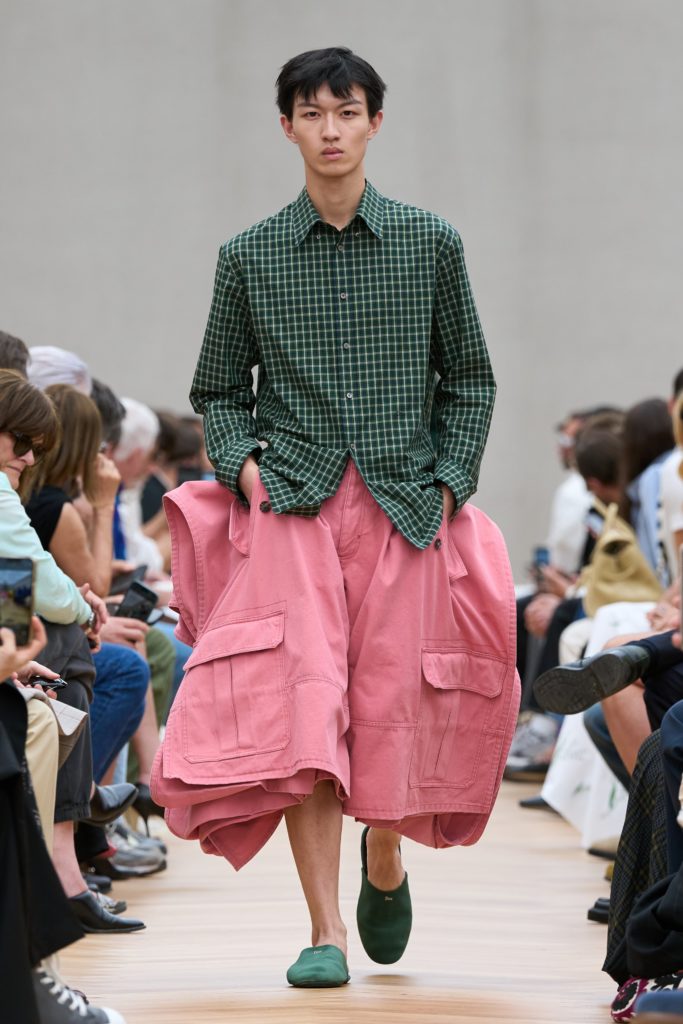
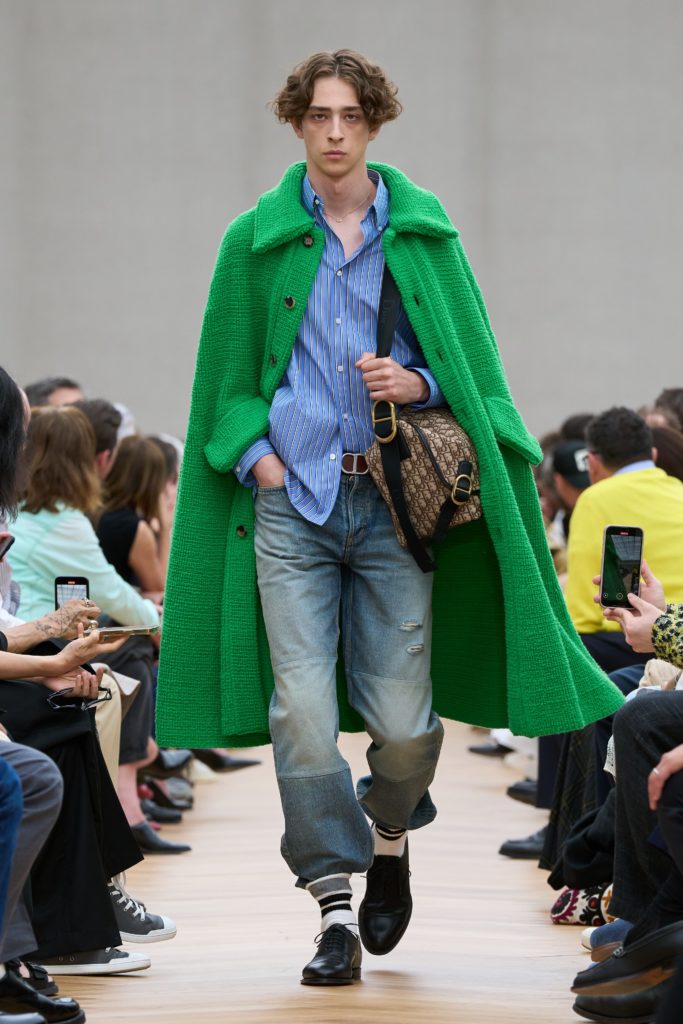
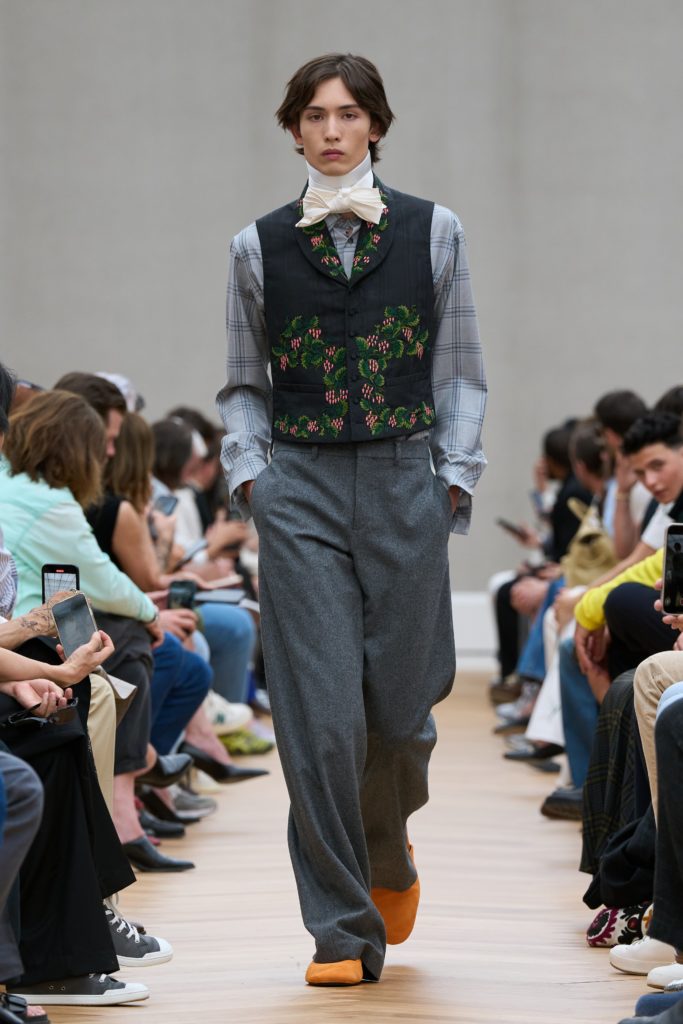
While the other brands on this list are big, none come close in scale to the behemoth that is Dior. Jonathan Anderson’s appointment at the brand is one of the industry’s most hotly watched ones because he is the first designer since Monsieur Dior himself to oversee the Maison’s womenswear, menswear, and haute couture. At Loewe, part of the reason Anderson was so successful was because he could build a whole new universe and character for the House. But Dior is one of those brands that have transcended its founder and his successors to evoke something in the collective consciousness. Think of the brand and a fully formed silhouette comes to mind.
And so Anderson confronted head-on the iconography that looms largest: The 1947 New Look. His opening outfit for the Dior Men show riffed on the iconic silhouette, but also knocked the stuffing out of it and recontextualised it within the realm of menswear: The wasp-waisted Bar jacket was rendered in a weighty Irish tweed; its full, voluptuous skirt transformed into cargo shorts. Throughout the collection, Anderson borrowed the construction of famous Dior dresses such as the Delft, Caprice, and La Cigale, but repurposed them on chinos and cargos—everyday items made special when cut in spirals or given jutting-out forms.
A brand’s heritage can be as much a guiding light as it is an anchor. There is none of that weightiness here, though there are plenty of references to bygone eras—not just of Monsieur Dior’s, but also of those periods in history he loved so much, like the 18th and 19th centuries. In Anderson’s hands, those references were made to feel utterly convincing in a contemporary setting; as easy as jeans and a sweater—of which there are many. Sure, there are ornate frock coats and ceremonial jackets, flowing capes and embroidered waistcoats, but alongside them are polo shirts and cable knits, track jackets and chinos. There are cravats and bow ties, but placed on bare chests. Evening coat-tails got abstracted into fluttering scarves.
Anderson also came up with an idea so simple, it was borderline genius, though no one has thought to do it till now: Putting actual book covers onto Dior Book totes. Suddenly, something we have seen countless iterations of gets a whole new look. If this is Anderson’s opening salvo, we cannot wait to see what comes next.
Related article: At Dior, A More Grown-Up Jonathan Anderson But Boyish Wonder Still Intact