
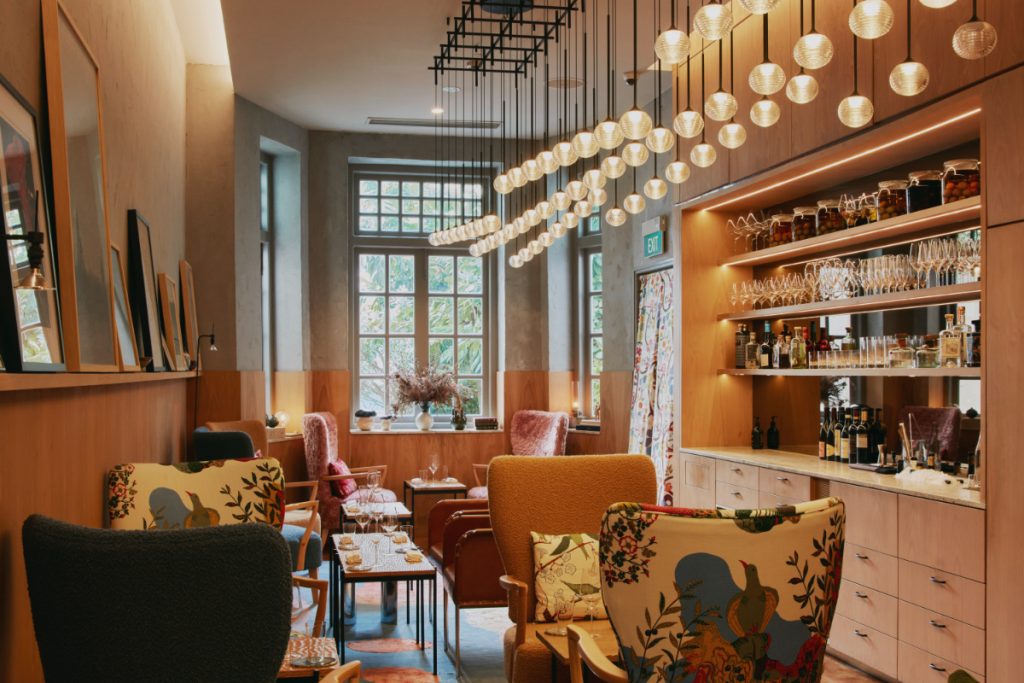
When Zén opened its doors in November 2018 inside a restored three-storey shophouse on Bukit Pasoh Road, it arrived with serious pedigree. The restaurant is the Singapore outpost of Swedish chef Björn Frantzén’s three-Michelin-starred Frantzén in Stockholm—the first international venture from the Frantzén Group, created in partnership with Singapore hospitality group Unlisted Collection.
Related article: International Women’s Day 2026: Female Trailblazers On Role Models & The Power Of Mentorship
From the beginning, expectations were high. Zén earned two Michelin stars within a year of opening, and by 2021 had secured the ultimate accolade—three stars—placing it among the most decorated dining rooms in Singapore.
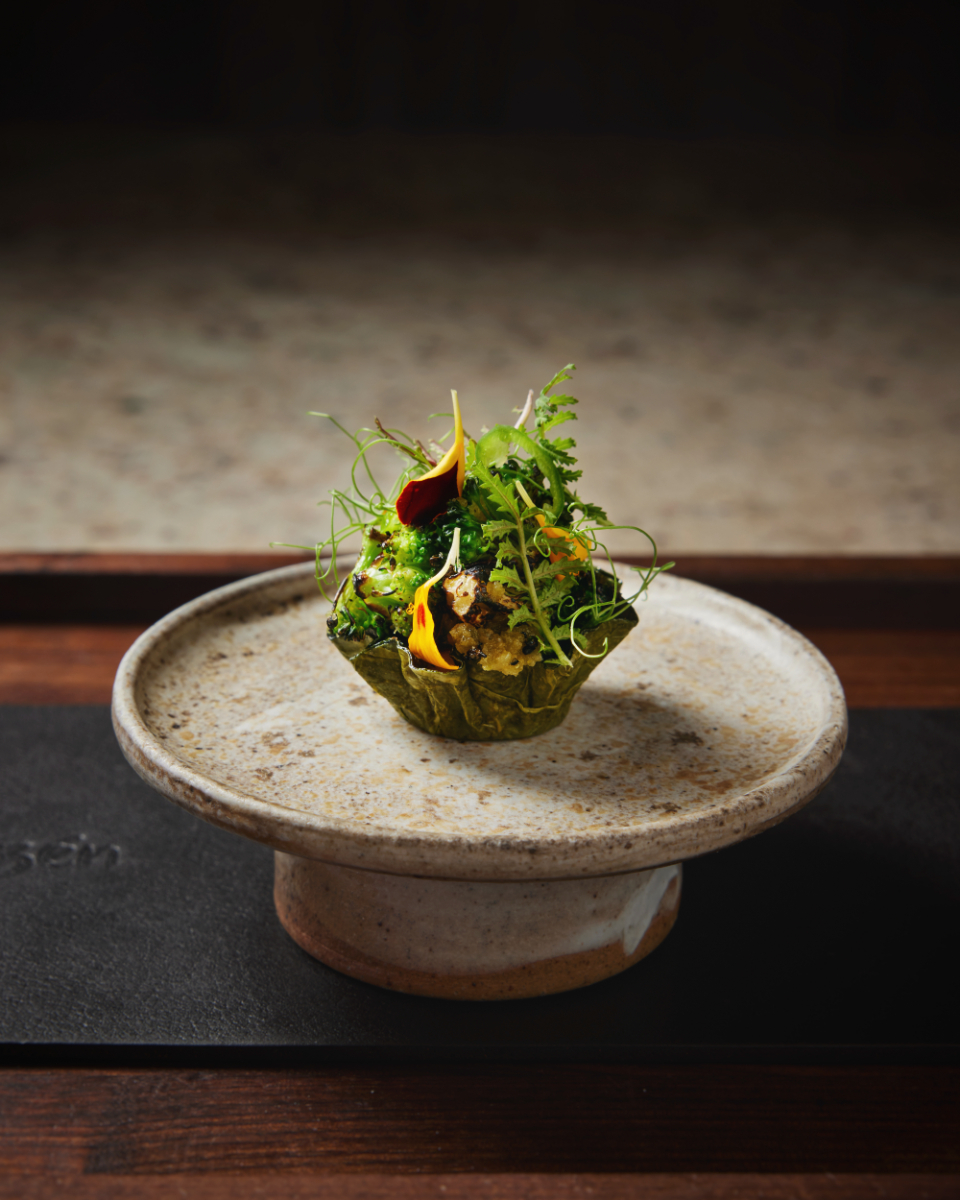
The restaurant’s approach blends Frantzén’s Scandinavian philosophy with classical French technique, layered with Japanese precision and ingredients. Fermentation, balance and intensity underpin much of the kitchen’s work, resulting in a cuisine that feels at once meticulous and quietly inventive. Here, service is choreographed with a relaxed precision that blurs the traditional divide between kitchen and floor—what the team describes as “casual luxury”.
Related article: Date Night Destination: Michelin-Starred Araya Serves Love On A Plate
Related article: Editor's Picks: Women's Charities In Singapore To Support This International Women’s Day
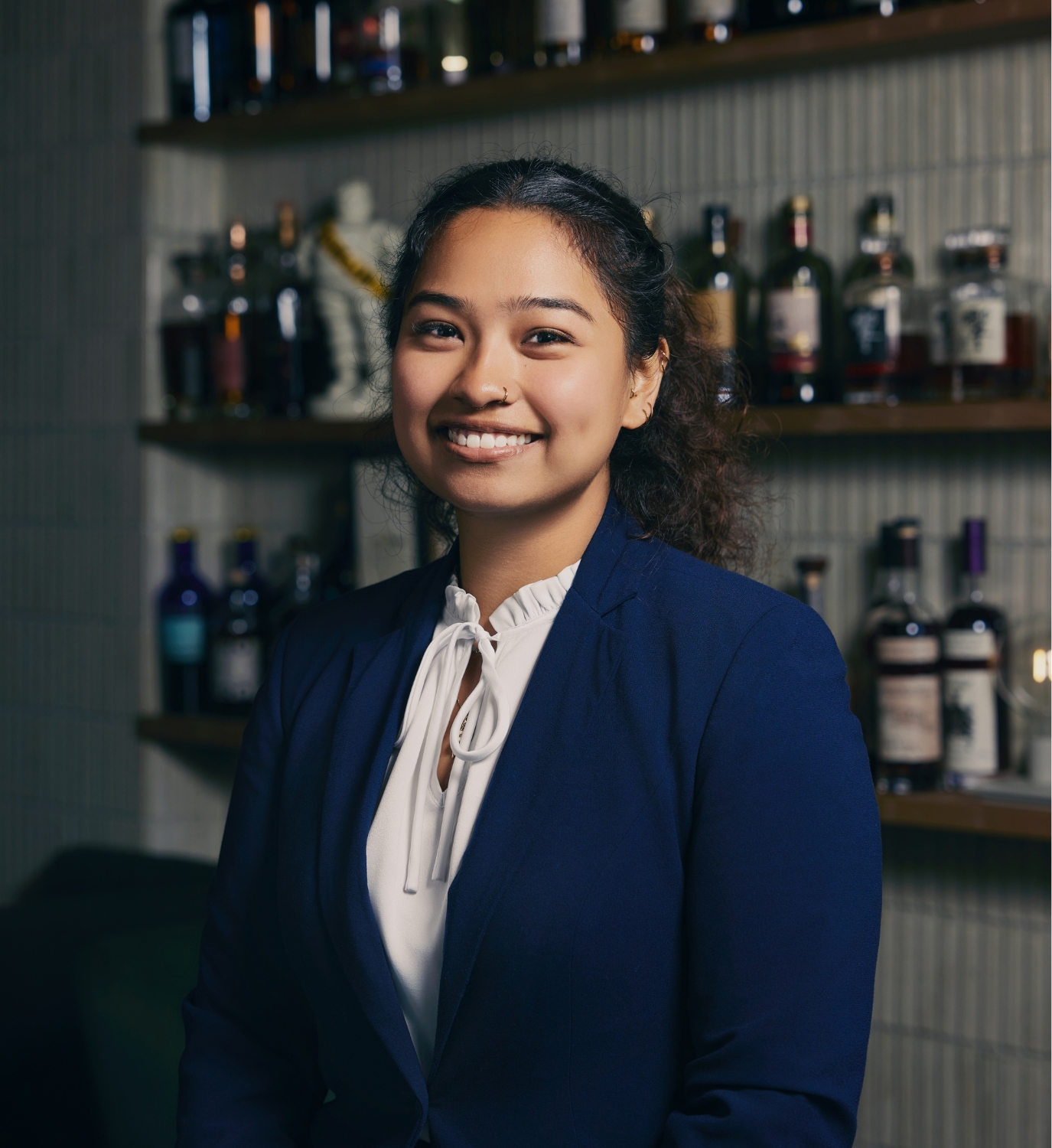
Beyond the plates and pairings, Zén has also become something of a launchpad for a new generation of talent. Today, the restaurant is steered by a notably young leadership team which includes Singaporean Head Chef Kelvin Ng, 31, and General Manager Rachel Ezekiel, 28. The latter, a tourism and hotel management graduate, has recently stepped into a management role after nearly four years rising through the ranks at the restaurant. Her appointment reflects Zén’s commitment to developing local talent, and marks something even rarer: Ezekiel is the only woman managing a three-Michelin-starred restaurant in Singapore, which is both inspiring and unique in the hospitality industry.
In a conversation with ELLE, Ezekiel reflects on the unlikely path that led her here, the mentors who shaped her approach, and the ambitions she still holds for the future.
You didn’t originally come from a fine-dining background. How did you end up at Zén?
Not at all. I was working at Mandala Club for about six months when they hosted a Mirazur pop-up event. I helped out there, and it was my first real glimpse into fine dining. The Mirazur team actually came down to train us on the menu and service, and I remember thinking, this is really interesting.
Aaron Jacobson—who is Zén's Operations Director—came in to dine with then-head chef Tristin Farmer (a former protégé of Gordon Ramsay), and I happened to serve them. He joked that I should come say hello next door because they were from Zén. At the time, I didn’t even know what Zén was. A friend later told me it was a Michelin-starred restaurant.
The following week Aaron saw me again and said, “When I said come say hi, I meant—would you like a job?” [The rest is history]. Later he told me the reason he approached me was my smile, and the way I spoke, and carried myself. I actually think dining out is one of the best ways to discover talent. Someone can arrive with a great résumé, but the way they interact with guests in a room tells you far more.
What was it like entering such a high-level restaurant with almost no fine-dining experience?
Intense—but in a way it helped that I didn’t know anything. I came in with no benchmarks and no preconceived expectations. I was just absorbing everything. At Zén, the expectation is that everyone knows and does everything—from cleaning the toilets to explaining wines, sake or ingredients to guests. I didn’t have formal training, so I spent nights and weekends studying, taking notes, and Googling everything I could.
You moved into management quite young. How did that affect you?
I’ve always been someone who can compartmentalise things quite well, so mentally I’ve generally been quite stable. But becoming a manager definitely made me more emotional. The hardest part is managing people—especially when they started out as your friends. No one teaches you how to manage people’s expectations or emotions. I definitely cried more during my management years, sometimes from stress, sometimes from relief. At the same time, I don’t hold grudges. I might get angry in the moment, but I move on quickly.
Did you have mentors who helped guide you through that transition?
Yes. Yelicia Yeo, who used to be our restaurant manager, is still someone I go to for advice. When I got promoted to manager she was the first person I called. Seeing women lead the restaurant before me was also very important. I learned a lot from them about how to navigate leadership in this industry.
Do you think attitudes around women in leadership are changing?
Definitely. If I look at my grandmother’s generation, women were working but they were also expected to take care of the household and children. Today, the mentality is much more fluid. Some of my [girl]friends earn more than their partners and it’s completely normal. Some couples choose not to have children because they want to focus on their careers. There’s much more freedom to define your own path.
In fine dining, chefs often get the spotlight. Do you ever feel front-of-house is overlooked?
In many restaurants, yes. Guests always ask about the chef and rarely about the service team. But at Zén, it’s very collaborative. The chefs interact with guests and the front-of-house team presents the dishes. I’ve never felt like we’re secondary. A lot of our regular guests come back not just for the food, but because they enjoy interacting with the team.
How do you handle dissatisfied diners in such a high-pressure environment?
One thing I’ve learned is that most people don’t actually want a solution—they just want to be heard. So I listen. I let them explain their experience and try to understand where they’re coming from. Once people feel acknowledged, the situation usually diffuses naturally.
Zén now has a young, largely Singaporean leadership team. What does that mean to you?
It’s something to be very proud of. It shows that Singaporeans are more than capable of running restaurants at this level. But at the same time, I don’t think about it too much. My focus is simply on doing my job well and making guests happy. If you had told me four years ago that I would end up here, I probably wouldn’t have believed you.
Where do you see yourself in the next three years?
I would love to visit Frantzén in Stockholm and experience the restaurant there. It’s something I’ve wanted since I first joined Zén. Working in another environment teaches you so much—about different guests, different cultures, and different ways of doing things.
*This interview has been edited and condensed for clarity.
Zén is open for lunch and dinner, Tuesday to Saturday at 41 Bukit Pasoh Road, Tel: 6534 8880. Book a table here.