
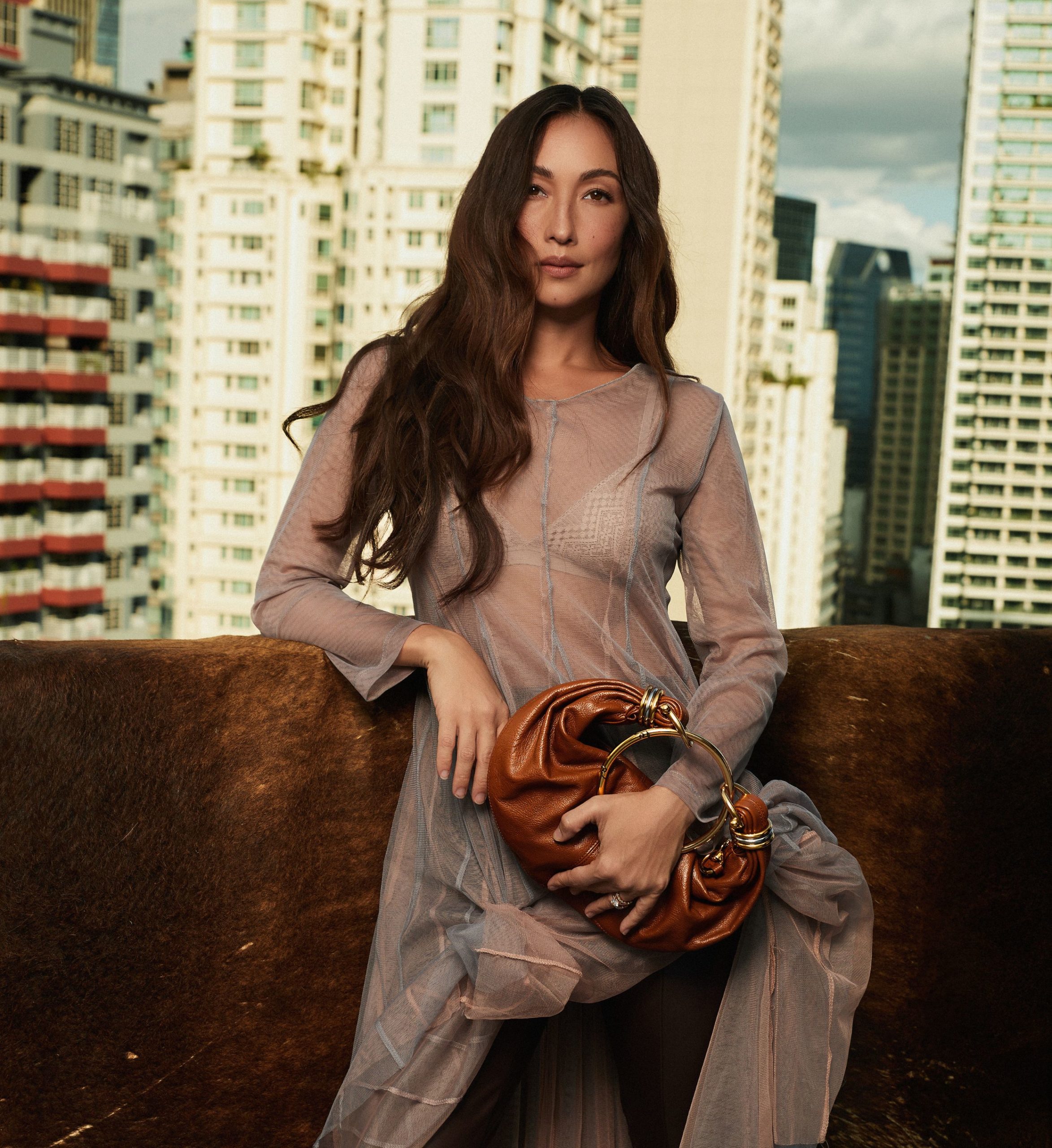
An actress, model, host, surrealist artist and mother to two beautiful children, Solenn Heussaff-Bolzico does it all. She is everything you imagine her to be, and it makes us wonder: How does she manage it all? While Solenn is one of the most popular personalities in the Philippines, acting was never really in the cards for the multi-faceted artist. Solenn first stepped into the creative world through fashion design, immersing herself in the craft while studying at Studio Berçot in Paris. Working backstage during Fashion Week further cultivated her interest in make-up artistry. One thing led to another, and Solenn found herself doing Ruffa Gutierrez's make-up. The scion of Eddie Gutierrez, A-list Filipino actor and head of the Gutierrez dynasty, mentioned in passing to Solenn that she should join the nation's top-rated reality television show, Survivor Philippines: Celebrity Showdown. The show catapulted her to stardom, and she's showing no signs of slowing down.
Joining the showbiz industry came with its own set of challenges, with language being chief amongst them. The French-Filipino actress, who grew up speaking English and French while living and studying in Paris, now had to memorise scripts in Tagalog. Not one to give up, Solenn rose to the occasion and eventually became fluent in her native tongue. Fortunately, her background in fashion and make-up artistry gave her an advantage. She often styled and glammed herself up for events and shoots.
Related article: Exclusive: Olympic Snowboarding Champion Scotty James On Mentorship, Motivation & His Path To Gold
Related article: Exclusive: Author Wen-yi Lee On Reimagining Singapore’s Darker Side With Her New Novel When They Burned The Butterfly
15 years later, Solenn has become a household name, building an impressive repertoire spanning films and television series. One of her most notable television credits include starring in the E! Asia reality television show IT Girls (2016). Reflecting on the roles she has portrayed, the actress is most proud of her portrayal of Maria in Misterio de la Noche (2019)—a malevolent creature in Filipino folklore. As for her dream role? Solenn references Gone Girl without skipping a beat. "Dark, complex, and challenging. Something that pushes me out of my comfort zone."
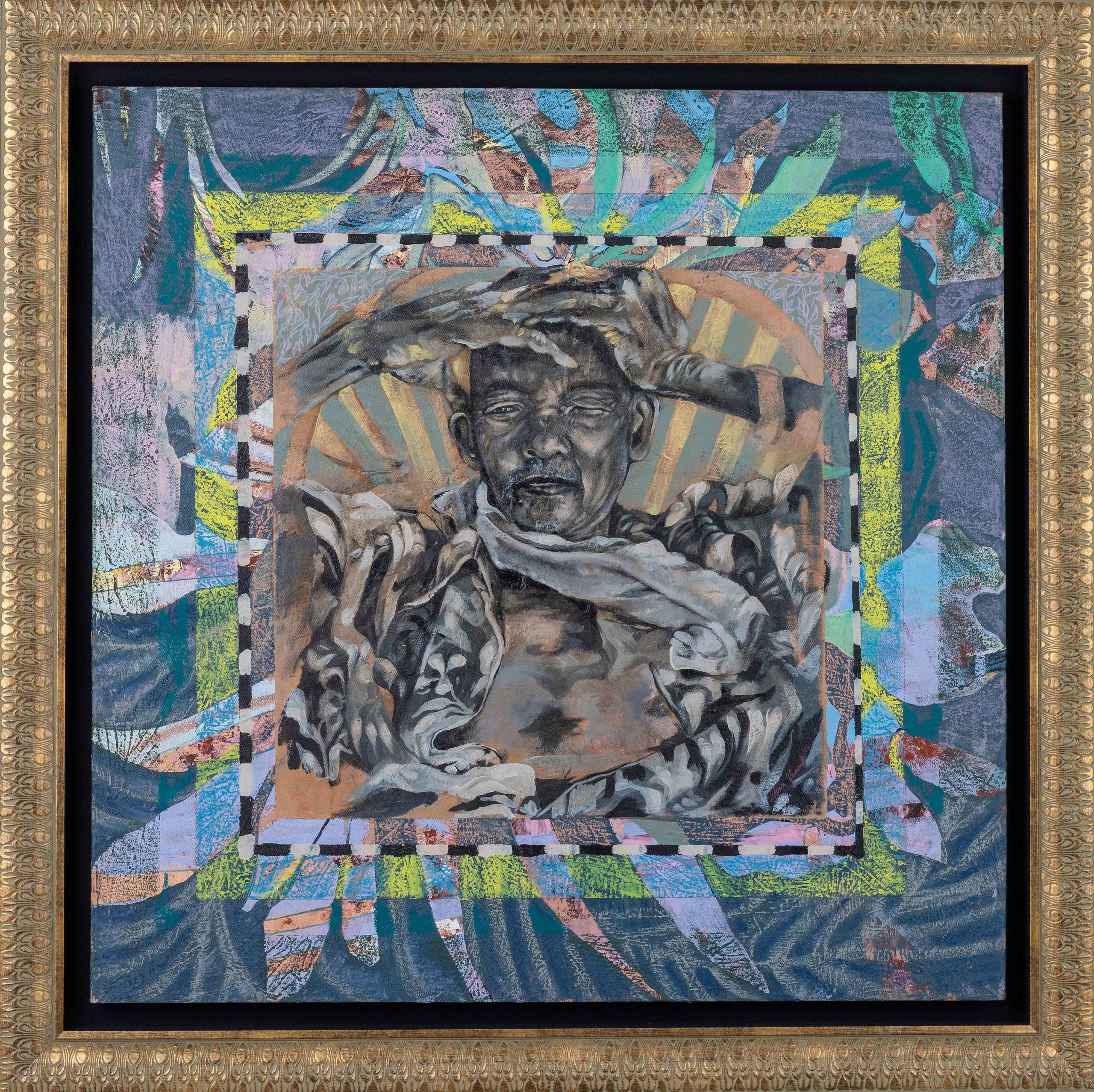
Beyond entertainment, Solenn has also carved out an admirable career in the arts. In 2016, she held her first solo art exhibition titled Our People, featuring works inspired by her French-Filipino heritage. Solenn's portfolio has since expanded to include surrealist floral art—exploring themes of growth, change, and hope—as seen at her most recent exhibition, VITA, with Olivia d'Aboville. Her most recent paintings are perhaps her most poignant yet, reflecting the whirlwind of emotions she experienced while supporting her father during his struggle with dementia.
Related article: CEO Zhang Ting Ting Reveals The Inspiration Behind The Relaunched DORS at Design Orchard
Having starred on the Filipino reality show It Girls, what is your definition of an “it” girl? Who would you say best embodies the idea of an “it” girl now?
I think an “it” girl is someone who naturally draws attention. She is confident without being boastful or arrogant, and she stays grounded. Back when people called us “it” girls, I didn’t really understand what it meant or how it happened. Looking back now, I think it was because we were a big group of girls who were always together, each of us quietly working hard to build our own paths.
When I think of an “it” girl here in the Philippines, Hannah Pangilinan quickly comes to mind. She is authentic, kind, and on a health and fitness journey that I find inspiring. Internationally, I would say Olivia Dean. I love her essence and how effortlessly cool she comes across.
You're an actor, model, host and painter. Which is more creatively challenging?
Among all the creative work I do, I think what challenges me the most is painting. I’ve always painted, but art and beauty are subjective. You want to create and share a story with the world, yet at the same time, there’s the fear of rejection. What if people don’t like it? What if they don’t accept it? Coming from acting, there was also the worry that people would think, “Oh, she’s just painting now because she’s already established in acting and wants another milestone.”
The challenge of painting is also about evolution. Each exhibit needs to feel fresh, but you have to stay true to your core. It’s easy to fall into repetition and that leads to stagnation. This is why I usually have a solo exhibit once every two to three years. With acting, you have a script to guide you—you memorise it and perform. But painting is deeply personal, and if you’re not inspired, nothing will make you pick up the brush.
How do you balance between the different roles on top of being a mother?
I'm able to maintain balance now because of how hard I worked in earlier days, when I was single. I didn't say no to anything, and months would go by where I hardly slept—and I saved every penny I could. Thanks to that, I'm now able to choose projects that speak to me. About 60-percent of my time is spent at home with my children. I drop them off at school, pick them up and am very present. I get to paint in the mornings, and focus on the things that bring me joy.
What is your creative process like?
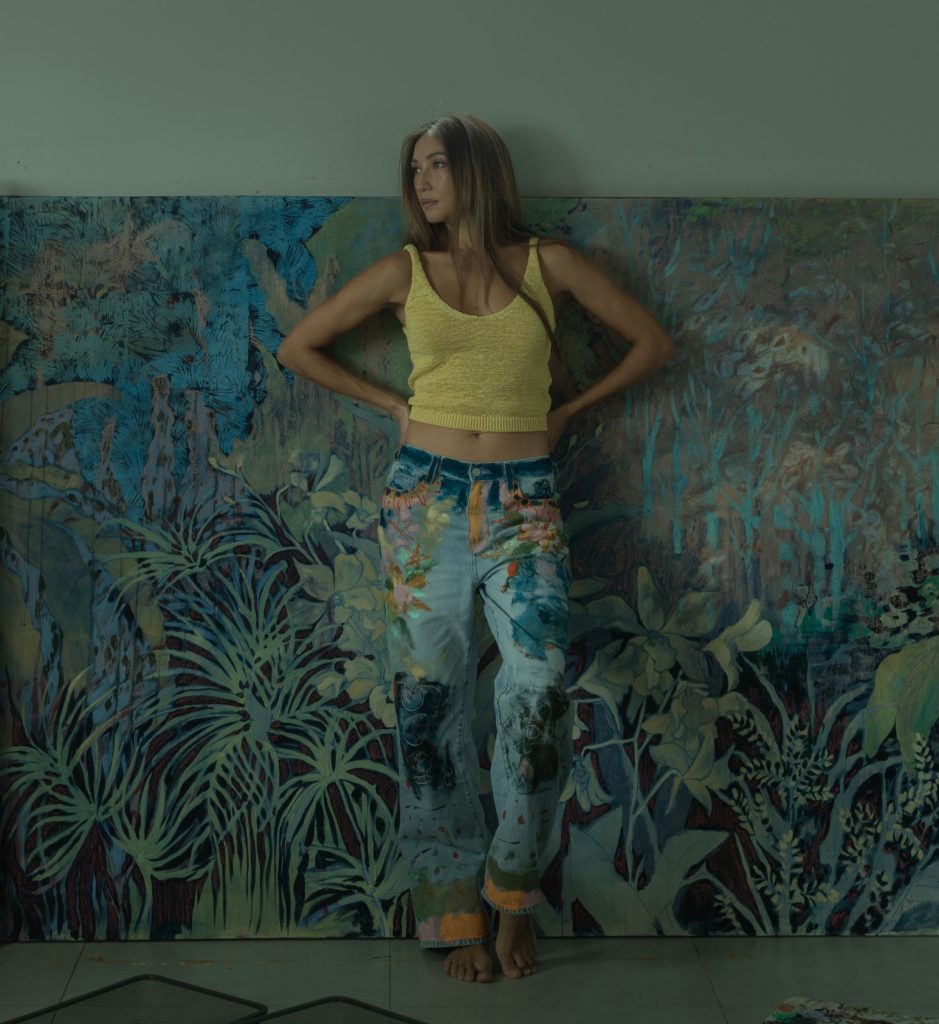
It really depends on my mood and the experiences I’ve had during the week or the people I’ve encountered. Some days I don’t want to touch a brush at all, and other days I feel a strong need to be alone and paint what’s in my head before it fades away. Exposure is key to inspiration. I research online, spend time in nature taking photos of plants like a “crazy person,” and talk to different people or visit exhibits and galleries. All of that feeds into the process. Usually, I start by choosing a colour palette. I don’t pre-sketch; it just happens almost like magic. I have the colours and the object in mind, and then the piece comes to life naturally.
Tell us about your recent exhibition VĪTA, and what was it like collaborating with Olivia d’Aboville.
Collaborating with Olivia was a dream of mine. Olivia and I have been best friends literally since we were born. She works with organic fabrics and weaving, which I think is such a beautiful form of storytelling. This exhibit was especially meaningful because it was my first in three and a half years, and it coincided with the early stages of my father’s dementia. I was going through a lot, and it was so healing to work on something beautiful with someone I trust completely; who knows me inside and out. I think that trust and familiarity really came through in the pieces we created together.
How have your experiences in acting influenced your approach to painting and vice versa?
All the layering in painting has really taught me patience. It’s about being able to step back, observe what you’re doing, trust the process, and see how each layer contributes to the whole. That lesson resonates with me deeply when it comes to acting, because acting is also full of layers.
With acting, I often read and memorise a scene without over-rehearsing. I bring whatever I’m feeling that day into the performance—whether it’s traffic, bad news, or a joyful moment. That spontaneity, that ability to channel life into art, is something I’ve carried over from painting, and I think it really works.
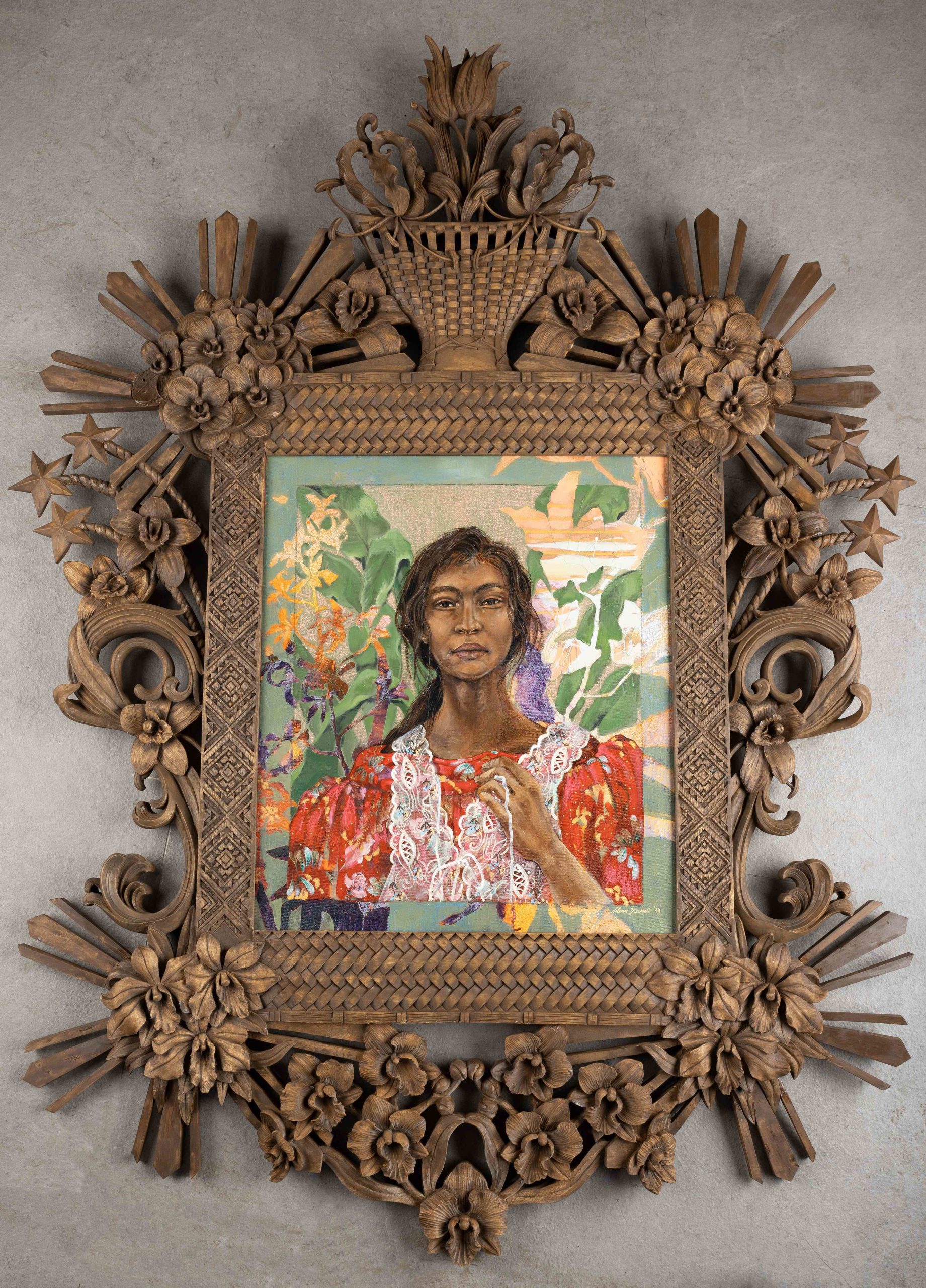
Your previous exhibition, KUNDIMAN, was an expression of love and appreciation for the Filipino people. How has your Filipino and French background influenced your other artworks?
Filipino art is nostalgic, rooted in family, memory, and warmth. French art, on the other hand, feels more conceptual. Even the colours tell a story: Filipino art, like Juan Luna and others, often uses sun-drenched tones that feel vibrant and narrative, while French art tends to be more muted.
A lot of my artwork combines both influences. My process usually starts with painting in bright, Filipino-inspired colours—like a sunset with layered tones. At the end, I go over the painting with a brown tint, which mutes and blends the colours. I love that fusion of bright and dark. The result can feel slightly vintage, but also very modern at the same time.
What can we look forward to you from you next?
I’d love to do a few more films in 2026. For my paintings, I have a group show in December where I’ll contribute one artwork, and another one in January. The next big project will be in June, which will feature six large pieces. This upcoming exhibit will draw heavily from my Filipino roots and can be seen as a mix of my Kundiman and Vita exhibits. I’ll also be collaborating with more Filipino artists and designing the frames for my work. I just started on the first painting for June, and I’m waiting for the final look before moving on to the rest. That’s usually how I work—the first piece sets the story in motion, and the rest of the collection unfolds from there.
*This interview has been edited and condensed for clarity.