
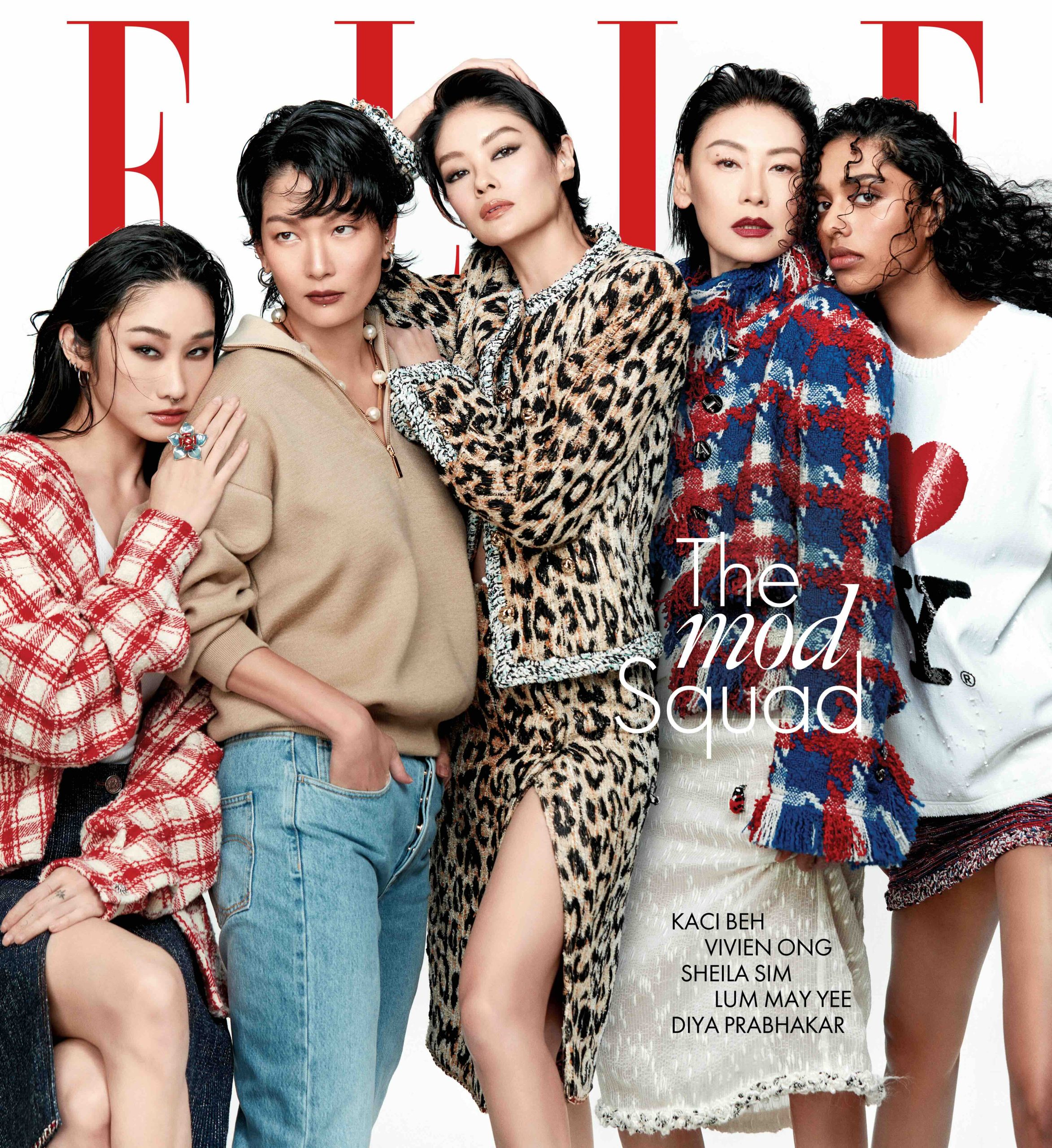
What happens when you gather five Singapore models from entirely different eras into one studio for a full-day shoot? Apparently, a lot of screaming, laughter, oversharing, and enough backstage stories to fill a second issue.
At one point, Lum May Yee reminisces about being shoved into a suspicious van and being driven to a dodgy industrial building in China for an 18-hour-long shoot. She was handed a thick envelope of hard cash after. Across the room, Vivien Ong recalls an off-beat shoot in a love hotel where she’s wearing bondage attire and clinging for dear life to a pole over a heart-shaped bed. You can already imagine the gaggles of giggles that ensue.
There’s a reason why we brought together five extraordinary women from different eras of Singapore fashion for our June issue. Gen X pioneer May Yee, with her then-signature pixie cut and androgynous beauty, helped define an era. Vivien, free-spirited and proudly vocal, provided a “how to” on surviving—and succeeding—in the Big Apple. Kaci Beh, armed with an iPhone, represents a new generation of models balancing runway life with social media presence while Sheila Sim emerged in an era when models successfully crossed over into entrepreneurship and mainstream celebrity.
Then, there’s Diya Prabhakar, who arrived at a time when fashion was finally beginning to confront its longstanding diversity problem. Together, these industry heavyweights chart a fascinating evolution of Singapore fashion in the past 30 years—dressed in Chanel’s Métiers d’art collection, no less.
To sit and listen to these women share their stories is to learn that a trajectory in fashion never runs in a straight line; there are bound to be bumps along the road. But, as the saying goes, what doesn’t kill you makes you a superwoman.
As the conversation shifts from castings and shoots to loneliness, ageing, and the quiet exhaustion of constantly being watched, May Yee reflects matter-of-factly, “Modelling was one chapter of our lives. Now everybody has moved on to different things. That’s just life.”
Ultimately, what connects these women most strongly is not the clothes, campaigns, or magazine covers, but their ability to consciously evolve. Together, they mirror the shifting landscapes in fashion that women have had to navigate over the past three decades—from rigid beauty ideals and body image struggles to visibility and social media burnout in the digital age. Read on as they reflect on the highs, the hard truths, and the lives they built beyond the runway.
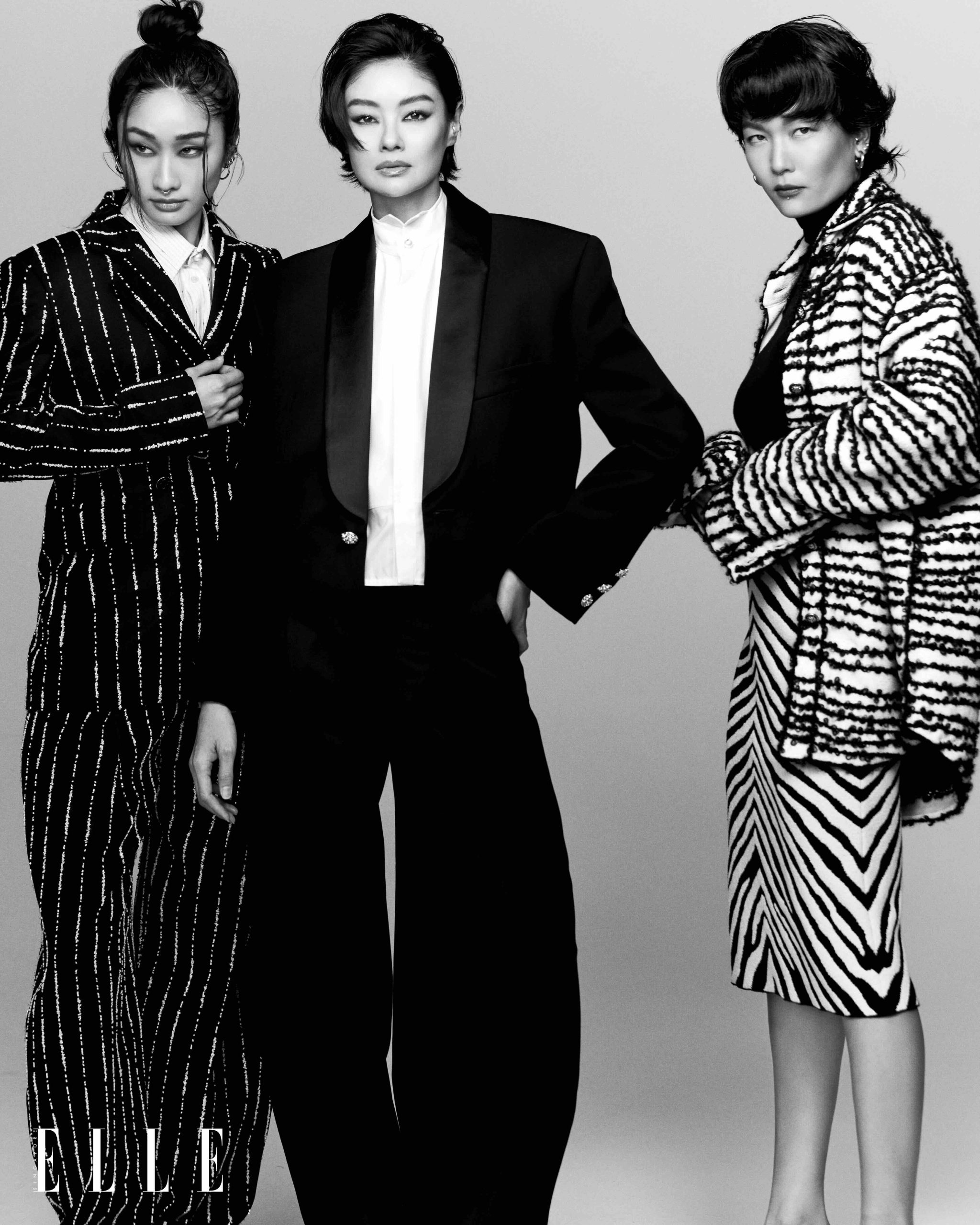
At 28, Kaci Beh is arguably one of Singapore’s busiest international models, building a career across Milan, Paris, and London long after many fashion careers would have plateaued. Yet, when she walks into the studio perfectly on time, she is completely unpretentious—dressed in an oversized plaid shirt and baggy trousers that amusingly mirror the exact aesthetic we had pulled for her cover look. With her tattoos, multiple piercings, and sharp runway features, one might expect Kaci to project a tough edge. Instead, there is something unexpectedly calm about her.
She speaks softly, listens carefully, and carries herself with the composure of someone who has spent nearly a decade learning how to survive one of the world’s most unpredictable industries. Her journey into fashion was anything but straightforward. “When I first started out as a model in 2018, I was a fresh dropout from Temasek Poly,” Kaci recalls. Camera-shy and deeply introverted as a teenager, she rejected open casting invitations twice before finally finding the courage to attend one with a supportive friend.
Recognising her potential early on, Basic Models co-founder Bonita Ma placed her through an intensive three-week runway training programme before sending her almost immediately to Milan Men’s Fashion Week. It was a rare privilege as most menswear shows only cast two or three female models.
She quickly became a part of a new wave of Singaporean models—including contemporaries like Layla Ong and Diya Prabhakar—who slowly carved out space on international runways traditionally dominated by European and East Asian faces. “A lot of people still don’t really know where Singapore is,” she says with a laugh. “I want people to know Singaporeans can model internationally, too.”
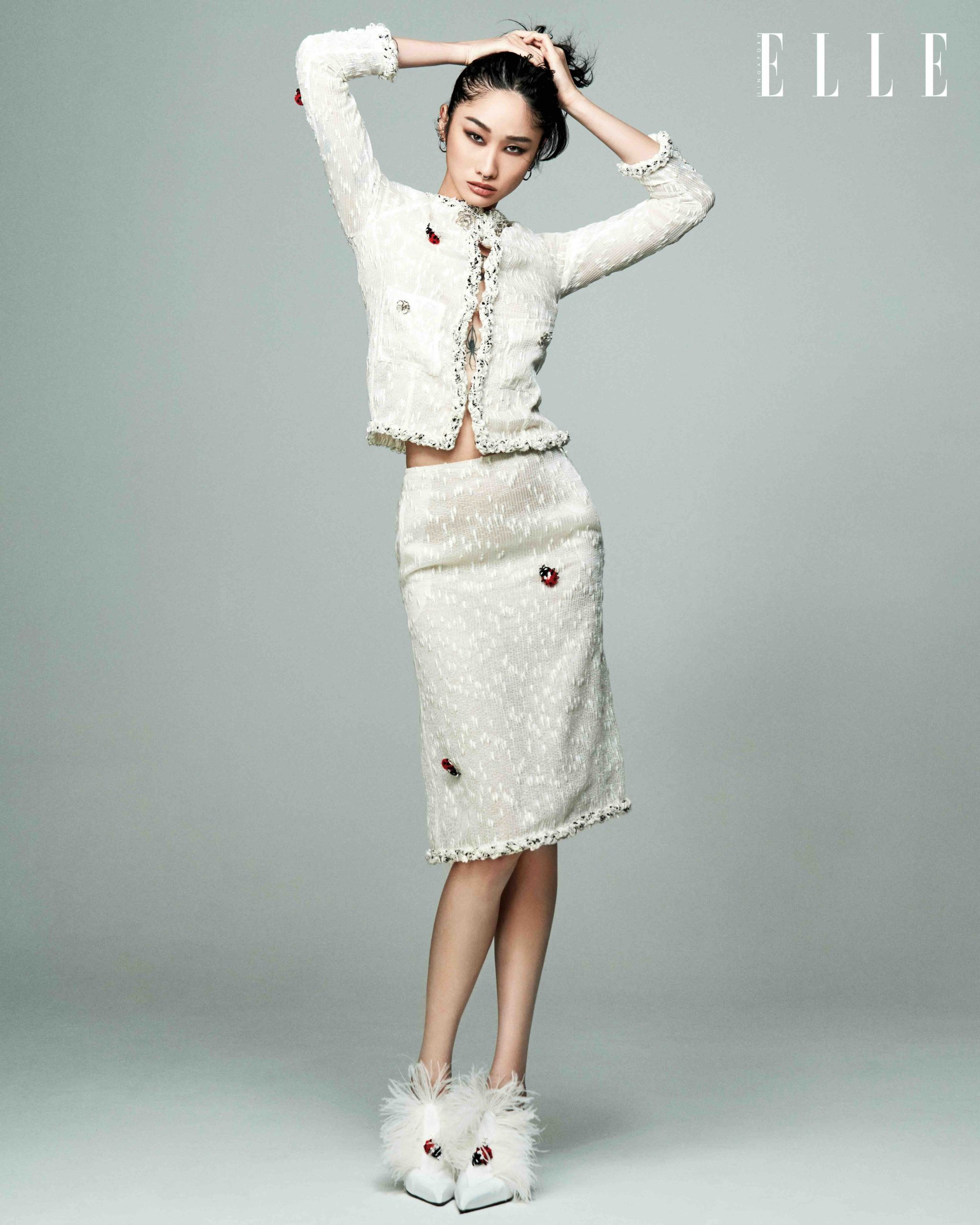
Over the years, Kaci has walked for brands including Dolce&Gabbana, Emporio Armani, Philipp Plein, Brunello Cucinelli, and Stella Jean. Last February, she achieved what she considers the pinnacle of her career: Closing the Emporio Armani fall/winter 2025 show in Milan. “Before Mr Armani passed away, he made me close the show and showcase all my tattoos. I was very honoured.”
The moment felt especially meaningful because tattoos were once considered career-ending within traditional luxury fashion circles. Kaci spent years suppressing her urge to radically alter her appearance in order to remain commercially viable. “I always wanted tattoos, different hair, different looks,” she says. “But people would tell me, ‘You can do it after your modelling career ends.’” Ironically, those tattoos would eventually become a part of her signature.
What makes Kaci especially remarkable within the fashion industry is her longevity. Modelling careers, particularly in Asia, are often treated as fleeting, with many women quietly ageing out by their mid-20s. Yet Kaci has managed to remain consistently booked across international markets while evolving alongside the industry itself. Part of that staying power comes from her adaptability. Part of it comes from her refusal to force a persona that isn’t true to who she is.
Beyond the runway, Kaci has built a parallel creative life. In 2024, she graduated from the Nanyang Academy of Fine Arts with a diploma in advertising and design, having temporarily paused international modelling to return to school. She also spent two years working as a tattoo artist, a craft she hopes to return to now that she is spending more time in Singapore.
For the past four years, she has also been an instructor at Basic Academy, mentoring aspiring young models in fashion posing, catalogue work, and runway presentation. “I know how intimidating this industry can feel when you first enter it,” she says. “I want them to feel comfortable.” Despite her growing visibility—which includes a viral TikTok moment helping her boyfriend’s family sort vegetables at their wet market business—Kaci remains surprisingly detached from social media culture. She treats Instagram less as personal branding and more like a visual diary. “I don’t really care about followers or likes,” she shrugs.
That sense of emotional detachment perhaps explains why Kaci appears unusually zen for someone operating inside one of the most chaotic industries in the world. While many models describe paralysing runway anxiety, Kaci’s mind drifts elsewhere entirely once she steps onto the catwalk. “When I’m on the runway, I’m honestly just thinking about what I’m going to eat after—usually hotpot!” she says.
Makeup Artist CLARENCE LEE using Chanel Beauty
Hairstylist RICK YANG
Photographer’s Assistant EDDIE TEO
Stylist’s Assistant NAZIRA LUBIS