
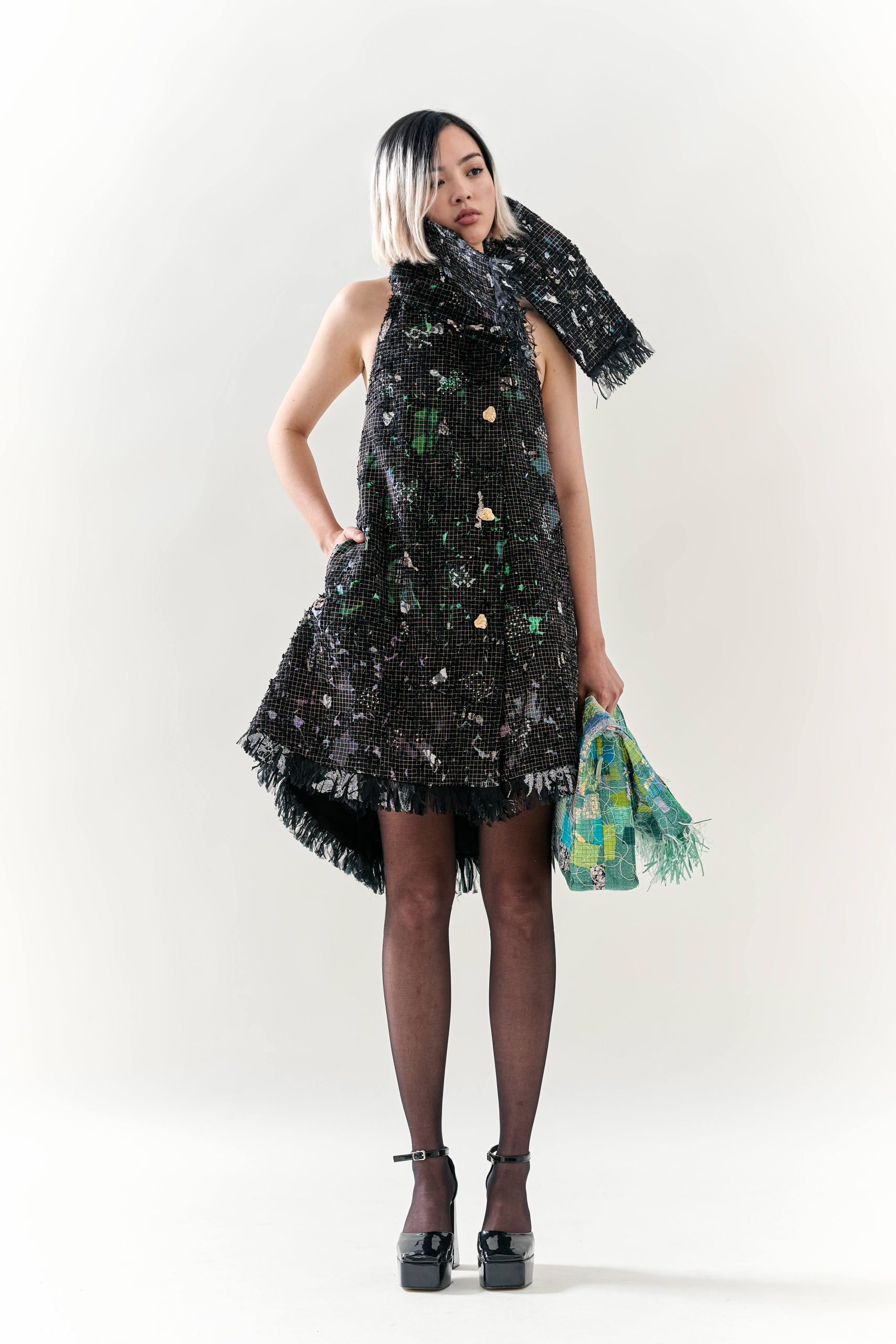
“Many customers are first drawn to KHAAR simply because the pieces are beautiful and distinctive. They often don’t realise at first that what they are seeing is made from recycled fabric scraps,” says Kha Hoang Ngo, designer of the Vietnamese label. “When they discover the story behind the material, they’re surprised and genuinely excited. That moment of discovery is important to me. It shows that sustainability is not something you compromise for—it is something you fall in love with first through design before understanding its deeper value.”
Ngo’s commitment to sustainability was shaped early in his career. “I’ve worked in the fashion industry for over 10 years, and I was surrounded by massive amounts of textile waste every single day, something I could no longer ignore.” In 2020, he designed his first sustainable collection for a fashion competition using fabric scraps, before founding KHAAR in 2022. “The name combines ‘Kha’ with AR—which stands for ‘And Recycling’ and ‘Augmented Reality’, reflecting our belief in merging sustainability, technology and forward-looking creativity,” he explains.
Related article: LE NGOK Tells Stories Rooted In Emotion And Experimentation
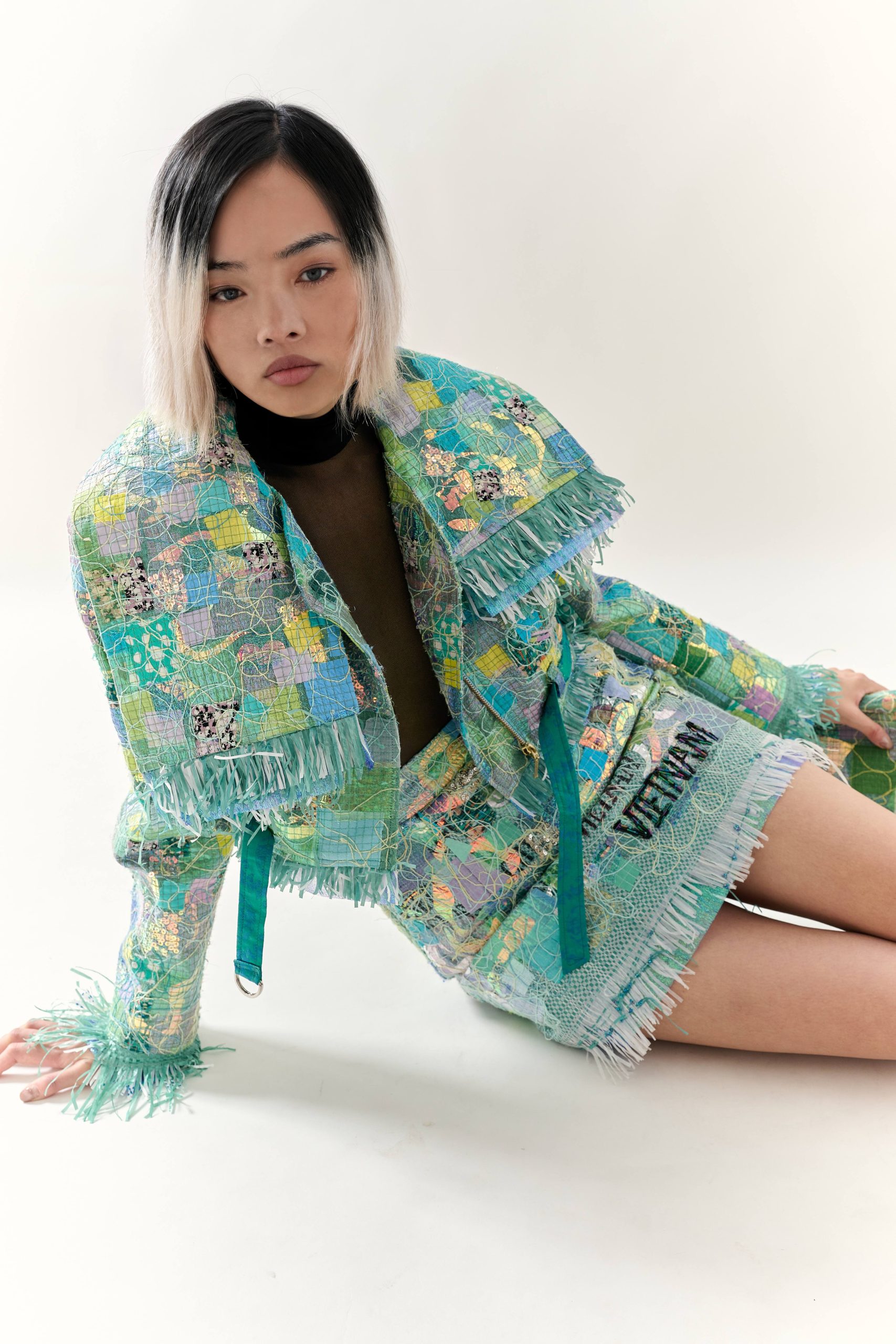
Vietnamese culture lies at the heart of Ngo’s work, coming fully into focus in the collection RICE/Rise: From Fields to Pixels. Motifs throughout the collection draw from rural Vietnamese life, from buffalo imagery to misty rice fields. “It’s a dialogue between past and future, between the roots of Vietnam’s wet rice-farming and agriculture civilisation, and a fast-moving digital generation.” This fusion defines his idea of Neo-Folklore, where tradition and technology merge into a new artistic language. Ngo’s design process often begins with colour. “Colour helps me organise the chaos in my mind. It feels like a rhythm or a tone that guides my emotions,” he shares. This approach led to KHAAR’s signature language of digital pixelation. “When I break fabric scraps down into their smallest units—threads, dots, fragments—they resemble pixels in a digital image.”
Related article: Steve O Smith Brings Evocative Sketches To Life As Dreamy Garments
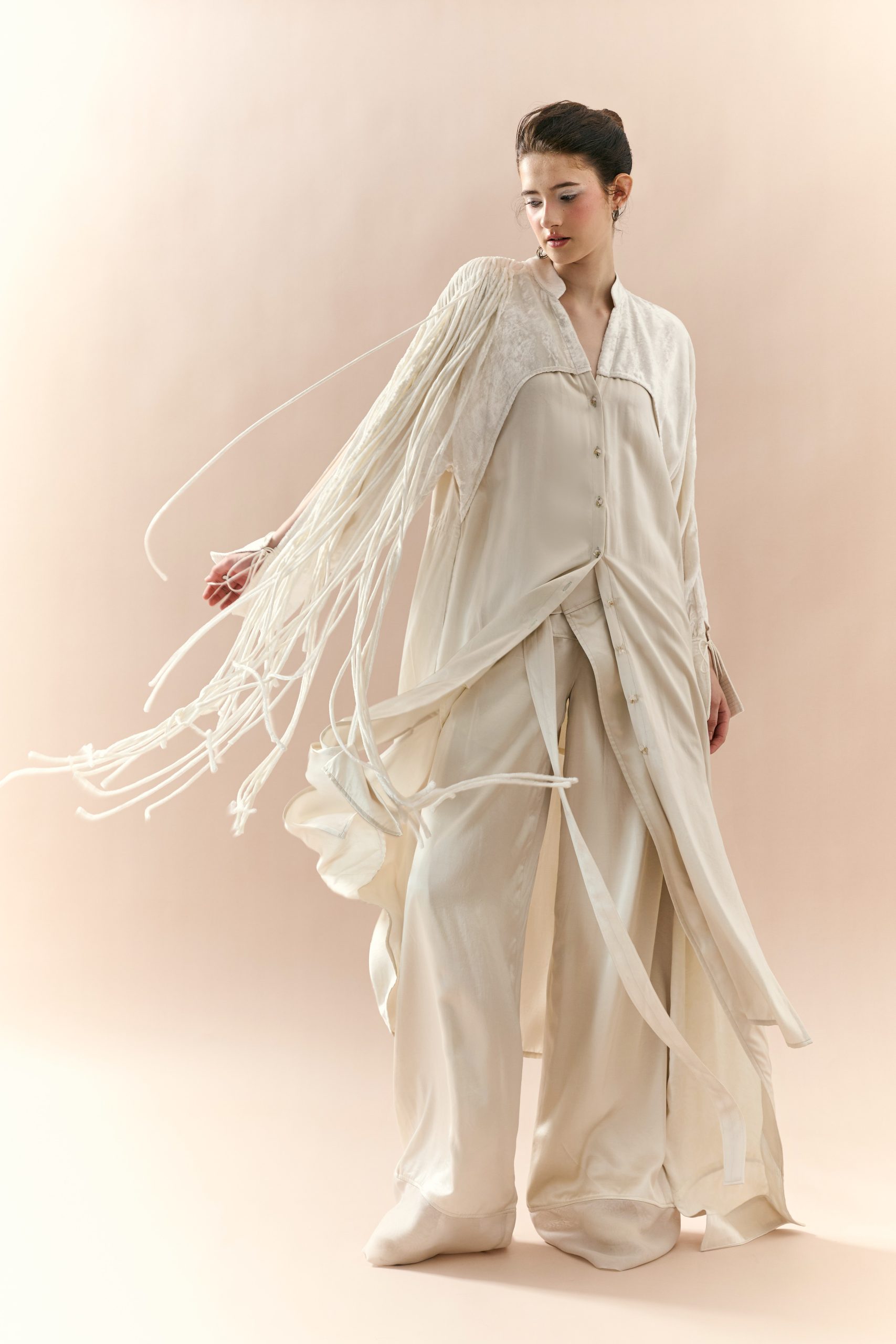
About half of KHAAR’s pieces feature fully handcrafted and recycled fabrics, while the rest are accented with recycled details for wearability. Materials are locally sourced and developed, ranging from rice sacks and instant noodle packaging to natural and biodegradable fabrics such as linen, hemp, silk, organic cotton, cupro, lyocell and EcoVero rayon. “These materials not only align with our sustainability values but also offer a luxurious feel and exceptional comfort,” he explains. One look from the collection uses bamboo lãnh—the world’s first eco-friendly bamboo silk, developed by W.ELL Fabrics in Vietnam. The silhouette is inspired by the traditional áo tứ thân, but paired with wide-leg trousers and layered panels. “The soft white tone shifts into a misty blue-grey, like fog drifting over rice fields at dawn,” Ngo elaborates. “Asymmetrical fringe cascading from one shoulder symbolises bundles of rice carried on the shoulder—an ode to labour, memory, care and perseverance.”
Technology remains central to the brand’s ethos. “Most KHAAR designs are developed using 3D virtual pattern-making and prototyping. This allows me to optimise time and resources, and significantly reduce fabric waste during the production process,” he explains.
Related article: ALAINPAUL Translates The Feeling Of Motion Into Fabric
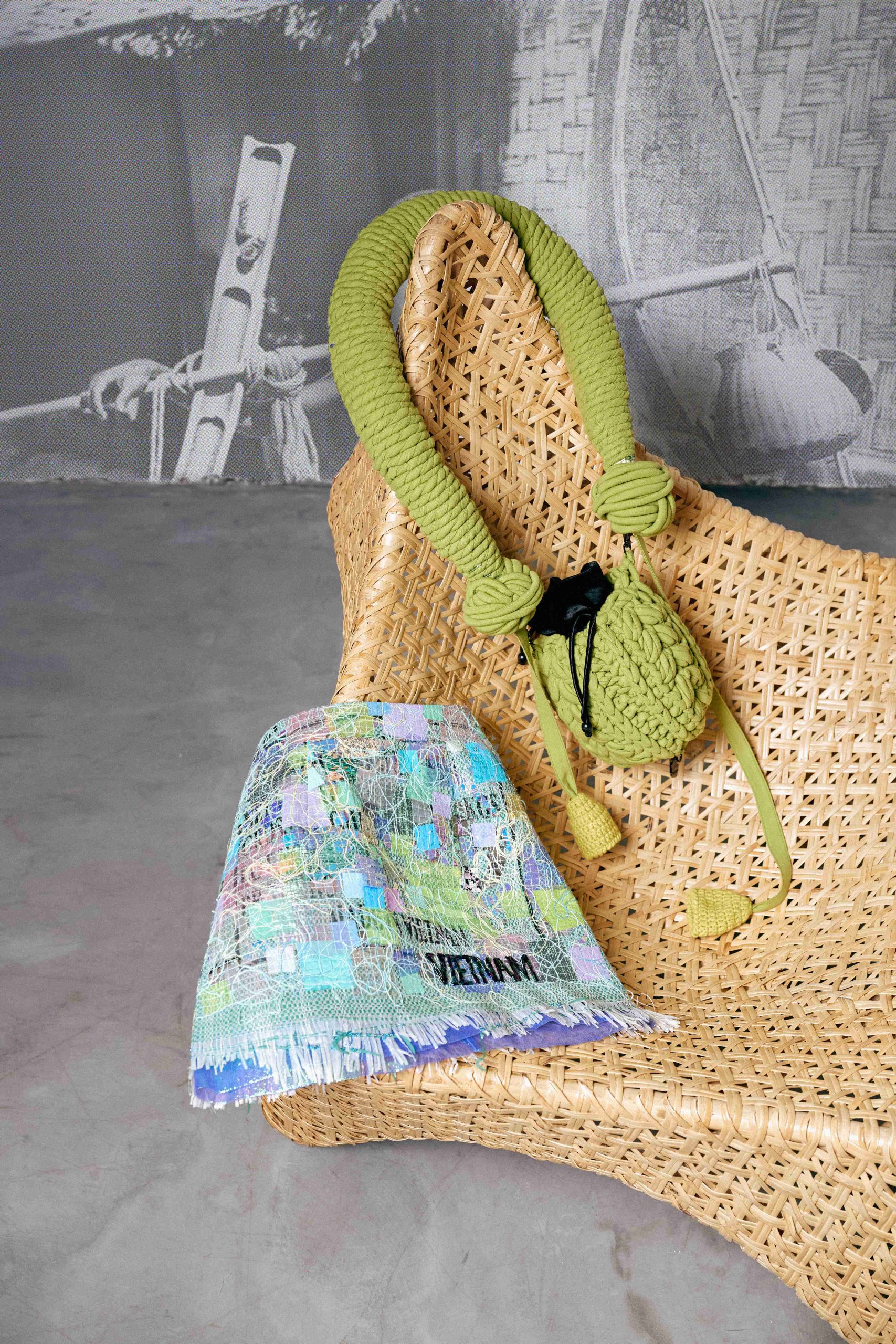
Running a sustainable brand comes with challenges. “Making sustainability commercially viable is the hardest part,” Ngo admits. “Understanding whether consumers are ready to pay a higher price for responsible, thoughtful design is an ongoing process.” Yet Ngo forges ahead with the hopes of building a digital zero-waste collective and showroom that will be a platform for knowledge-sharing, collaboration and innovation. “When people stop seeing waste as something rough, raw and overlooked, and as something precious and refined, that’s when we feel we’ve truly done our job.”
Check out these other labels
Benmoyal
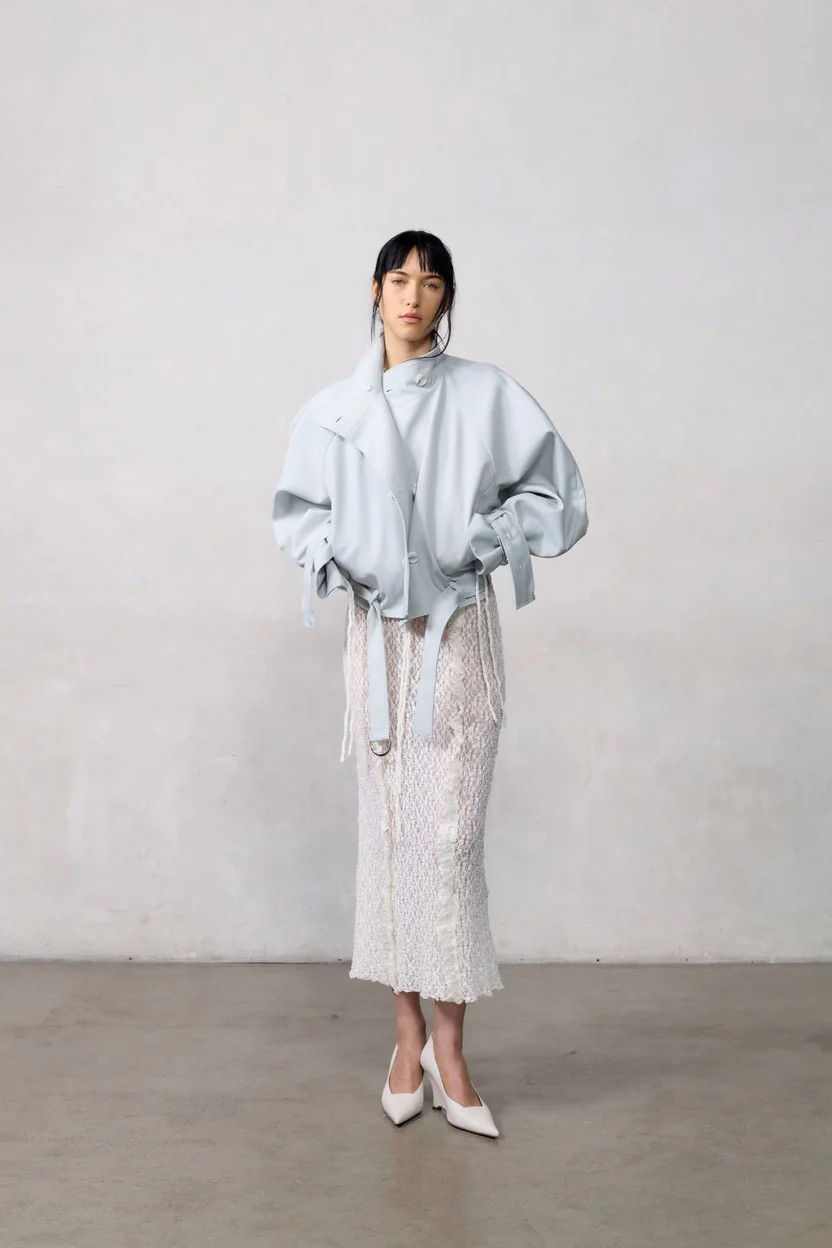
After honing his craft at Alexander McQueen and Hermès, Benjamin Benmoyal founded his eponymous label in 2020, prioritising the use of sustainable fabrics, and craftmanship inspired by his Moroccan roots.
Môi Điên Studio
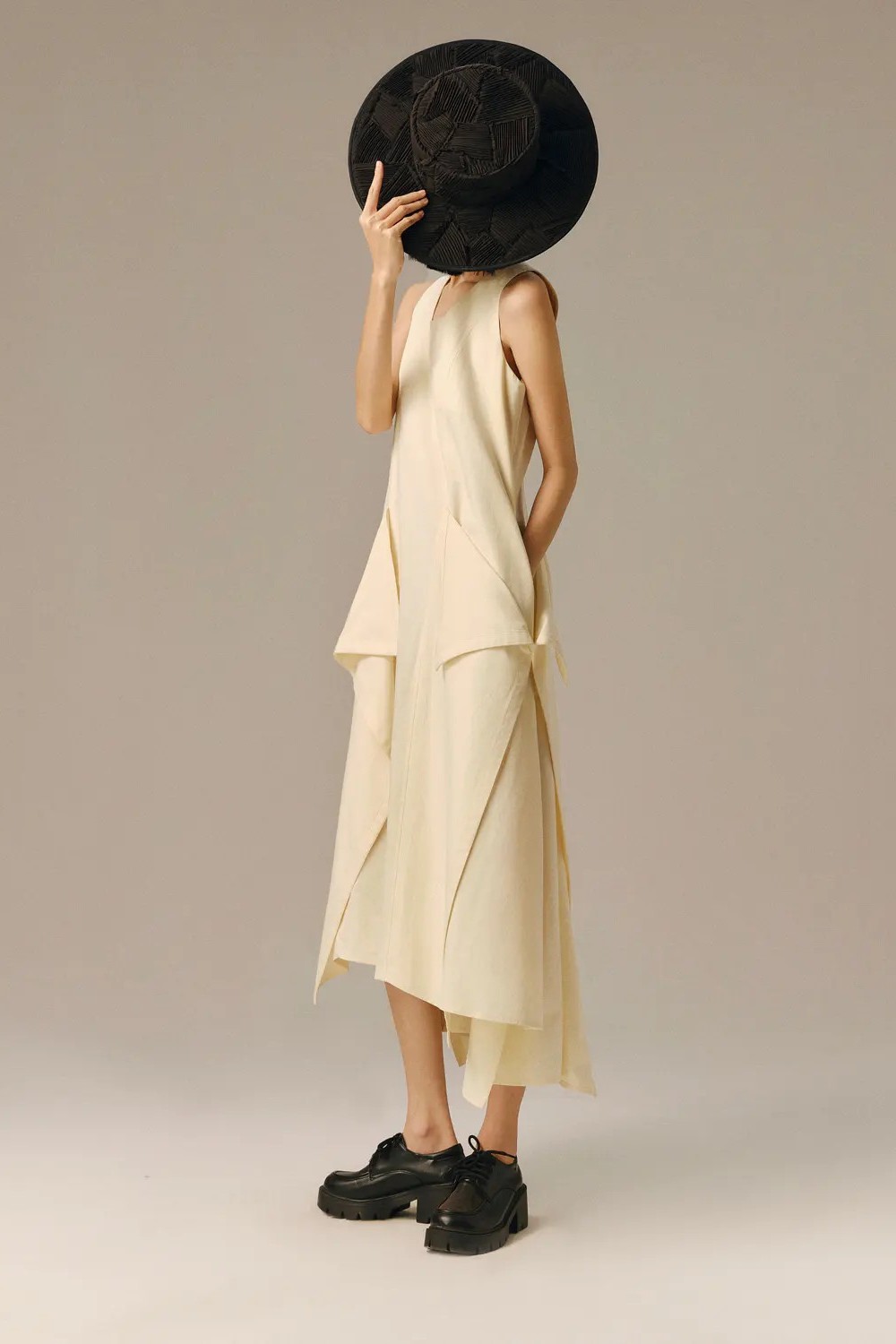
Vietnamese designer and Parsons graduate, Tom Trandt Minh Đạo, is experimental and environmentally conscious, using leftover or donated fabrics to create bold, genderless designs at Môi Điên.
ONETONE

Founded in 2023 in Hanoi, ONETONE embraces minimalism and meticulous craftsmanship, creating simple, yet unique pieces with interesting drapes and shapes.