
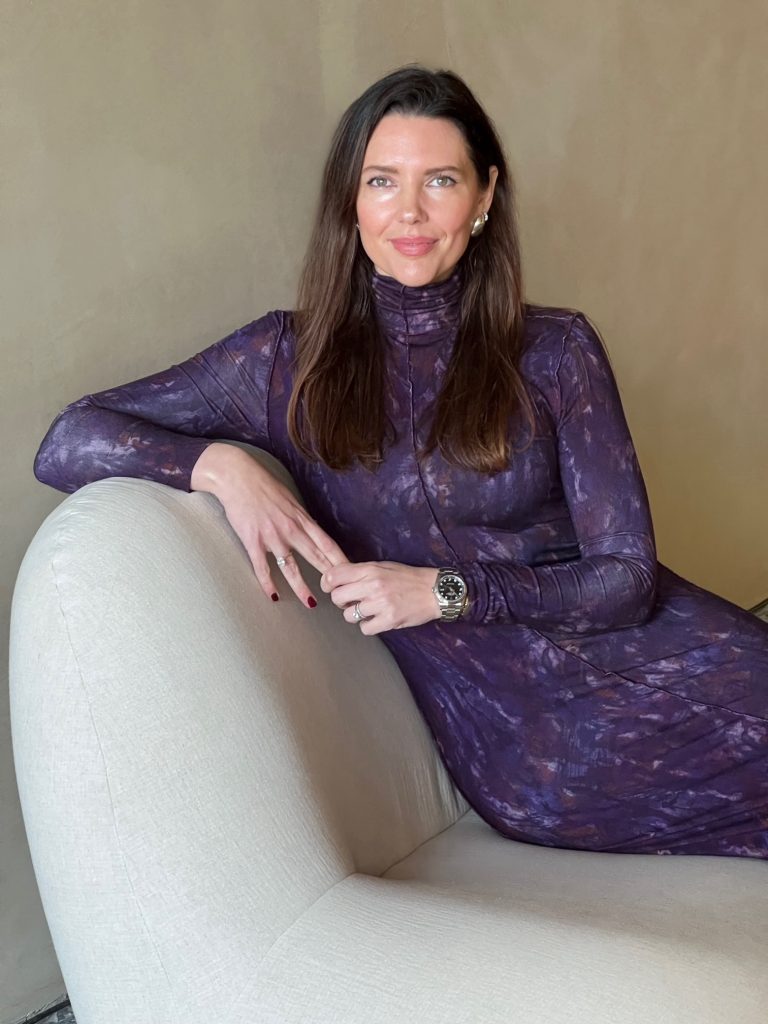
Most beauty executives build their careers on brand stories. Céline Talabaza built hers on science. Before becoming a founder team member and CEO of Noble Panacea, she spent more than 15 years shaping global beauty houses across Paris, Madrid, New York, Singapore and Zurich. Armed with a double master’s degree, she held leadership roles at L’Oréal, LVMH and Unilever, managing global portfolios, driving innovation pipelines, and working with over 50 nationalities across emerging and established markets. Her expertise was broad, but her approach was consistent: Understand consumers deeply, anchor decisions in science, and honour the responsibility of portraying inclusive, meaningful beauty.
Related article: Your Skin Has A Sleep Schedule Too—And Clé de Peau Beauté Just Hacked It
Related article: Sleepless In Singapore: Medical Experts Weigh In On Why Catching More Zzzs Is Crucial
What ultimately set her career on a new course was the intersection of that scientific rigor with a breakthrough technology—OSMV (Organic Super Molecular Vessel), the Nobel Prize-winning discovery that would become the backbone of Noble Panacea’s identity. Together with inventor Sir Fraser Stoddart, the brand launched in 2019 at The Metropolitan Museum of Art, a symbolic nod to chemistry as an art form and to the idea that science and beauty can coexist with surprising poetry.
Today, Noble Panacea continues to operate at that intersection of deep science and human values. Its patented OSMV system protects, programs and releases actives with molecular precision, while its sustainability efforts—from starch-based packaging to TerraCycle partnerships—are built into the brand’s DNA from concept to creation. But perhaps Talabaza’s greatest strength lies in how she makes complex science feel personal and emotionally resonant to the everyday user.
Related article: The Great Fatigue: Why Are We All Exhausted Right Now?
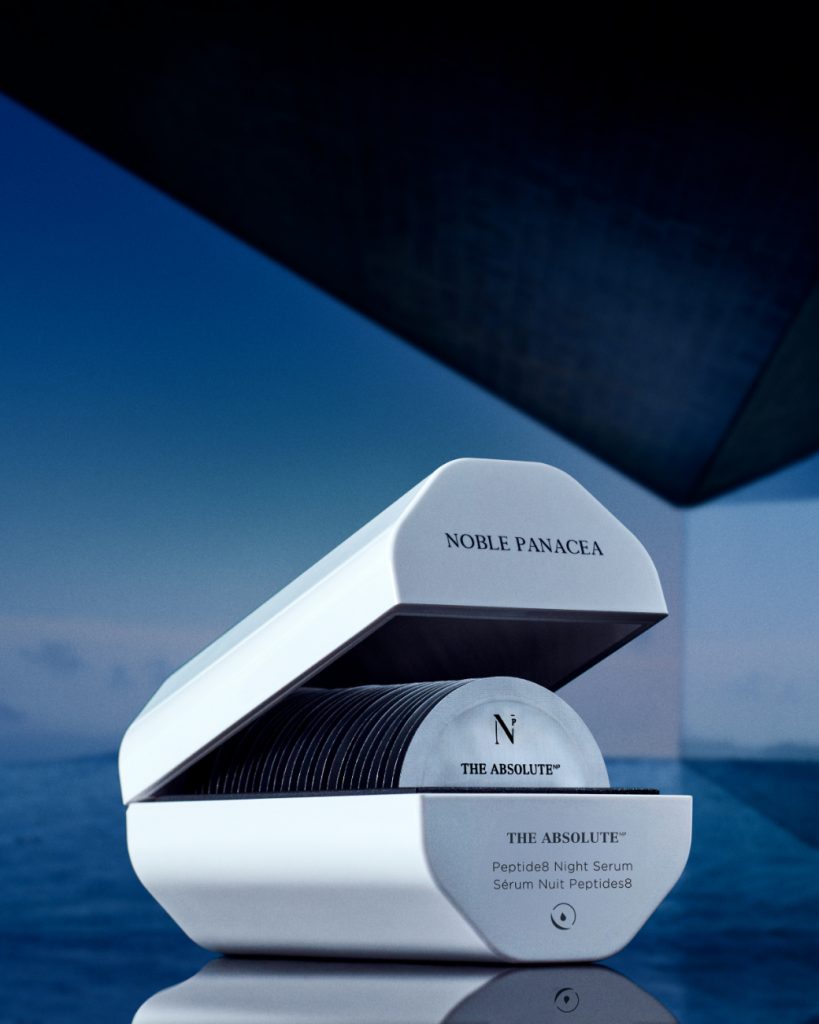
Its newest innovation, The Absolute Peptide8 Night Serum, is a perfect example: A three-phase, timed-release night treatment engineered to harmonise with the skin’s circadian rhythm. From detox at 11pm to repair at 2–4am to deep hydration when the skin reaches peak permeability around 4am, the formula delivers exactly what your skin needs, exactly when it needs it.
Over a Zoom call with ELLE, Talabaza breaks down the science, and the quiet intelligence of working with your body’s natural biorhythm.
How did Noble Panacea come about, and what was the vision that you shared with Sir Fraser Stoddart?
I think it all started for me in 2018, when I received a call from someone on Sir Fraser’s team. He was looking for a person who could build a brand from scratch using his Nobel-winning technology. I met him that year at Northwestern University, where he served on the Board of Trustees, and spent nearly two full days with him—one entire day in a classroom—as he walked me through the concept of supramolecular machines and what he had discovered.
It took me about two to three hours to really understand the connection between these machines and their potential impact on skincare. It finally clicked when he said, “You know, Céline, you’ve been working in beauty for quite some years. If you think the skin, which is your best protection against external aggressors, is going to let anything in to maintain its beauty or the health of the skin matrix, that’s a misconception.”
When I asked what he meant, he explained that active ingredients don’t necessarily penetrate the various layers of the skin—and to truly transform the skin, you need to act at the cellular level. If the active ingredient can’t penetrate, you’re essentially working with a flawed design.
He also explained that every active ingredient has a peak level of activity. Take vitamin C for example: It acts within the first minutes to first hour. If that peak is too high, it causes irritation; then it drops quickly, and nothing happens after. So even if the active could reach the cells (already unlikely), and even if it stayed potent from purchase to application (again, unrealistic), the window in which it actually works is extremely short. You’d essentially have a cream that works for an hour, even though you expect results throughout the day or night.
That’s when he made it clear: The only way to tackle this issue in skincare is through an encapsulation system that sustains the release of ingredients over time. And that is his idea behind OSMV.
How do you make something so scientific feel relatable and personal?
I think it comes down to communicating the human value: What does this actually mean for you? What do you gain from it? Much of that clarity comes from Dr Benjie Limketkai, Noble Panacea’s Chief Technology Officer, who leads the scientific advisory. He once said, “Think of it like a delivery app.” If you order food, you want it to arrive at the right address, at the right time—that’s the OSMV. It’s the motorcycle that gets the actives to the right place, at the right time, in the right condition. And that’s exactly how skincare delivery systems function.
You call the Peptide 8 Night Serum a “skincare time manager”. What really happens to our skin at night?
We’ve been working with the concept of the circadian rhythm since we launched our Exceptional Sleep Mask—which controls ingredient release perfectly throughout the night. I thought: Now that we’ve proven we can release ingredients at the right time, why not bring that into a serum? Something highly concentrated, penetrating deeply, and used daily as part of your nighttime routine. That’s when we discovered senescence as the newest biomarker of ageing. Senescent cells are “zombie cells”: They should be dead, but they stay in the skin and create inflammation, causing healthy cells to age prematurely. So, during the detoxification phase of the night from 11pm, we use peptides to remove senescent cells and delay new ones from forming. Then, from around 2am to 4am, when healthy cell replication peaks, we deliver a complex of eight other peptides to accelerate collagen production and encourage the right cells to multiply. And finally, around 4am, when skin permeability is highest, we deliver 4D hyaluronic acid for deep hydration.
What else do you think is missing from the Noble Panacea lineup?
We are working on something new and it’s all about cortisol—a hormone we all need. It's what wakes you up in the morning, gives you drive, and protects you in moments of danger. It’s part of our survival as humans. But when cortisol remains high for long periods, physically or emotionally, the skin becomes unable to process anything. Cortisol acts like a wall; the skin can no longer “understand” the ingredients you’re giving it—even if they’re beautifully formulated or delivered via OSMV. It’s almost like the skin is blinded by stress, and the neural communication between skin cells breaks down. So what we need to do is bring down cortisol levels in the skin during the day so the products can work properly.
That said, we are working on something new using the OSMV, to manage this hormone and it will be launched early next year. I'm very excited about this new addition and can't wait to share more.
With skincare evolving so quickly, how do you see the future of skincare in the next 5 to 10 years?
Artificial Intelligence (AI) is going to be a major part of it, though it’s already here. It’s been incredible for skin analysis, diagnosis, and prediction based on humidity, lifestyle, time spent indoors vs outdoors, UV exposure, workouts... everything. It can compute all these variables and recommend a personalised regimen.
In our lab, our formulas are computer-engineered. The era of casually mixing ingredients like making soup is over. We program each dose precisely: the polarity of ingredients, how they’re loaded into OSMV, and how they’re released. It’s extremely intense and precise, and AI will only improve this.
So, in five or ten years from now, the real question will be: How do we maintain the human touch in a world of hyper-optimised beauty? But one thing I’m certain of: Science is the future. A high-integrity formula must be developed by people who understand chemistry. That’s basic, and consumers are becoming more aware of that.
*This interview has been edited and condensed for clarity.