
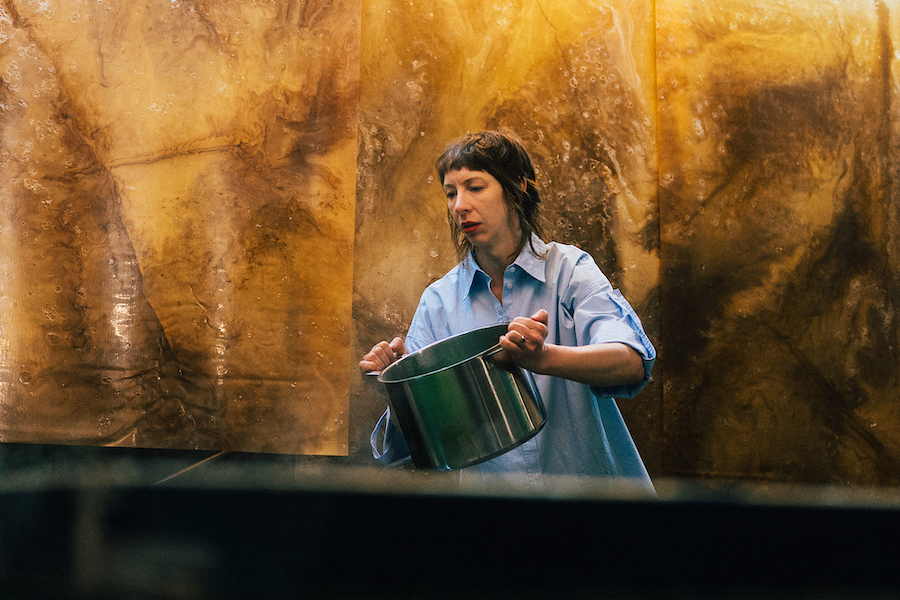
Sustainability isn’t just a buzzword in beauty anymore; it is a non-negotiable. According to Nielsen IQ's report "The Global Beauty Edit: Seeking Balance for Growth in 2025", clean beauty across all subcategories, from packaging to formulation, has become mainstream, with consumers expecting accountability and transparency from brands. But for Aesop and Melbourne designer Jessie French, it’s never been a trend. It is who they are.
Since 1987, Aesop has been creating sensorial experiences that go beyond skincare: Cruelty-free formulations, stores designed to feel like sanctuaries, and minimalist packaging that is both functional and refillable. Jessie, meanwhile, founded her studio Other Matter to reimagine our relationship with materials—particularly petrochemical plastics. “Most people are familiar with the term ‘fossil fuels’,” she says. “I was struck to learn that petroleum is primarily formed from microalgae. This ancient oil is now used to produce disposable, often trivial objects that don’t reflect their true cost. That realisation became the catalyst for my practice.”
Related article: Chérie Je T’aime: Kate Spade New York’s Latest Scent Is A Love Letter To Paris
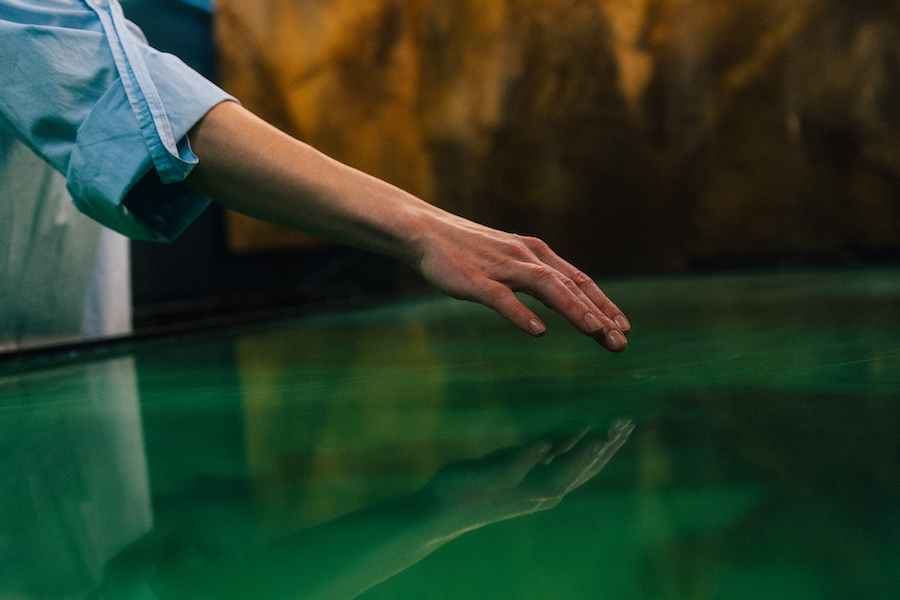
Exploring what a post-petrochemical world might look like, Jessie began experimenting with algae-based polymers derived from freshly grown algae rather than fossilised deposits. From this, her studio has managed to create real-world alternatives such as algae-based signage films that have already replaced harmful PVC (polyvinyl chloride) in galleries, retail, and events. It’s now a patent-pending material in early commercial use across retail and events.
Related article: Here’s Why Bleach-Free Teeth Whitening Is On The Rise
Related article: What Gen Zs Should Be Doing To Future-Proof Their Health
This shared ethos made her a natural collaborator for Aesop. Jessie’s luminous bioplastic installations have appeared in Aesop stores worldwide, and her latest work brings the story to Singapore. Across ION Orchard, Ngee Ann City, and Raffles City, her creations form a three-part journey inspired by Aesop’s Geranium Leaf Body Care range—a fresh, green-citrus line beloved for almost three decades.
Here, Jessie reflects on how the partnership took shape and why she believes materials have the power to spark systemic change.
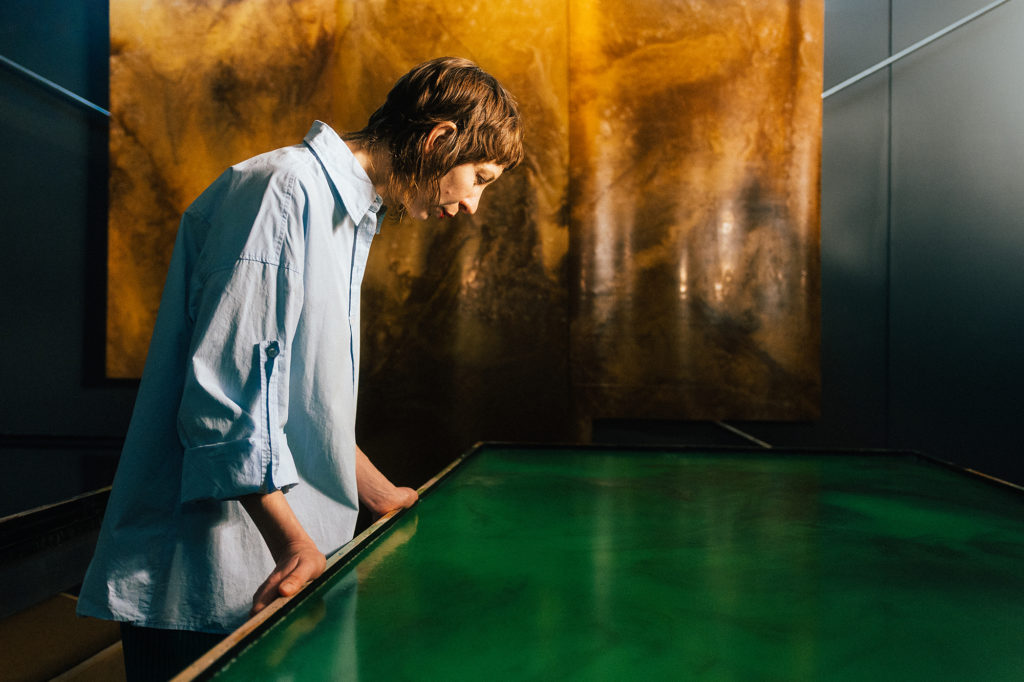
How do you see your role as a designer in shaping conversations about sustainability?
The role of any artist is to both reflect and shape the conversations that define our time. I do this by bringing attention to the materials that surround us: What they are made from, the ethical considerations, how they’re used, and where they end up. We’re living through overlapping environmental crises, and the scale of these challenges can feel paralysing. It wasn’t enough for me to simply make work about these issues. That’s what led me to create Other Matter as a separate design studio—one that could take the material research of my artistic practice and apply it in meaningful, practical ways. It is a way to engage with industry, science, and design to influence systems and shift conversations from awareness to action.
How did the collaboration with Aesop come about?
My first collaboration with Aesop began as an artistic commission when Calum Hurley and Luke Mortimer from the Australian visual merchandising team visited my studio. Aesop was already reducing PVC use, and I was testing vinyl replacement films on my studio windows. They quickly saw the potential—a real alternative for retail, events, exhibitions, and built surfaces. What started as a small campaign soon expanded across Aesop stores in Australia and New Zealand, making them the first global partner and a major driver in the material’s development.
Our material is transparent and achieves colour through the addition of locally milled pigments. We’re fortunate to collaborate with pigment expert David Coles of Langridge Colour, who supports this aspect of our work with expertise and supply of locally-milled pigments that are ethically sourced and of the highest quality.
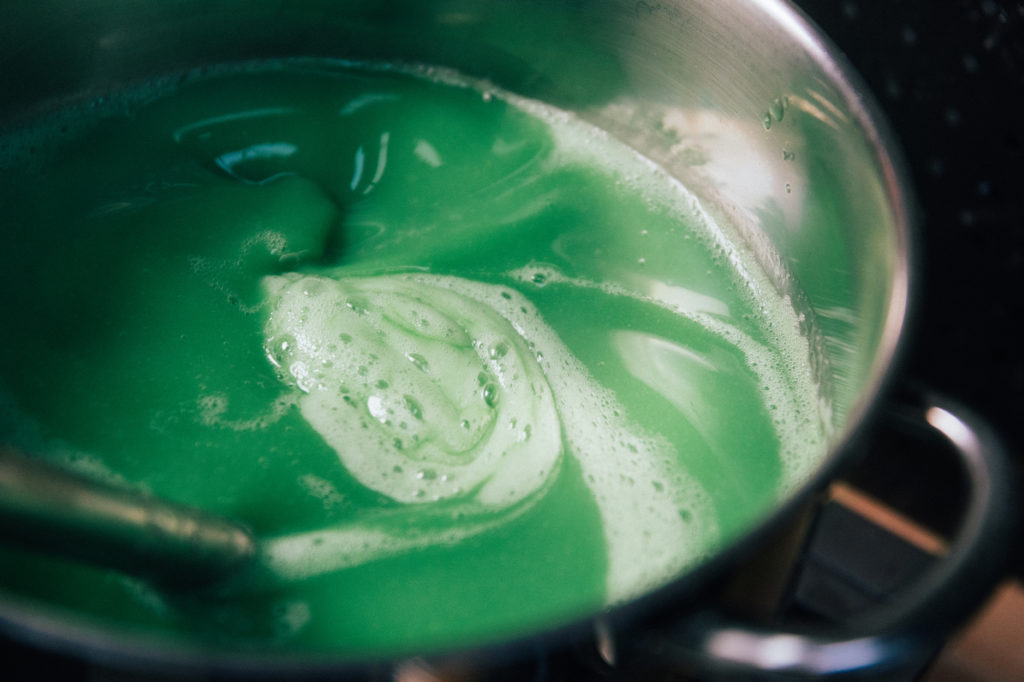
What drew you to working with algae-based bioplastics, and how do you see their potential in reshaping material culture?
The link came from the petroleum’s building block, microalgae. No material has bent the world so out of shape—environmentally, economically, and politically—so it felt natural to return to the source using a polymer from the same origin. The polymers I use are derived from freshly grown algae rather than fossilised deposits. These materials don’t just offer solutions; they offer a vision. They shift how we think about materials and show individuals and businesses that alternatives are possible.
When new materials are designed with their full lifecycle in mind, they increase pressure on the industry to change. Our work is part of that transition. We intend for our materials to enter the mainstream, alongside other innovations moving in the same direction. Together, these developments signal a broader shift in material culture.
What was the most surprising or rewarding discovery you made while embarking on this partnership with Aesop?
One of the most rewarding outcomes came from our work on Aesop’s Hainan store. The humid climate demanded a sealing method that balanced durability with biodegradability and recyclability. In New York, I consulted research scientists at The Metropolitan Museum of Art, who reviewed my ideas based on conservation techniques used for centuries—methods that age organically without disrupting circularity. Back in Melbourne, I partnered with Boom Studios to refine a technique that preserved the material’s integrity and delivered a seamless finish, pushing our work beyond PVC replacements to alternatives for materials like quarried stone.
The Hainan store, surrounded by marble-heavy luxury retailers where leases require updates every three years, was the perfect test case. Marble rarely gets reused in such remote locations, and transporting it comes at a steep cost. By contrast, our panels arrived in a poster tube, weighed just 10kg, and left only a fraction of the footprint. We’re now scaling this approach to architectural projects worldwide.
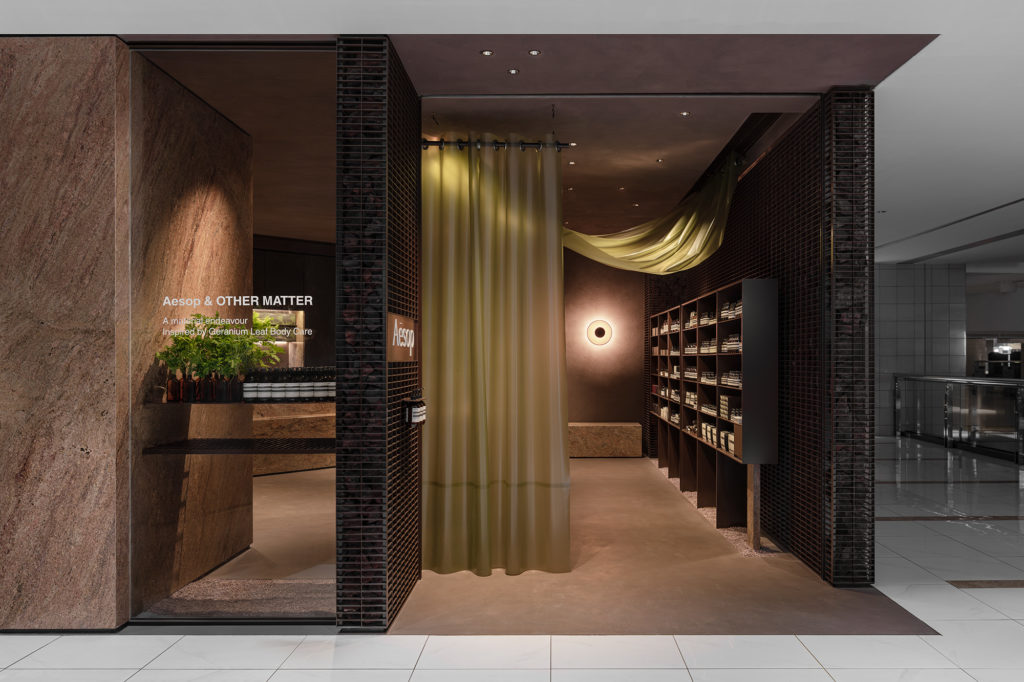
Can you walk us through your conceptual journey for the Singapore installations?
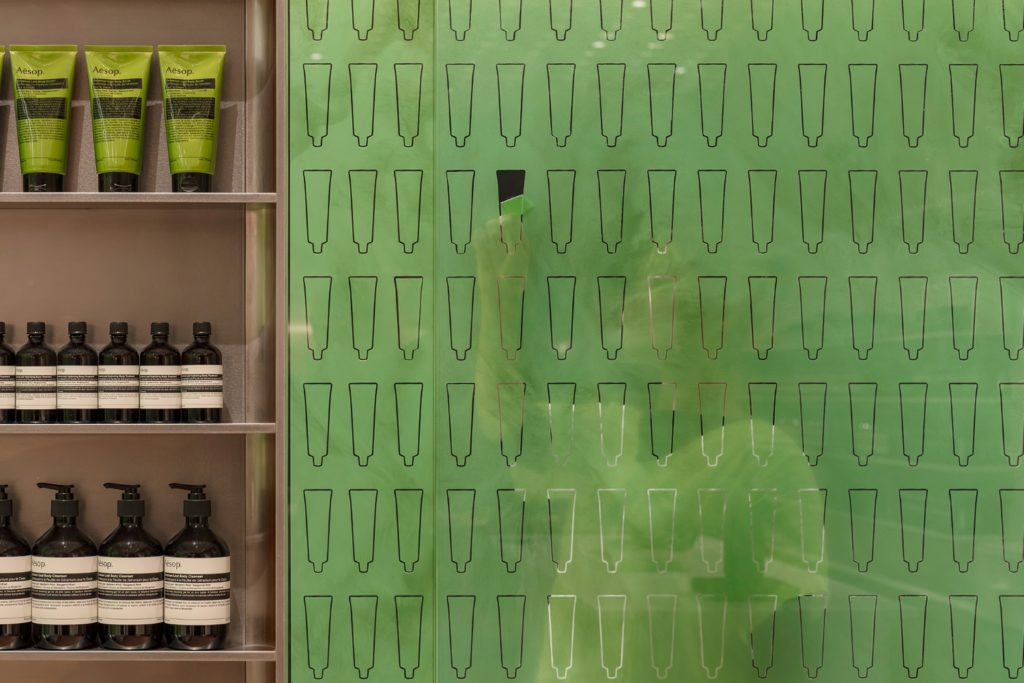
The three installations tell the story of our two-year collaboration with Aesop. Each project pushed the development of our material and its applications, offering a glimpse into that evolution and showing how it can function in diverse retail contexts. Across the spaces, the material appears in several ways: Replacing complex, traditionally vinyl-based shapes with a sheer curtain and marbled patterning. We also highlight the material’s versatility. It can be produced in a wide range of transparencies, colours, and textures, adapting to aesthetic and functional needs while remaining rooted in sustainable practice.
What do you hope visitors in Singapore take away when they encounter your installations?
A sense of wonder comes first, as visitors encounter the luminous colours and patterning. For those curious to look deeper into the project and its materiality, I hope they leave with a sense of hope for the future.
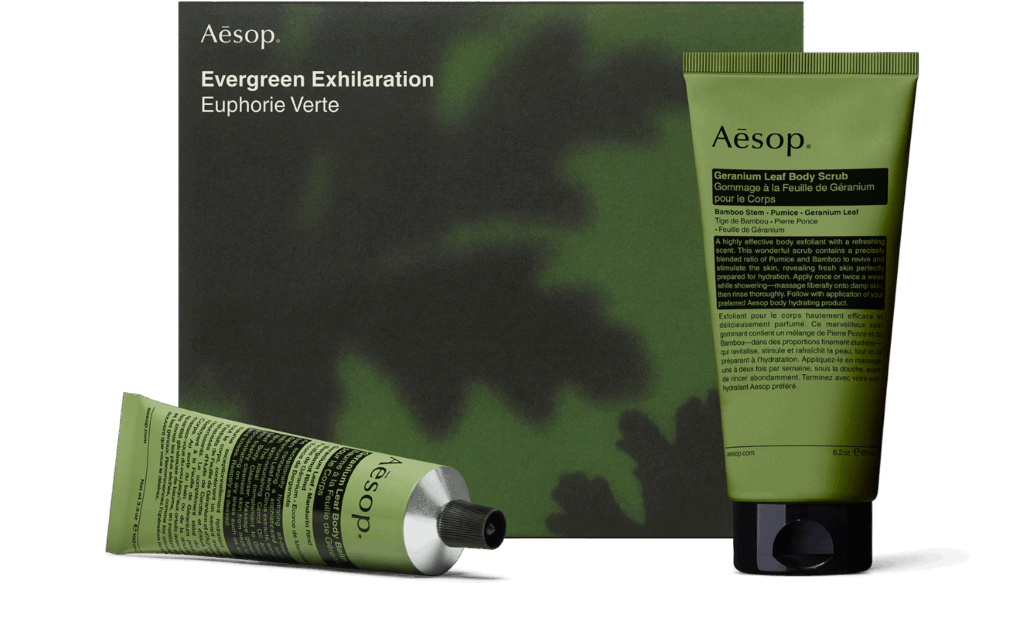
Explore the Other Matter's installations at Aesop ION, Aesop Ngee Ann City, and Aesop Raffles City, now on till 21 September 2025. Enjoy a limited-edition gift set at $97, which includes Geranium Leaf Body Scrub to exfoliate and Geranium Leaf Body Balm to replenish, from neck to toe. For more information, visit the Aesop website.
*This interview has been edited and condensed for clarity.