

When Delphine Jelk speaks about perfume, she does so with the ease of someone who has lived among scents for most of her life. “Each perfume is a new adventure, and the creation process is what I love most—it’s always as exciting and wonderful,” she says. After more than a decade at Guerlain as their in-house master perfumer, the anticipation remains fresh. If anything, the years have sharpened her olfactory sensibilities. “With experience, I trust myself more and increasingly follow my instincts,” she reflects. “Generally, I know the perfume is ready when I no longer feel the need to remove or add anything.”
Related article: Exclusive: Guerlain’s Master Perfumer Thierry Wasser On The Art Of Emotional Perfumery
Related article: Exclusive: Perfumer Céline Barel Unveils Aesop's Revolutionary Fragrance, Aurner
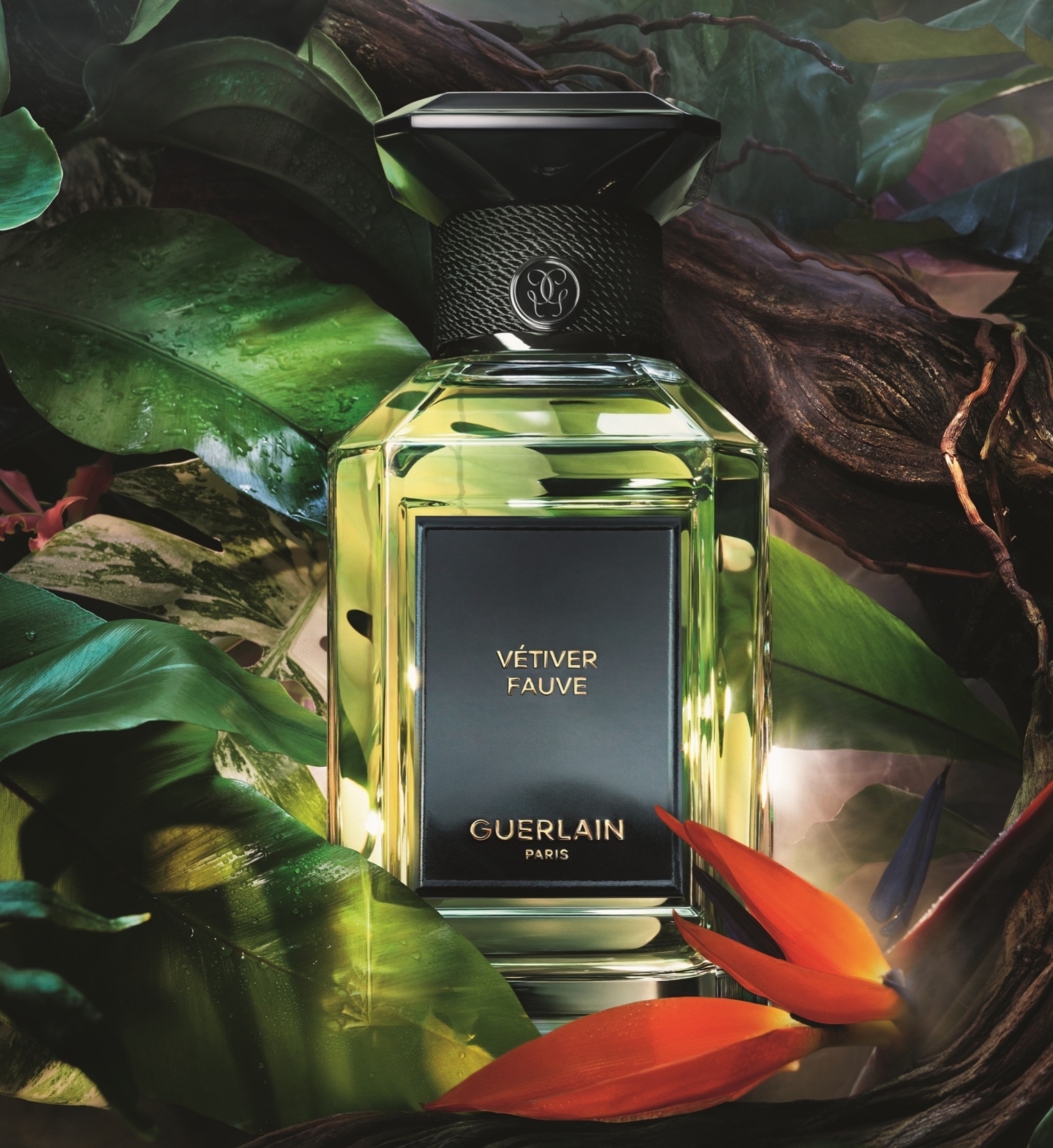
Her latest creation for the Maison, Vétiver Fauve, is part of the L’Art & La Matière collection, a fragrance series where raw materials are elevated to masterpieces of scent. For this new release, the starting point was vetiver root. Inspired in part by Rudyard Kipling’s The Jungle Book, Jelk wanted to evoke a tropical jungle at first light, where the ground is dense and heavy with vegetation, and the air is thick with moisture. “I was inspired by the warm, woody scent of vetiver, whose roots grow in sandy soil and whose leaves are green and moist,” she explains. “I loved working with the contrast of a tropical, wet, lush atmosphere with vetiver.”
The fragrance opens with a tropical green accord that is bright and slightly fruity, thanks to fig, which adds a warm, creamy quality, and pineapple, which contributes a sweet juiciness. Together, they soften the sharper edges of vetiver and give it a more multi-dimensional appeal. The warm vanilla notes of tonka bean and earthy, resinous cypriol support the vetiver at its core. “For me, vetiver is the chicest raw material, and I enjoyed working with its contrasts,” says Jelk. The resulting composition produces a fresh-woody sillage that is elegant and easy to wear.
Related article: Francis Kurkdjian On How To Create An Iconic Perfume
She intended this scent to be worn by both men and women. “I agree that vetiver is often associated with men, and I personally love smelling vetiver on a man. However, in Vétiver Fauve, adding fig gives it a milky, fruity effect that adds a lot of sensuality,” she says.
The fragrance’s freshness makes it easy to wear in the day while the depth makes it work for evening. But Jelk believes that there are no rules when it comes to perfume: “There is no ideal place or occasion. Perfuming should be a light and free gesture. Wear it whenever you feel it’s right for you. The important thing is to feel good and beautiful.”
If you’re curious about the possibilities of mixing Vétiver Fauve with your other fragrances, Jelk’s advice is to think of it as “combining rather than layering”. “I would pair it with bergamot or vanilla extract, or Aqua Allegoria Nerolia Vetiver,” she suggests. “It’s always interesting when there’s a note that links two perfumes together.”
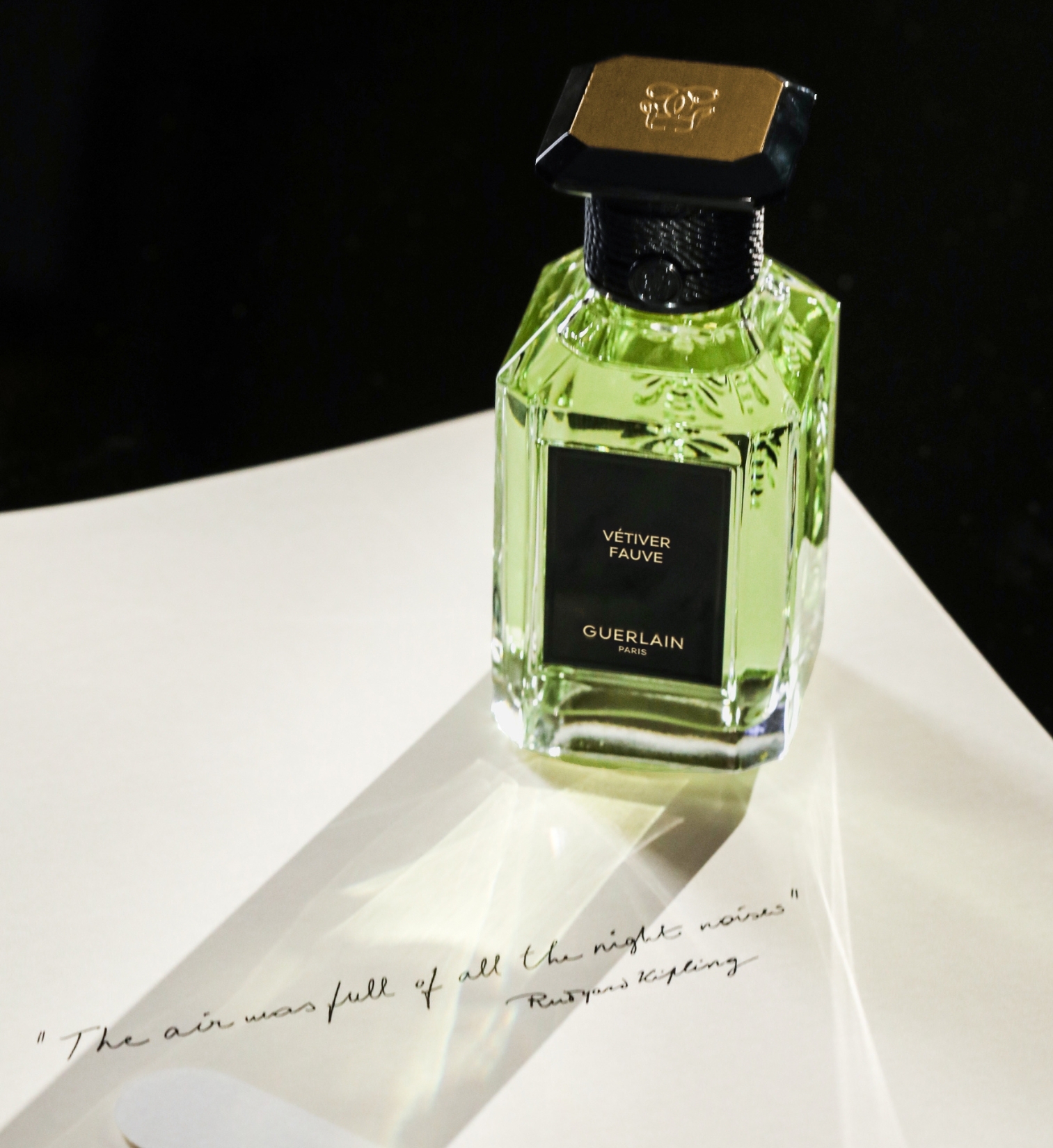
As exquisite as the scent is the octagonal L’Art & La Matière flacon with its ridged glass, which contains the vivid green liquid in a shade that Guerlain variously describes as “leaf green, fern green, luminous jade.” A silver-toned metal plate with a hammered texture, designed to catch the light and add a tactile detail, is a new addition to the collection’s customisation options for the top of the bottle. It is such touches that speak to the Maison’s ability to merge olfactory and visual art.
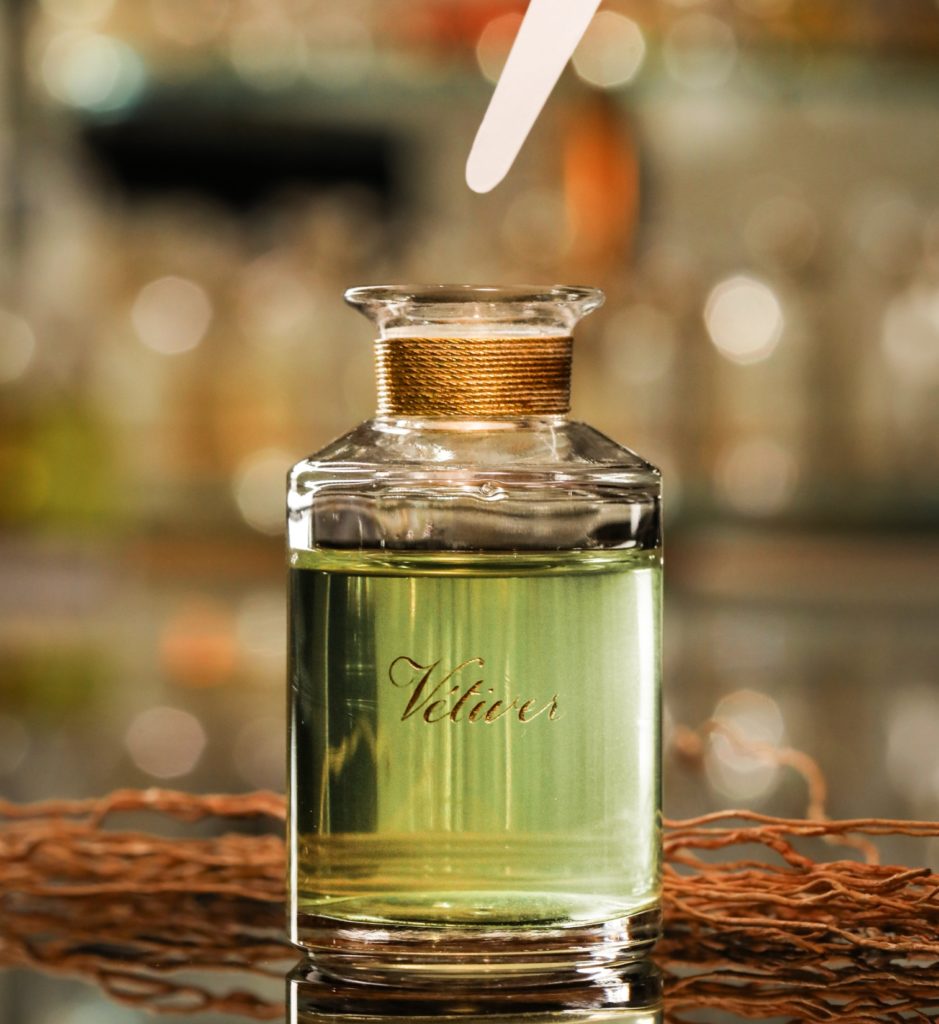
With Vétiver Fauve, Guerlain doesn’t reinvent vetiver so much as reintroduce it. It was first used by the house in 1959 for its Vétiver scent for men. In Jelk’s hands, the fragrance exudes a softer, more adaptable quality. It’s a reminder that even the most familiar ingredients can reveal new sides when seen, and smelled, in a different light.