
Parfum-Jardin has always treated fragrance like travel. The kind where you wander into a place, unhurried, and let it imprint on you. Inspired by gardens around the world, it’s what the House calls “an olfactory stroll”—a scent you reach for when you crave freshness or need an escape.
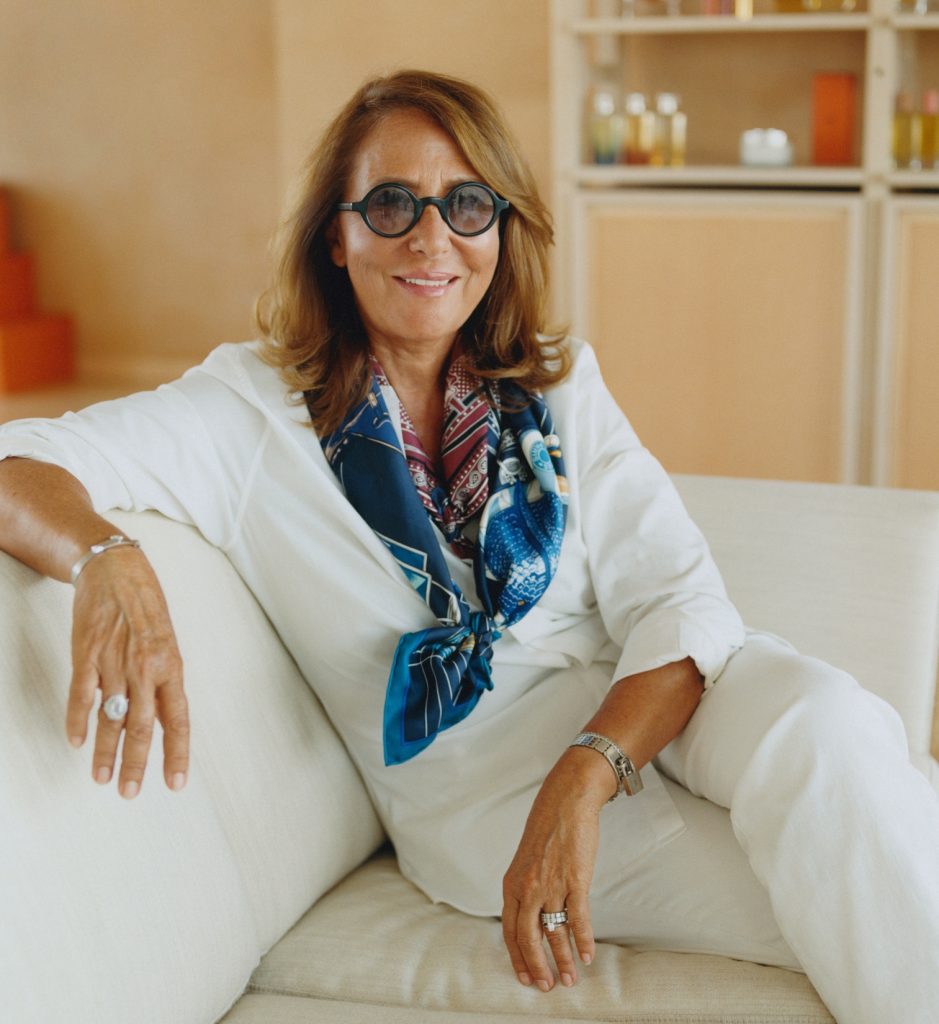
Now seven creations strong, each Un Jardin eau de toilette is framed as an encounter between the soul of a place and the perfumer’s inspiration. For its latest “garden”, Un Jardin sous la mer, Director of Hermès’ olfactory creation Christine Nagel takes us to the island of Taha’a in French Polynesia, where she took a summer vacation some four years ago. The lagoon’s coral garden and the island’s lush flora stayed with her—enough to spark a question: If that underwater garden had a scent, what would it be?
Related article: Hermès Unveils A Bolder Interpretation Of Its Beloved Barénia Perfume
Related article: Exclusive: Gregoris Pyrpylis From Hermès Beauty Reveals The Secret To The Perfect Lip
From Tahitian vanilla to coconut fibres, and from the minerality of coral to the creamy woodiness of tamanu nut, Nagel set out to translate those impressions into a singular genderless scent. On the nose, sous la mer opens watery, then quickly turns into a lush white floral bouquet with creamy woody notes. She’s tight-lipped about the full formula, but names tiare flowers, bergamot, vanilla, and a blend of “toasted roasted notes” to evoke tamanu nuts, as the key ingredients. There's also a whisper of salty mineral notes sitting in the background—one of the hardest effects to achieve in perfumery, she notes.
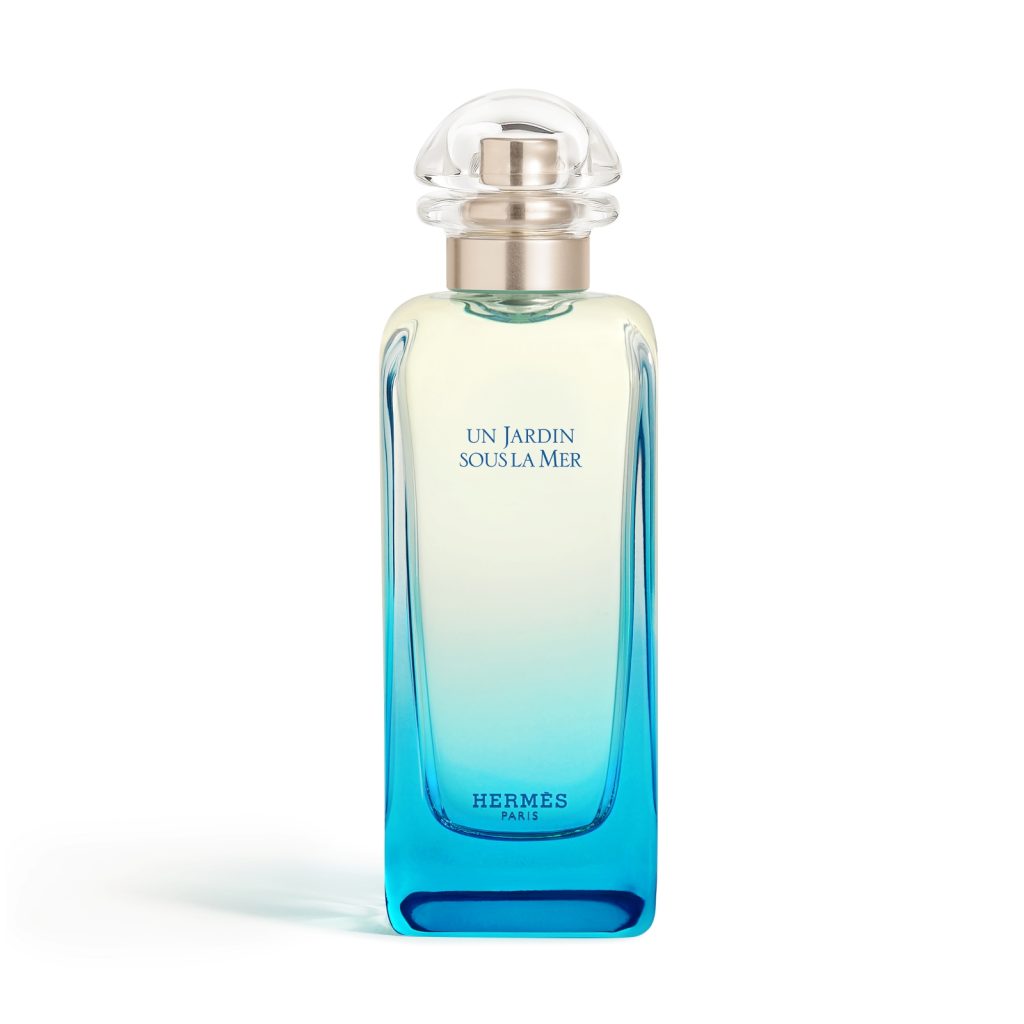
Even the gradated hues of the iconic lantern-shaped bottle is a deliberate attempt to capture the shifting colours of Taha’a’s ocean and sky. “The blues of the sky and the blues of the sea are so varied that sometimes you can't quite distinguish where the horizon lies… it all blends into one. Even the birds turn blue because the reverberation is so strong,” says Nagel.
In this exclusive interview with ELLE, she takes us back to Taha’a, and lists the small, precise details that became Un Jardin sous la mer.
Related article: Meet Nadège Vanhee, Hermès Fashion's Secret Weapon
Tell us what a walk through Taha’a feels like?
The French Polynesia, for me, was a dream I had as a teenager—it inspired sailors and artists. When I finally went, I was delighted, but also slightly apprehensive because I was worried about being disappointed. But the opposite happened: As soon as I got off the boat and reached the island, I was immediately caught by the beauty of the flora. It first hit me through the tiare flowers; there were hundreds and thousands of them. The coconut leaves and fibres also had a different aroma. Even at my feet, I found small tamanu nuts which had a very powerful scent, both woody and nutty.
My intention was to go diving there, but the locals told me to go snorkelling instead: "Go to the end of the lagoon, get in the water, and let yourself be carried by the current.” And then I saw it... the beautiful coral garden just 70cm from the shoreline. It was so gorgeous, I kept going back. And then I wondered “if this garden had a fragrance, if it had a scent, what would it be?” I know I didn't want to end up with a cliché watery marine note or monoi (Tahitian scented oil). I wanted it to be a little bit mineral, because coral is mineral, with a whisper of saltiness. You know that tiny film of salt on the skin after swimming… it’s delicate yet very sensual.
What do you want the wearer to feel when they use this?
I want it to feel enveloping and easy to wear—something that sits naturally on clothes and moves with you through the day. On skin, the salty note becomes unexpectedly sensual, almost provocative, in a way that surprises me more than a classic amber would. It’s comfortable enough for daytime, yet more intimate in the evening. Ultimately, I hope people feel at ease wearing it, because scent is deeply tied to emotion, and we always return to the perfumes that feel right on our skin.
How has your personal interpretation of “the garden” evolved over time?
There’s always been a guiding thread in the Parfum-Jardin collection: They’re inspired by gardens we’ve experienced and that have genuinely moved us, whether [my predecessor] Jean-Claude Ellena or myself. Another constant is water; throughout the history of a Parfum-Jardin, water is always present in some form. What I find most beautiful about gardens is how they invite you to travel. It’s a family of fragrances I truly love—very international in spirit—and one that resonates with many different people, which makes working on it especially rewarding.
How has the Hermès fragrance language changed under your leadership?
I’m a perfumer who creates fragrances for Hermès, and that in itself is a pleasure. Perfume is often the first Hermès object someone can own—it’s an accessible entry point—so it has to carry all the House’s values within a single bottle and scent. Since joining Hermès, I’ve been given an extraordinary level of creative freedom. I choose my subjects, I’m never given a brief, and I’m given time to work. That freedom allows me to create fragrances with a strong narrative and unexpected ingredients, to seek out new materials, and to open up new perspectives and worlds through scent.
In your opinion, what is perfume consumption like these days, and where is it headed?
Perfume consumption has shifted noticeably, especially after the pandemic, when people became more aware of how vital the sense of smell is. There’s a growing fatigue with fragrances that feel too similar—many dominated by sweet, caramel notes with little distinction. As a result, people are seeking clearer signatures and more character, whether through niche scents or perfumes with a strong identity. For example, people use Hermès perfumes because they are unique, because they have a story, and because they contain incredible materials.
At the same time, especially among younger consumers, layering has become popular (as a form of personalisation). While it can be surprising to see carefully balanced fragrances mixed, what matters most is comfort and personal connection. That said, as houses create perfumes with stronger signatures, this urge to layer may naturally fade.
Un Jardin sous la mer EDT is priced at $132 for 30ml; $182 for 80ml; $250 for 100ml, $350 for 200ml refill, available online and at Hermès boutiques.
*This interview has been edited and condensed for clarity.