
The Bund in Shanghai is a testament to the city’s centuries-long history as an international hub. East of the Huangpu River, neon graphics flicker across futuristic skyscrapers, while its western banks are lined with rustic red-brick buildings, each housing its own storied past. It is in one of these buildings, transformed 15 years ago into the Swatch Art Peace Hotel, that Swatch is unveiling its latest Art Journey Collection with the Guggenheim Museum, bringing a piece of New York to Shanghai.
As Carlo Giordanetti, CEO of the Swatch Art Peace Hotel, and a member of Swatch’s Product & Design Committee, explains when we chat in the Swatch boutique at the hotel, the Art Journey Collections took shape from the brand’s mission to take art off the walls of museums and private collections and inject it into everyday life. Swatch’s first foray into the art realm began in the ’80s, when it offered its watches as blank canvases for artists. “Often, the artists were pushing us to develop things we had never imagined,” he shares.
Related article: The Latest Blancpain & Swatch Collaboration Shows Love To The World’s Lagoons

Some four decades later, the brand shifted the scope of the collections to museums instead. The museum collections, launched in 2018, spanned collaborators such as MoMA and the Louvre—institutions with strong global recognition that extended far beyond the circle of art enthusiasts. “Our mission is to work with artists and the arts, while remaining extremely broad to reach the spectrum of people we talk to,” Giordanetti says. “At the same time, [the museums] have to like the spirit of Swatch, the idea of taking a masterpiece and reinterpreting it. Not all museums are ready to do that.”
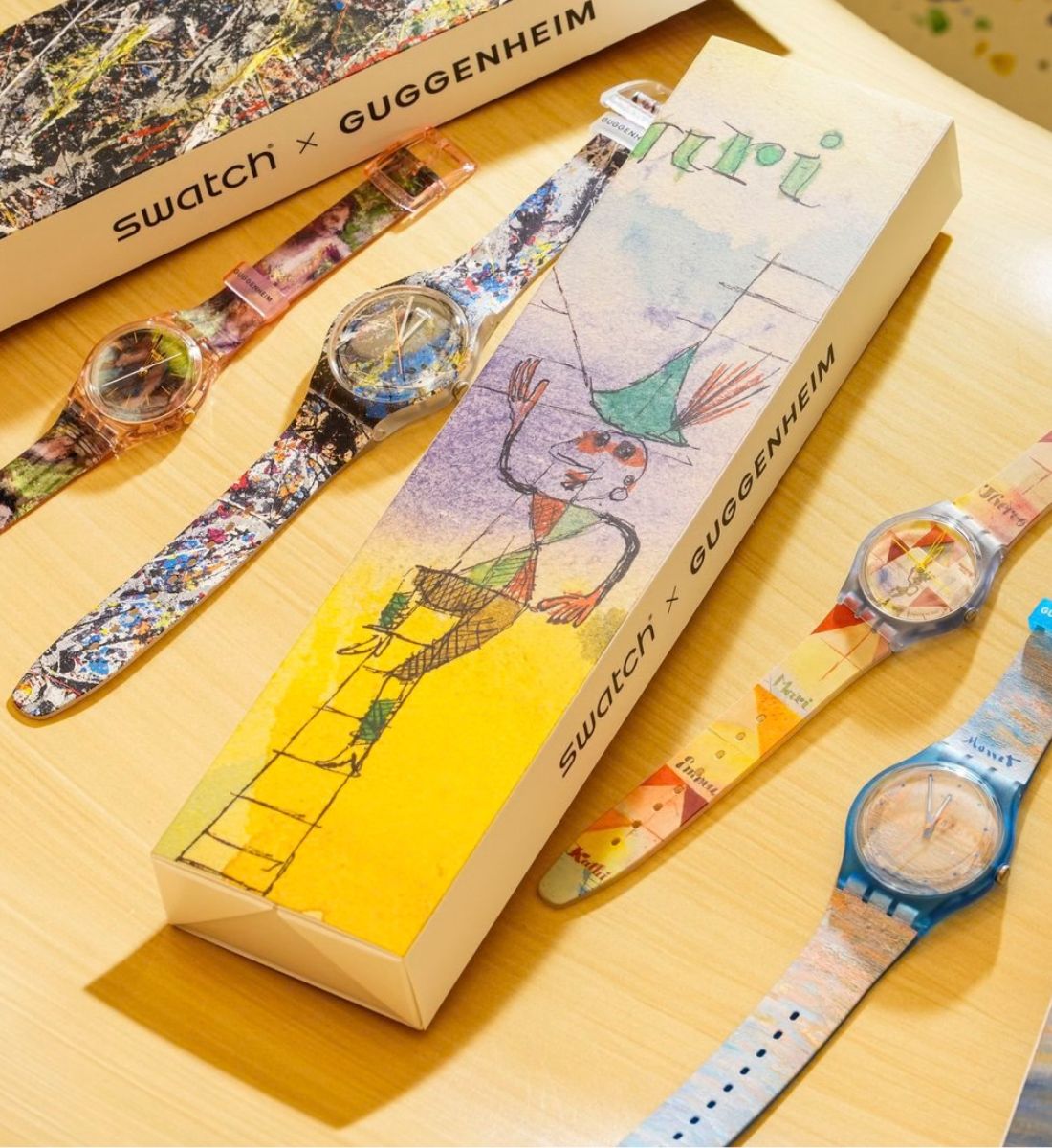
For its latest collection, Swatch once again turned to the Solomon R. Guggenheim Foundation, renewing a long-standing association that began in 1992 with its support of the Peggy Guggenheim Collection in Venice. The new partnership draws on four iconic paintings housed across the museum’s New York and Venetian outposts, resulting in watches with double-length seconds hands that nod playfully to the museum’s transatlantic dualism.
Related article: Park Bo-gum Celebrates The Opening Of Omega House At The 2026 Winter Olympics
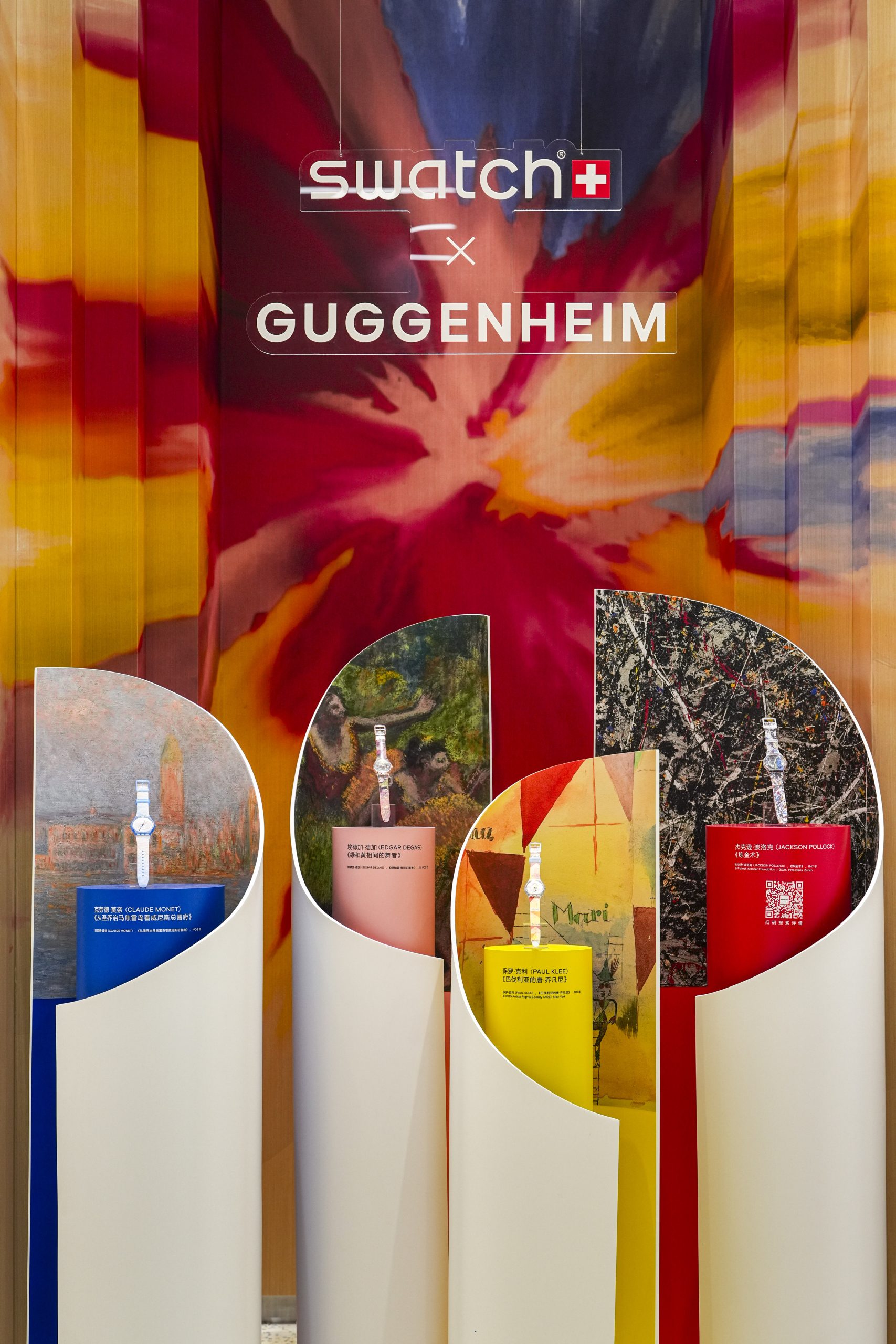
Claude Monet’s The Palazzo Ducale, Seen from San Giorgio Maggiore (1908) and Jackson Pollock’s Alchemy (1947) both reside in a 41mm case. The sunset hues of Monet’s art glow vibrant orange under ultraviolet light; though it is the Pollock, Giordanetti confides, that proved the most challenging piece to adapt due to its sheer intensity. Then there is Edgar Degas’ Dancers in Green and Yellow (1903) and Paul Klee’s The Bavarian Don Giovanni (1919), each found on a smaller 34mm case size. For Klee’s tribute, Swatch equipped the watch with a multihued rotating disc beneath the dial, which is revealed through a triangular cutout window at 12 o’clock. The disc turns and shows a new scene with each passing second of the day—in homage to the artist’s infatuations with the five sopranos named in his original painting.
“There is no written rule,” Giordanetti says of Swatch’s latest choices of inspiration. “It’s not a magic formula, it’s not mathematical. Part of it is aesthetics, and the other is meaning. But there’s also this immaterial element, which is whether or not [the artwork] resonates with [the public].” This resonance, which he calls a “vibration”, often dictates the success of a collaboration, which in turn continues to fuel the creativity of Swatch’s designers. Here, those vibrations manifest in the details. Whether it is the Monet’s hidden glow or the mechanical trick of the Klee, Swatch’s interpretations of each piece go beyond what is painted upon the canvas, reflecting the essence and stories they hold.
The Swiss watch brand’s role as a creator, patron, and supporter of the arts takes shape not just through its Art Journey Collections, but also through the very building in which it presents the Guggenheim Collection. This year sees the Swatch Art Peace Hotel kick off its 15th anniversary with a year-long celebration. In 2011, the brand transformed the century-old heritage building into an artist’s residence, comprising apartments and workshops where over 20 artists from around the world can live, create, and collaborate for months at a time. Initially catering to visual artists, the Swatch Art Peace Hotel now welcomes musicians, writers, and actors, fostering a multidisciplinary community built on creativity and diversity.
Related article: Rado & Ji Chang-wook Unveil New Bangkok Boutique and Limited-Edition Timepiece
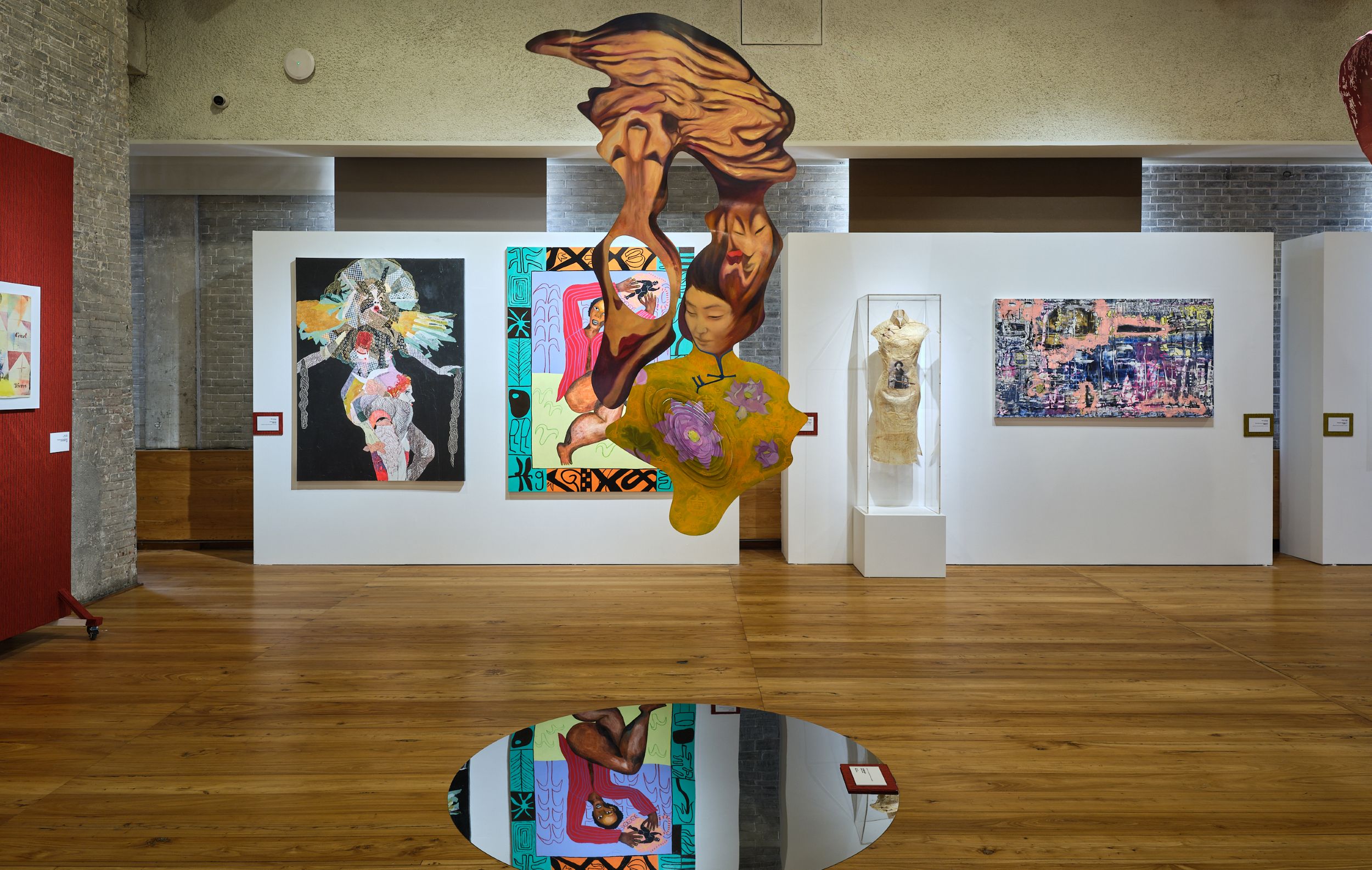
To commemorate both the hotel’s anniversary and Swatch’s latest Art Journey Collection, its existing artists-in-residence welcome us upstairs, into its exhibition space. Here, they showcase a collection of pieces, organised thematically with replicas of the four Guggenheim artworks featured on the watches. A rendering of light reflecting off the river on The Bund is displayed across Monet’s own study of Venice’s waterways. Symbols of womanhood, deconstructed and stretched to their limits, are presented before Klee’s abstractions of his romantic pursuits. Not unlike Swatch, the artists-in-residence here have successfully injected new points of view into the discourse surrounding the four legendary artworks, decades after their conception. And like Swatch’s latest wrist-takers, they have shown how time meets—and then transforms—art.