
What happens when you gather five Singapore models from entirely different eras into one studio for a full-day shoot? Apparently, a lot of screaming, laughter, oversharing, and enough backstage stories to fill a second issue.
At one point, Lum May Yee reminisces about being shoved into a suspicious van and being driven to a dodgy industrial building in China for an 18-hour-long shoot. She was handed a thick envelope of hard cash after. Across the room, Vivien Ong recalls an off-beat shoot in a love hotel where she’s wearing bondage attire and clinging for dear life to a pole over a heart-shaped bed. You can already imagine the gaggles of giggles that ensue.
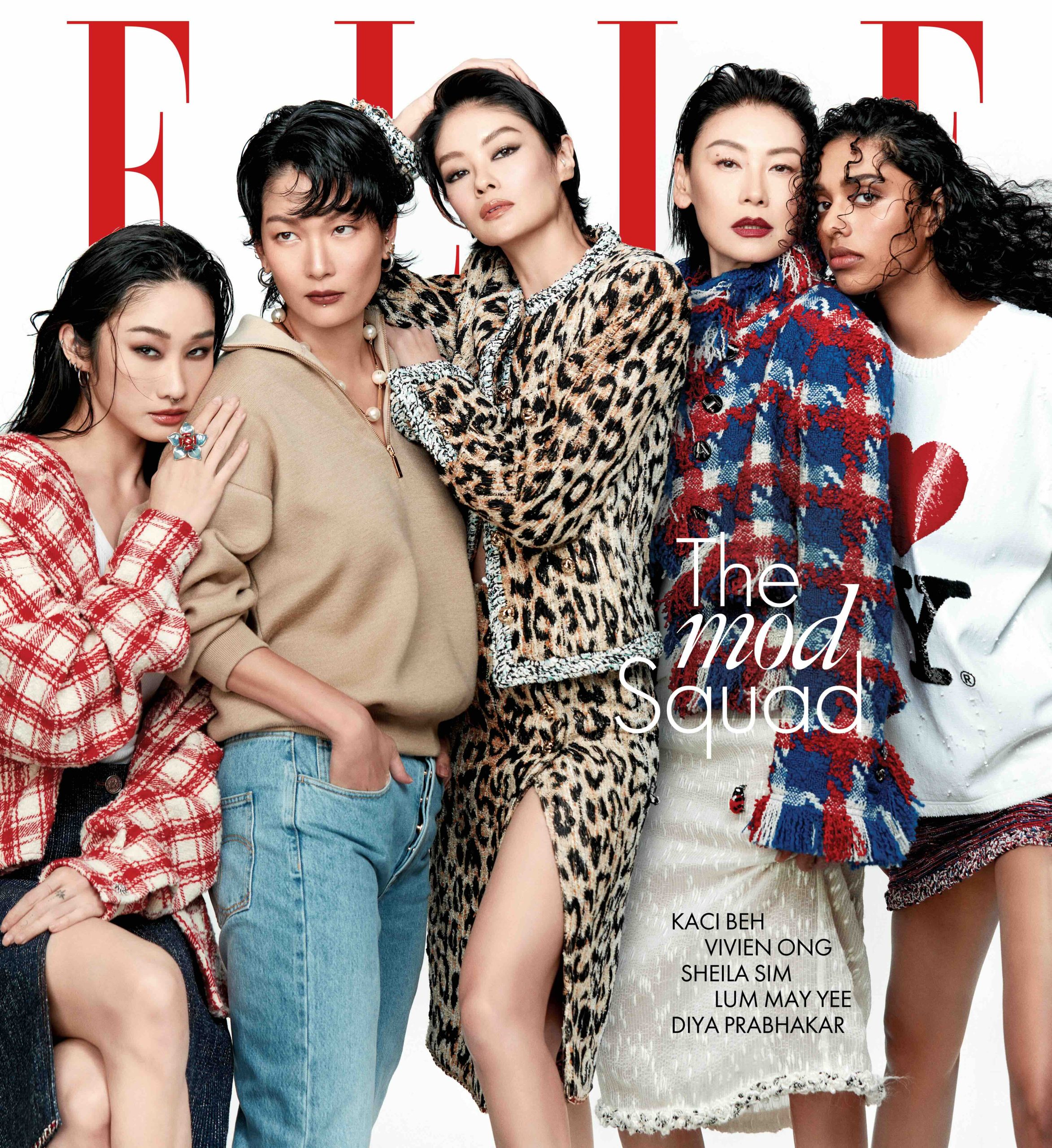
There’s a reason why we brought together five extraordinary women from different eras of Singapore fashion for our June issue. Gen X pioneer May Yee, with her then-signature pixie cut and androgynous beauty, helped define an era. Vivien, free-spirited and proudly vocal, provided a “how to” on surviving—and succeeding—in the Big Apple. Kaci Beh, armed with an iPhone, represents a new generation of models balancing runway life with social media presence while Sheila Sim emerged in an era when models successfully crossed over into entrepreneurship and mainstream celebrity.
Then, there’s Diya Prabhakar, who arrived at a time when fashion was finally beginning to confront its longstanding diversity problem. Together, these industry heavyweights chart a fascinating evolution of Singapore fashion in the past 30 years—dressed in Chanel’s Métiers d’art collection, no less.
To sit and listen to these women share their stories is to learn that a trajectory in fashion never runs in a straight line; there are bound to be bumps along the road. But, as the saying goes, what doesn’t kill you makes you a superwoman.
As the conversation shifts from castings and shoots to loneliness, ageing, and the quiet exhaustion of constantly being watched, May Yee reflects matter-of-factly, “Modelling was one chapter of our lives. Now everybody has moved on to different things. That’s just life.”
Ultimately, what connects these women most strongly is not the clothes, campaigns, or magazine covers, but their ability to consciously evolve. Together, they mirror the shifting landscapes in fashion that women have had to navigate over the past three decades—from rigid beauty ideals and body image struggles to visibility and social media burnout in the digital age. Read on as they reflect on the highs, the hard truths, and the lives they built beyond the runway.
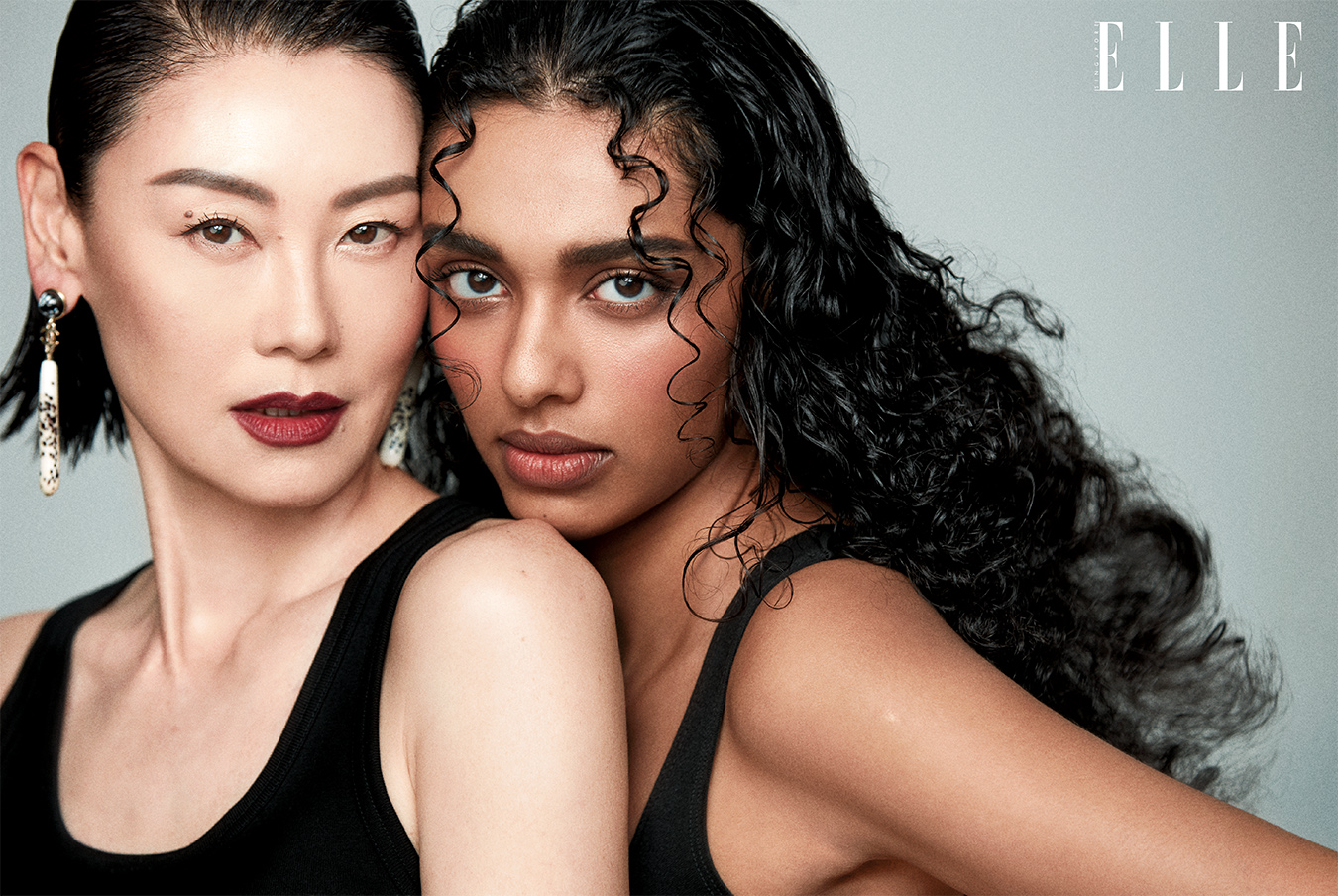
If you happen to spot Diya Prabhakar wandering through your local wet market looking decidedly dressed down, do her a favour and look away. The Mumbai-born model has spent more than half her life building a career across the international modelling circuit, but her personal blueprint for survival relies heavily on fiercely protected normalcy. “I always get very thrown off when people recognise me,” she admits with genuine bewilderment. “People would randomly DM me and be like, ‘Oh, I saw you at this mall, and you were walking with your family.’ I feel very watched—like I can’t go out in public if I’m not put together.”
When she was spotted in India at the tender age of 14—during a fashion show her uncle had snagged tickets for—Diya was already standing at her current height of 1.82m. Her mother immediately recognised the opportunity. The moment they relocated to Singapore, she marched her daughter straight to a local modelling agency to figure out the next steps.
Yet, despite a meteoric rise—which includes walking for Prabal Gurung, Alexander Wang, and Dolce&Gabbana, shooting campaigns for MAC Cosmetics and Sephora after winning The New Paper New Face 2014 at just 15—Diya remains unusually detached from the typical “fashion girlie” archetype. She may spend her days draped in luxury fashion, but she would happily live in jeans and a T-shirt for the rest of her life.
Her heart has always leaned more naturally toward books and academics than glamour. “I was a very avid fantasy sci-fi girl,” she confesses. “In school, I would have a Kindle underneath my table, and I would just be swiping.” She can tear through 10 books in three months, escaping into alternate realities filled with dragons, fairies, and superpowers. That intellectual curiosity eventually took her to New York, where she completed a marketing degree two years ago.
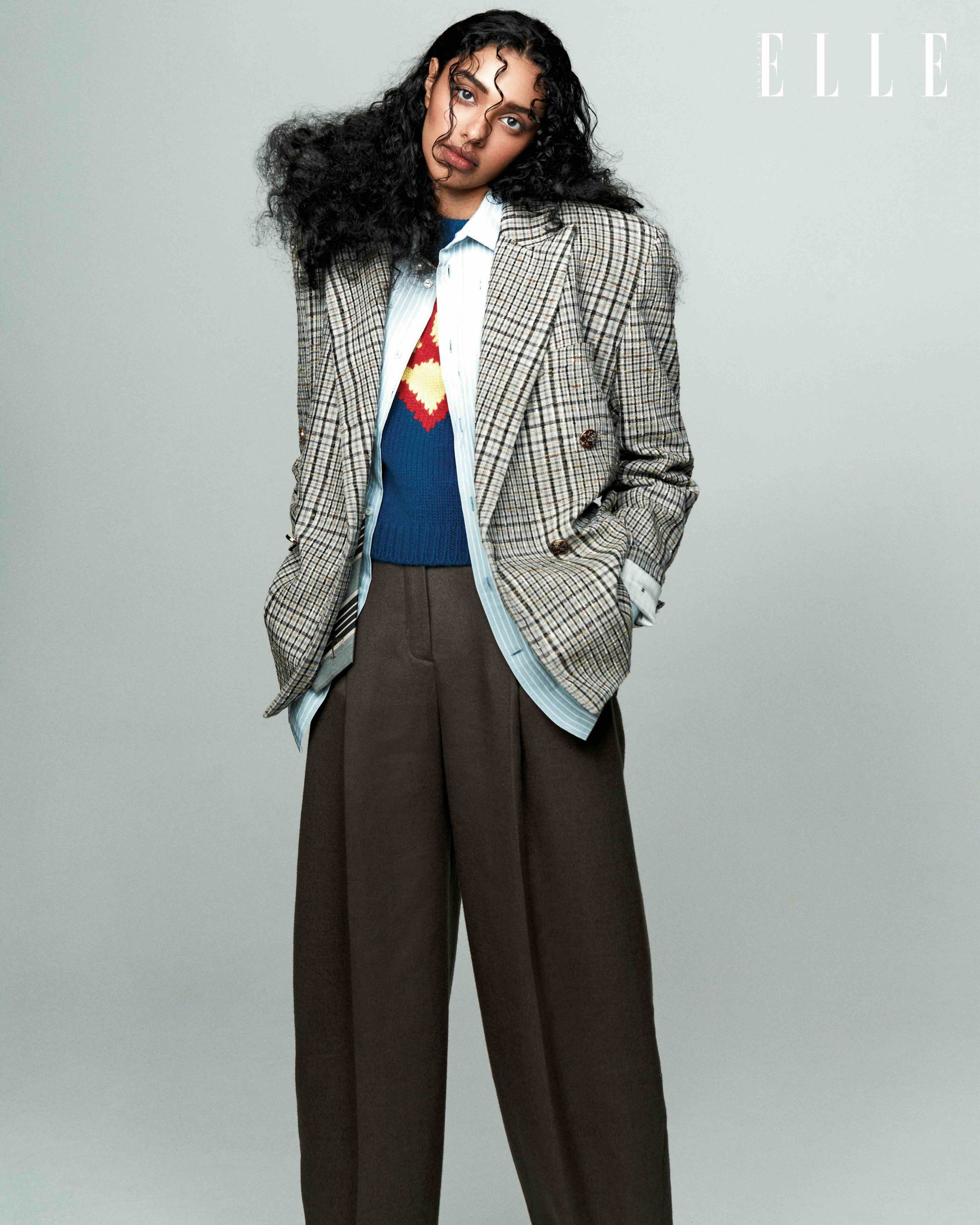
Her international success arrives at a particularly important moment in fashion’s ongoing conversation about race and representation. When Diya first started modelling, South Asian representation on Western runways was almost non-existent. She remembers entire casting rooms where she was often one of the only brown girls present.
“There would have been like two girls who ever walked shows when I first started out,” she recalls. “India is such a huge country with over one billion of us, and yet you don’t see any Indian people. I would always get really frustrated with that. When people thought about Asians, it was immediately East Asians.”
She points to the industry’s current fascination with Indian model Bhavitha Mandava—particularly her recent Chanel-backed Met Gala appearance—as evidence that perspectives are finally beginning to shift. What fascinated Diya most about the look was not the celebrity spectacle surrounding it, but the craftsmanship behind it. “Everyone was fighting about whether they liked it or not, but really, it was all about the sheer work that went into the outfit,” she says, referring to what appeared to be casual denim but was actually meticulously woven silk.
That respect for craftsmanship is also why Diya remains deeply sceptical of cheap, disposable fashion. “My family was always very big on sustainability. My mum would be like, ‘Never shop at Shein—it’s just bad materials.’ It feels frustrating when you see fast fashion take a design and make it with cheaper materials. A lot of the labour process—even Indian-inspired embroidery, where there’s so much handicraft—gets lost, and they get paid so little.”
Today, she finds immense joy in watching younger Indian models step into the industry with far more visibility than her generation ever had. “Representation matters,” she says. “A lot of them come to me and say, ‘When I saw you, I got excited. It made me think that I could do it too.’ I didn’t realise it had that big of an impact.” These days, Diya is actively applying for corporate roles in PR, marketing, and advertising. After nearly a decade in fashion, she wants to prove to herself that she can exist outside the industry, too. “Modelling was everything for me,” she says. “But trying a full-time job is about taking back a little bit of control. I want to express myself in different ways.”
Part of that shift is practical, too. Like many models today, she has watched brands increasingly funnel budgets toward influencers and content creators instead. “Even after all these years, I’m earning less than what I did when I was 19 or 20,” she says candidly. “It feels frustrating.” Still, don’t expect her to suddenly pivot into a hyper-visible TikTok personality. Despite years spent fronting campaigns and walking the runways, Diya still finds the idea of social media too intrusive.
Which is perhaps why, even after all the couture fittings, global castings, and luxury campaigns, her dream life still sounds remarkably simple: A good book, a quiet afternoon, and the freedom to wander through a wet market unnoticed.
Makeup Artist CLARENCE LEE using Chanel Beauty
Hairstylist RICK YANG
Photographer’s Assistant EDDIE TEO
Stylist’s Assistant NAZIRA LUBIS